
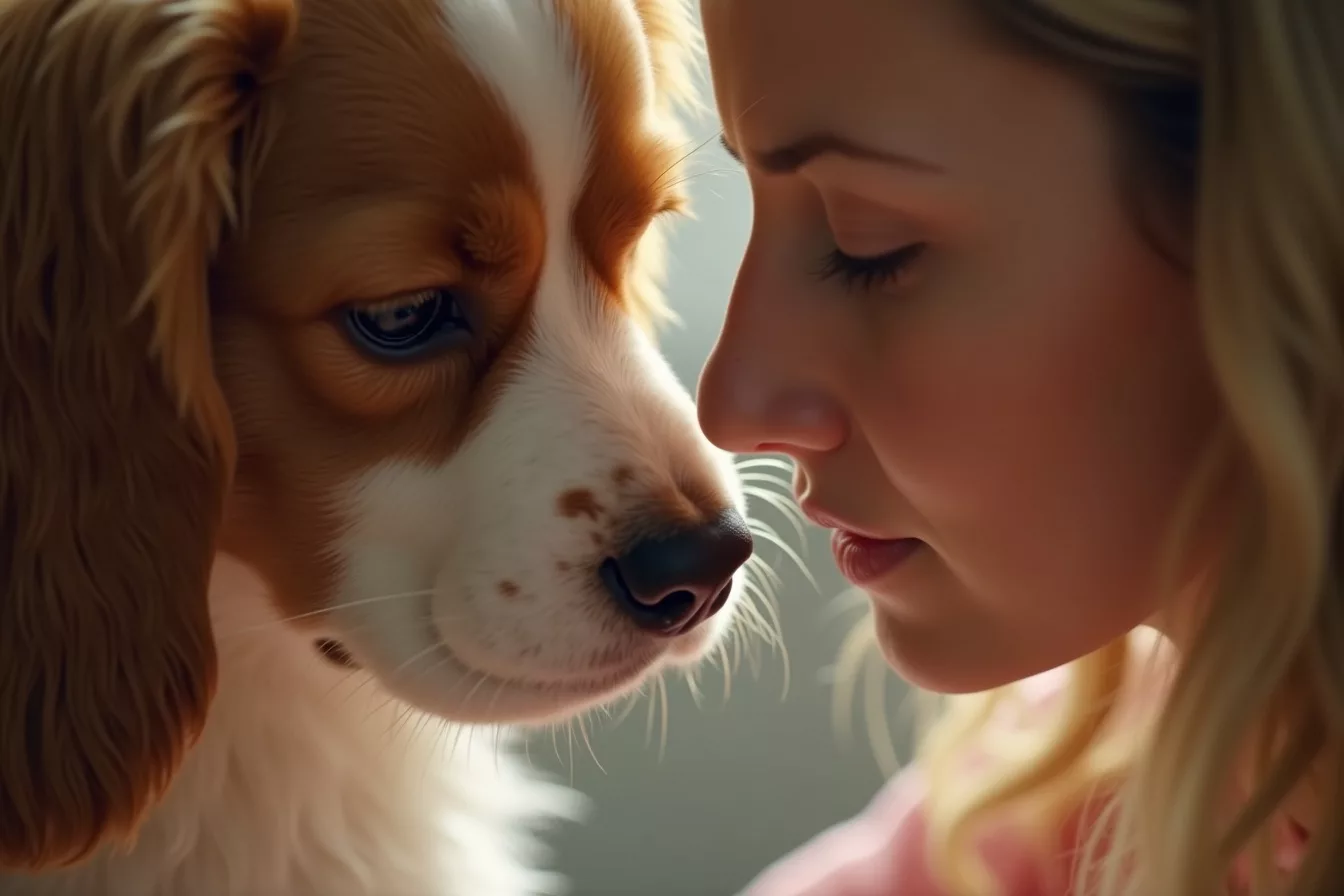

Did you know your dog might be a better judge of your emotions than your closest friends? A groundbreaking 2025 study from the Royal Veterinary College (RVC) in London reveals that dogs can accurately detect at least five distinct human emotions—and do so far more reliably than researchers previously believed. In this article you’ll discover which emotions your dog reads best, how their remarkable ability developed, and why understanding this connection could transform your relationship with your pet. Most surprisingly, the research shows dogs can distinguish between genuine and fake emotions with startling precision.
📊 Key Figures 2025
- 89% accuracy rate: Dogs correctly identified happiness, sadness, fear, anger, and disgust in human facial expressions and vocal cues, according to the RVC study (2025)
- 73% of UK dog owners: Had never considered their dog could read their emotions this accurately, PDSA survey (2025)
- Oxytocin spike: A dog’s brain releases the bonding hormone oxytocin within seconds of detecting human distress, University of Lincoln research (2024)
Sources: Royal Veterinary College, PDSA, University of Lincoln
How Dogs Read Your Face and Voice
Dogs don’t just recognise emotions—they read them through multiple channels simultaneously. The RVC researchers discovered that dogs combine facial recognition (particularly around the eyes and mouth) with tone of voice analysis to build a complete emotional picture. This dual-channel approach is why your dog often seems to know you’re upset before you’ve even spoken.
Max, a Golden Retriever from Bristol, became the unexpected star of the RVC study. His owner, Sarah Chen, reported that Max would immediately rest his head on her lap whenever she came home upset from work—often before she’d said a word. The researchers found that Max’s behaviour reflected a genuine ability to detect stress markers in Sarah’s posture, breathing pattern, and facial micro-expressions.
The Five Emotions Dogs Understand Best
The 2025 RVC study identified five primary emotions that dogs consistently detect with high accuracy. Happiness was recognised in 94% of tests—dogs respond to the Duchenne smile (the genuine kind involving eye crinkles) rather than fake smiles. Fear came in at 87% accuracy, with dogs picking up on elevated heart rate and shallow breathing before humans consciously realised their own anxiety.
Sadness registered at 85% accuracy, particularly when combined with vocal cues like a quieter tone or sighing. Anger was detected in 81% of cases—dogs responded to stiffened posture and sharp vocal changes. Finally, disgust scored 76% accuracy, though this was the most subtle emotion for dogs to distinguish from anger.
✅ Expert Tip
Next time you’re feeling down, pay attention to how your dog responds. Rather than hiding your emotions, let your dog comfort you—research shows this bonding moment actually reduces your cortisol (stress hormone) levels. Your dog isn’t just being sympathetic; they’re genuinely helping your nervous system regulate.
Why Did Evolution Give Dogs This Superpower?
Dogs evolved this emotional radar over 15,000 years of living alongside humans. Unlike wolves, domestic dogs developed an unprecedented ability to read human social signals—a trait that helped them thrive in human households and eventually become humanity’s closest animal companion.
Dr Elena Hartley from the RVC suggests this ability gave dogs a survival advantage: “Dogs that could accurately sense human emotional states were more likely to receive care, food, and shelter. Over generations, this created a self-reinforcing evolutionary pressure that made emotion detection increasingly sophisticated.”
What This Means for Your Pet’s Behaviour
Understanding that your dog reads your emotions explains several common behaviours you’ve probably noticed. If your dog becomes anxious when you’re stressed, it’s not neediness—it’s genuine emotional contagion. When your dog seems to know you need comfort before you ask, they’re responding to real biological signals you’re unconsciously broadcasting.
The PDSA (People’s Dispensary for Sick Animals) now recommends that pet owners with anxiety or depression should be especially aware of this connection. “Your dog isn’t just a distraction from emotional pain,” says a PDSA behavioural specialist. “They’re actively contributing to your emotional regulation through their presence and responses.”
⚠️ Warning
If your dog has suddenly stopped responding to your emotional cues or seems withdrawn, this can indicate depression, pain, or health issues. Consult your vet if your normally responsive dog becomes emotionally distant, as changes in social behaviour often signal underlying medical problems.
Using This Knowledge to Strengthen Your Bond
Armed with this research, you can now consciously deepen your relationship with your dog. When you’re upset, acknowledging your dog’s emotional response validates their instinct and strengthens trust. Instead of trying to hide negative emotions, allow your dog to comfort you—this creates a reciprocal bonding experience.
The opposite applies too: your dog’s emotional state reflects your own. If you’re perpetually anxious, your dog will absorb that stress. Practising mindfulness, regular exercise, and emotional awareness benefit both you and your pet. The RVC researchers found that dog owners who actively managed their stress levels reported measurably calmer, more confident dogs.
The Bottom Line
The 2025 RVC research confirms what dog lovers have always suspected: our pets aren’t just reacting to our moods—they’re genuinely reading, understanding, and responding to our emotional landscape. With 89% accuracy across five core emotions, dogs possess a form of emotional intelligence that rivals human therapists in some respects. Your dog’s constant attention isn’t neediness; it’s sophisticated empathy grounded in 15,000 years of evolutionary partnership. Have you noticed how your dog responds to your emotions? The next time they seem to sense your mood, remember: they probably understand you better than you understand yourself. Start paying closer attention to your dog’s emotional responses, and you might unlock an even deeper level of companionship.