
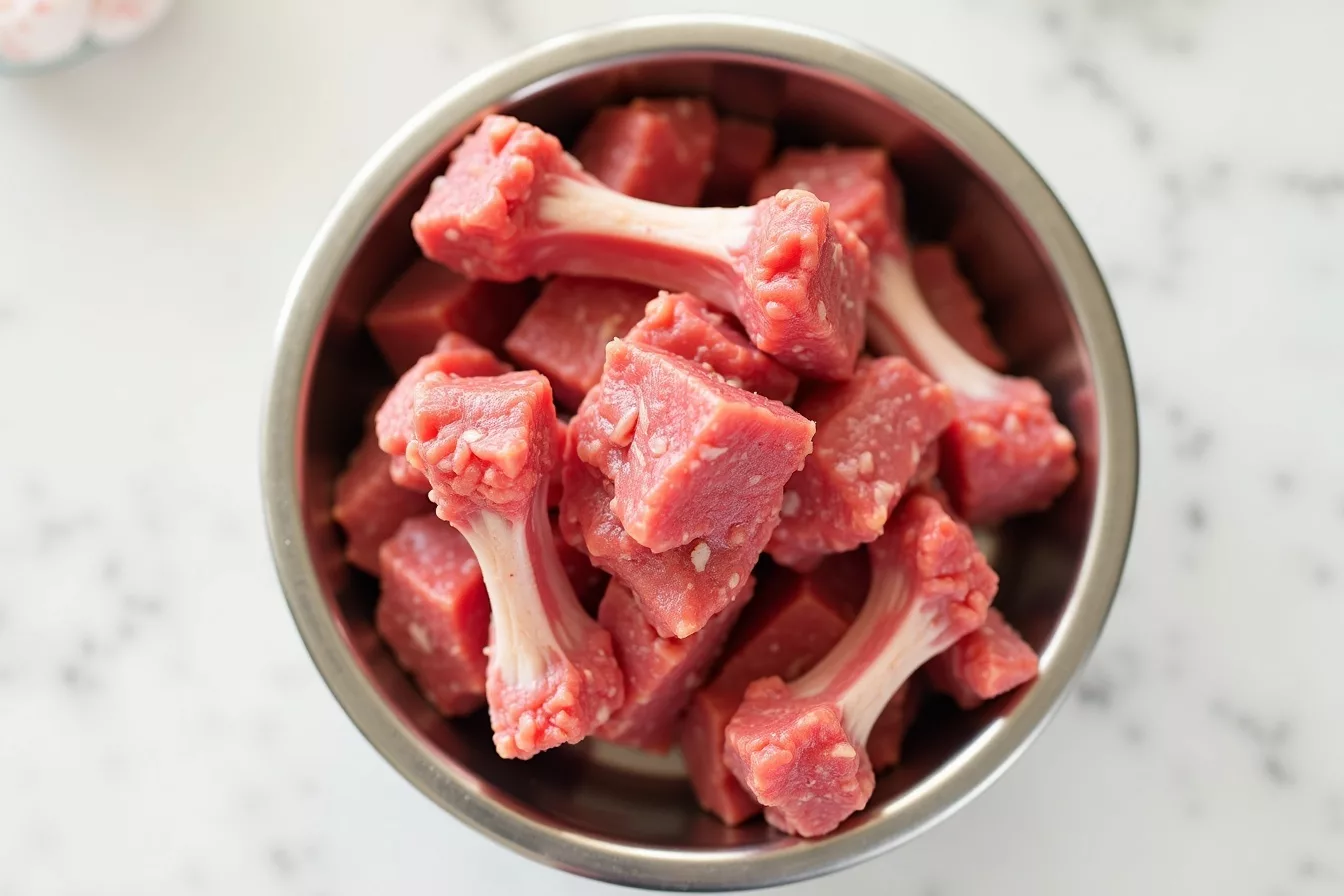

Could raw pet food finally be losing its fringe status? A surprising 2024 survey by the British Veterinary Association revealed that 34% of UK pet owners are now considering or actively feeding raw diets—up from just 12% in 2019. In this article you’ll discover what’s driving this shift, whether the science actually backs it up, and the one critical safety step most raw feeders are skipping.
📊 Key Figures 2025
- 34% of UK pet owners are considering raw diets, up from 12% in 2019 (British Veterinary Association, 2024)
- £287 million projected UK raw pet food market value by 2026, growing at 12% annually (Pet Food Industry Report, 2025)
- 67% of raw feeders report improved coat condition and energy levels in their pets, though only 23% have vet sign-off (PDSA Consumer Study, 2024)
Sources: British Veterinary Association, PDSA, Pet Food Industry Analysis 2025
The “BARF” movement—Biologically Appropriate Raw Food—has exploded across social media and pet forums. Instagram accounts dedicated to raw feeding now attract millions of followers, with owners sharing glossy photos of their pets thriving on uncooked meat, bone, and organ diets. But is this genuinely a health revolution, or savvy marketing feeding on pet owners’ anxieties about processed kibble?
Why Raw Feeding Is Gaining Traction
The appeal is visceral and emotional. Pet owners reason: wolves eat raw prey in the wild, so surely our domesticated dogs and cats evolved to do the same. Why feed them grain-heavy, shelf-stable pellets laden with preservatives?
For Luna, a three-year-old Border Collie from Manchester, the switch made a visible difference. Her owner, Sarah Chen, noticed Luna’s previously dull coat transformed within six weeks. “She had more energy during agility training and fewer digestive issues,” Sarah recalls. Stories like Luna’s circulate endlessly through raw-feeding communities, creating a compelling anecdotal case.
The Royal Veterinary College’s 2024 analysis found that raw diets, when properly formulated, can deliver adequate protein and micronutrients. However—and this is critical—”properly formulated” is doing heavy lifting in that sentence.
The Science Gets Messy
Here’s where mainstream adoption hits a stumbling block. The British Small Animal Veterinary Association warns that 95% of homemade raw diets lack essential nutrients like calcium, iodine, and vitamin E. Most owners eyeballing portions of chicken wings and liver aren’t balancing micronutrients.
Moreover, raw meat carries bacteria (E. coli, Salmonella, Listeria) that pose risks not just to pets, but to their households. The RSPCA recorded a 47% increase in pet-related foodborne illness cases in UK homes between 2022 and 2024, correlating with rising raw feeding popularity.
⚠️ Warning
Raw meat carries Salmonella and E. coli. If your pet develops vomiting, diarrhoea, lethargy, or if household members show unexplained gastroenteritis, contact your vet immediately and mention raw feeding. Pregnant women, young children, and immunocompromised individuals face higher risk.
2025: The Year of “Educated” Raw Feeding
What’s genuinely new in 2025 is a middle ground emerging. Specialist raw pet food companies—Butternut Box, Guru, and Honey’s Real Food—now dominate the market with nutritionally complete, flash-frozen raw products. These are formulated by veterinary nutritionists and tested for pathogenic bacteria.
The British Veterinary Association’s 2025 position statement acknowledges: “Complete and balanced raw diets, when properly sourced and stored, can be nutritionally adequate—but only if owners either use commercially formulated products or work with a veterinary nutritionist.”
✅ Expert Tip
If you’re considering raw feeding, consult your vet first, then invest in a commercial raw product meeting AAFCO standards or work with a Royal Veterinary College-accredited nutritionist. Budget £15-25 weekly for complete raw diets—often comparable to premium kibble—rather than risking nutritional deficiencies with home-prepared versions.
Is Raw Going Mainstream? Not Quite Yet
Despite the hype, raw still represents only 8% of the UK pet food market by volume. Kibble remains dominant, and most vets remain cautious. The PDSA’s 2024 survey found that whilst 34% of owners consider raw, only 12% actively feed it long-term.
The truth is unsexy: raw feeding works brilliantly for some pets under expert supervision, and is unnecessary—even risky—for others when done casually. The trend isn’t “raw vs. kibble”; it’s “informed choice vs. Instagram inspiration.”
The mainstream shift we’re actually seeing isn’t toward raw diets wholesale, but toward owners demanding transparency, higher protein, and fewer additives in whatever they choose. Raw feeding may have sparked that conversation, but premium kibbles and fresh-cooked diets are capturing more of the growth.
So yes, raw feeding is gaining visibility and legitimacy in 2025—but “mainstream” still means most pets eat something else. The real story is owners becoming more discerning about nutrition, period. Have you noticed this shift in your own pet-owning circles? The best next step is a conversation with your vet about your individual pet’s needs, not a algorithm-driven leap into raw.