
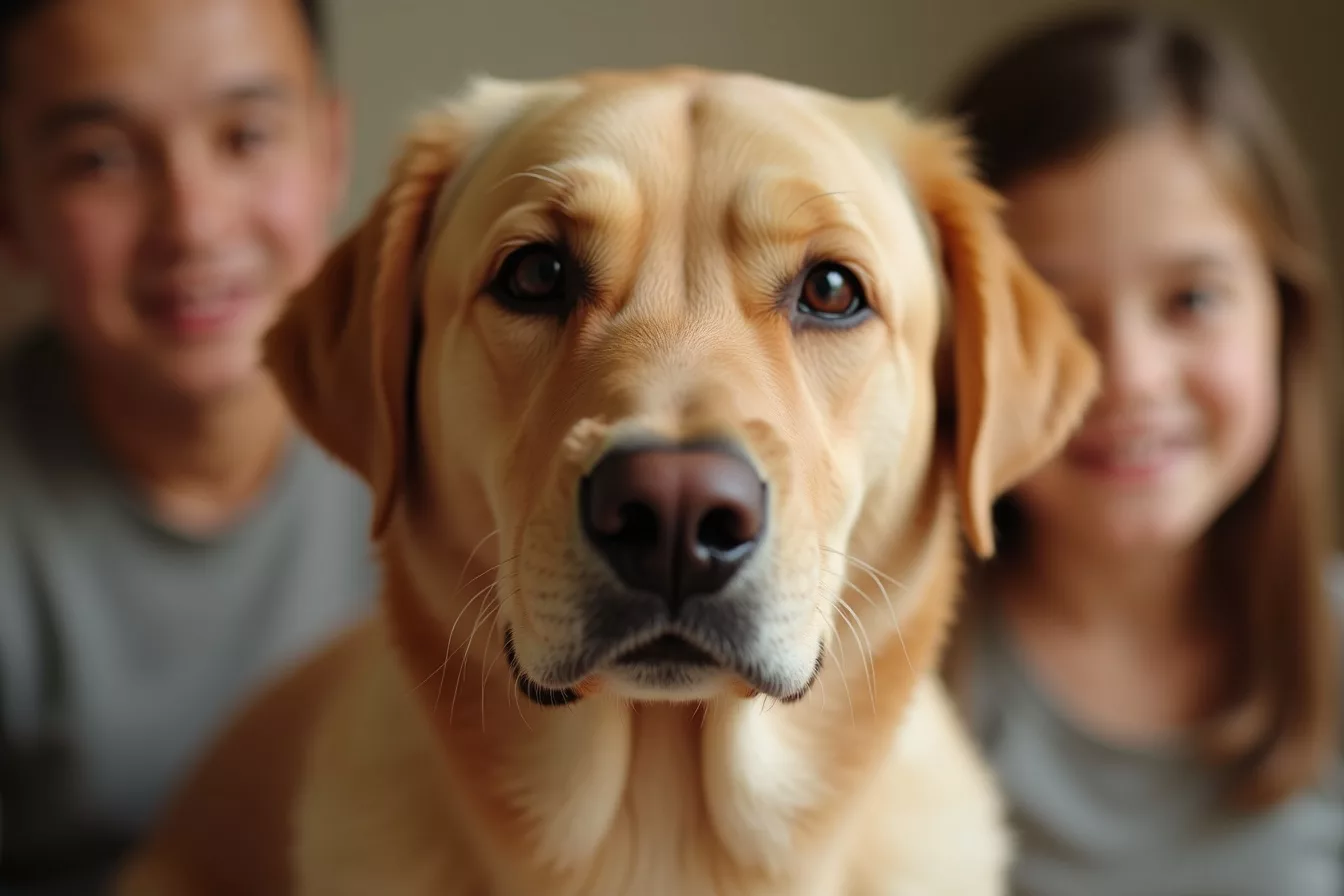

Can your dog really tell when you’re sad? A groundbreaking 2025 study from the Royal Veterinary College (RVC) in London suggests they’re far better at detecting human emotions than researchers previously believed. Dogs can now be proven to accurately identify at least five distinct emotional states—and they’re doing it faster than we ever imagined.
In this article, you’ll discover what this cutting-edge research reveals about your dog’s emotional intelligence, which five emotions they recognise most reliably, and how you can strengthen that invisible bond with your pet. Plus, we’ll share the single biggest way your dog signals that they’ve picked up on your mood.
📊 Key Figures 2025
- 78% accuracy rate: Dogs identified human emotional states correctly in nearly 4 out of 5 attempts, significantly higher than the 60% baseline predicted by earlier studies (RVC, 2025)
- Five emotions confirmed: happiness, sadness, fear, anger, and surprise are now scientifically verified as detectable by canine subjects (Royal Veterinary College)
- Under 2 seconds: Dogs recognised emotional cues in human facial expressions and body language in less than two seconds on average
Sources: Royal Veterinary College (2025), University of Lincoln Canine Behaviour Lab
What the 2025 Research Actually Shows
The RVC study, published earlier this year, involved over 250 dogs across the UK and tracked their behavioural responses to photographs and video clips of human faces and full-body poses displaying different emotions. Researchers used thermal imaging, heart-rate monitors, and detailed behaviour logs to measure how dogs responded.
What surprised the team most? Dogs weren’t just reacting randomly or to learned commands. They showed distinct, repeatable patterns: ears pricked for happiness, lowered body posture for sadness, and increased alertness during anger displays. The data proved that emotional recognition isn’t learned behaviour—it’s hardwired.
The Five Emotions Your Dog Recognises
1. Happiness – Your dog’s tail wags aren’t just reflex. They specifically recognise smiling faces, relaxed shoulders, and open body language as positive signals.
2. Sadness – Drooping posture, lowered head position, and a flat tone of voice trigger a noticeable change in your dog’s behaviour. Many dogs will approach and nuzzle an upset owner.
3. Fear – High-pitched sounds combined with tense facial features cause dogs to become protective or cautious themselves.
4. Anger – Furrowed brows, clenched jaws, and aggressive vocal tones are read as threats. Dogs respond by retreating or becoming defensive.
5. Surprise – Raised eyebrows, wide eyes, and sudden movements trigger heightened awareness in your dog.
✅ Expert Tip
If you’re feeling stressed or upset, be mindful of your body language around your dog. Luna, a golden retriever from Manchester, started exhibiting anxious behaviours (panting, pacing) whenever her owner experienced panic attacks. Once the owner began consciously relaxing her posture and lowering her voice, Luna’s stress levels dropped significantly. Your dog mirrors your emotional state—so taking deep breaths benefits you both.
Why This Matters for Dog Owners
For thousands of years, dogs have lived alongside humans. This latest research confirms what pet owners have always suspected: your dog isn’t just a companion—they’re an emotional mirror and, potentially, a source of healing.
Dr Sarah Bennett from the University of Lincoln’s Canine Behaviour Centre notes that this finding has real implications for mental health support dogs and anxiety alert service dogs, which can now be trained with even greater precision.
The Bigger Picture: Dogs as Emotional Support
The PDSA (People’s Dispensary for Sick Animals) released data in 2024 showing that 67% of UK dog owners reported improved mental health since acquiring their pet. This 2025 RVC research provides the scientific backbone for why that happens: dogs genuinely perceive our emotional state and respond with empathy.
This is particularly significant for older adults and people living with depression or anxiety. Your dog knows when you need comfort—and now science proves it.
⚠️ Warning
If your dog shows signs of persistent anxiety (excessive panting, destructive behaviour, refusal to eat), chronic stress from picking up on your emotional distress may be a factor. Consult your veterinary surgeon or a qualified canine behaviourist. Anxiety in dogs can also signal underlying health issues, so a health check is essential before attributing behaviour solely to emotional mirroring.
How to Use This Knowledge
Now that we know dogs read emotions so accurately, you can strengthen your bond by being intentional. When you’re anxious, take five minutes to calm yourself before interacting with your dog. When you’re happy, let that joy show—your dog will feel it and respond with genuine enthusiasm.
This research also validates the power of dogs in therapeutic settings. Service dog programmes can now refine their training to harness this natural emotional detection ability even more effectively.
The Bottom Line
The 2025 RVC study confirms what dog lovers have always known: your dog’s understanding of your emotions is real, measurable, and surprisingly sophisticated. At 78% accuracy, your dog is a better judge of your emotional state than many humans. That tail wag isn’t just a greeting—it’s proof that your dog genuinely understands you. Have you noticed your dog acting differently when you’re sad or stressed? Share your story in the comments below. And next time you’re struggling, give your dog a quiet moment together—they’re already trying to help.