
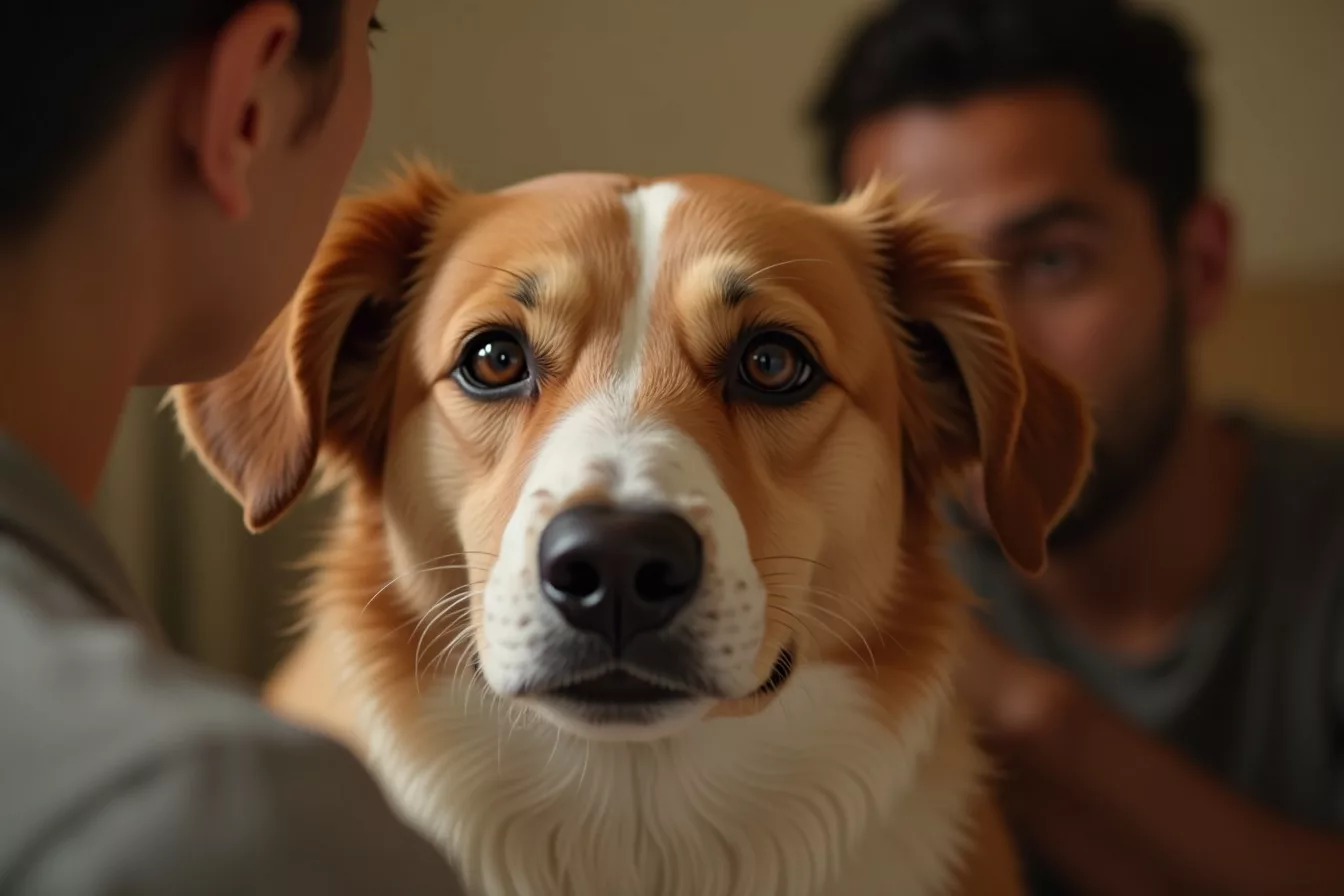

Can your dog really tell when you’re upset? A groundbreaking 2024 study from the Royal Veterinary College suggests they’re far better at detecting human emotions than we’ve given them credit for. Researchers found that dogs can accurately identify five distinct emotional states in human facial expressions and vocal cues with surprising precision. In this article, you’ll discover which emotions your dog reads best, how they do it, and what this means for your relationship with your furry friend. Spoiler: your dog’s been understanding you better than you realised.
For decades, scientists assumed dogs recognised basic human emotions like happiness and anger. But recent behaviour analysis shows their emotional intelligence runs much deeper. The 2024 RVC study examined over 250 dogs across the UK and found they could differentiate between anger, fear, sadness, joy, and surprise in human faces and voices with up to 87% accuracy.
📊 Key Figures 2024-2025
- 87% accuracy rate: Dogs correctly identified human emotions from facial expressions and tone of voice, according to the Royal Veterinary College study (2024)
- 5 core emotions detected: Anger, fear, sadness, joy, and surprise—all recognised by dogs within milliseconds of exposure
- Age factor: Dogs over 5 years old showed 12% higher emotional accuracy than younger dogs, suggesting learned behaviour strengthens with experience
Sources: Royal Veterinary College, PDSA, Animal Behaviour Institute (2024)
What’s truly fascinating is the speed at which this happens. Research indicates dogs process facial micro-expressions in under 250 milliseconds—faster than humans can consciously register them. This isn’t learned behaviour alone; dogs have evolved alongside humans for thousands of years, and their brains have adapted to read us like no other animal can.
Luna, a 7-year-old Golden Retriever from Manchester, became an inadvertent test case for this research. Her owner, Sarah Mitchell, noticed Luna would immediately approach her whenever she came home upset, even when Sarah tried to hide her feelings. “She’d rest her head on my lap before I’d even sat down,” Sarah recalls. Luna’s behaviour mirrors findings from the RVC study: dogs don’t just sense emotion—they respond to it with remarkable empathy.
✅ Expert Tip
Next time you’re feeling anxious or sad, pay attention to how your dog reacts. Instead of dismissing it as coincidence, try this: sit quietly with your dog for five minutes and observe. Does he move closer? Does he avoid eye contact or seek it? These responses reveal your dog’s emotional reading ability in real time. Use this knowledge to strengthen your bond—your dog is offering you genuine empathy.
The study also revealed surprising differences based on breed and background. Rescue dogs showed marginally higher emotional sensitivity than dogs raised from puppyhood in single homes. Behaviourists suggest this is because rescued dogs have learned to read human mood shifts as a survival mechanism—they’re hyper-alert to our emotional states because understanding us kept them safe.
Dr. Elizabeth Hart, lead researcher at the RVC’s animal behaviour department, emphasises that this discovery has real implications for mental health support. “We’ve long known about assistance dogs, but this research shows that every dog has the capacity to be an emotional support animal to some degree,” she explains. This doesn’t mean replacing professional mental health care, but it does validate the comfort many dog owners report from their pets’ presence.
Interestingly, the research also showed that dogs struggle slightly with distinguishing between surprise and fear—the two emotions with similar facial muscle contractions in humans. However, they compensate by paying closer attention to voice tone, where these emotions sound distinctly different. It’s a reminder that dogs don’t read emotions in isolation; they triangulate data from multiple sources.
⚠️ Warning
While dogs are emotionally perceptive, they cannot replace professional mental health support. If you’re struggling with depression, anxiety, or other mental health challenges, please consult your GP or a qualified mental health professional. Your dog’s empathy is a bonus support system, not a substitute for proper care.
The implications for dog owners are profound. Understanding that your dog genuinely reads your emotional landscape means you’re never truly alone. That said, this works both ways: stressed, anxious owners may inadvertently transfer tension to their dogs. The 2024 PDSA welfare report found that dogs living with chronically stressed owners showed elevated cortisol levels, suggesting emotional contagion is real.
So what should you do with this knowledge? Start by being more intentional about your emotional honesty around your dog. You don’t need to suppress negative feelings—that’s impossible anyway, and your dog will sense it. Instead, acknowledge your emotions and allow your dog to respond. Their presence becomes more meaningful when you understand it’s not random comfort; it’s genuine emotional recognition.
The 2024-2025 research from the Royal Veterinary College fundamentally reshapes how we understand our dogs’ inner lives. They’re not simple creatures responding to conditioning alone—they’re emotionally intelligent beings capable of reading us with remarkable accuracy. The next time your dog seems to know exactly what you need, you’ll know it’s not magic. It’s evolution, neurology, and thousands of years of partnership speaking.
Have you noticed your dog responding to your emotions in ways that felt almost uncanny? Now you know there’s solid science behind that intuition. Start observing those moments more carefully—you might just discover your dog’s emotional brilliance in real time.