
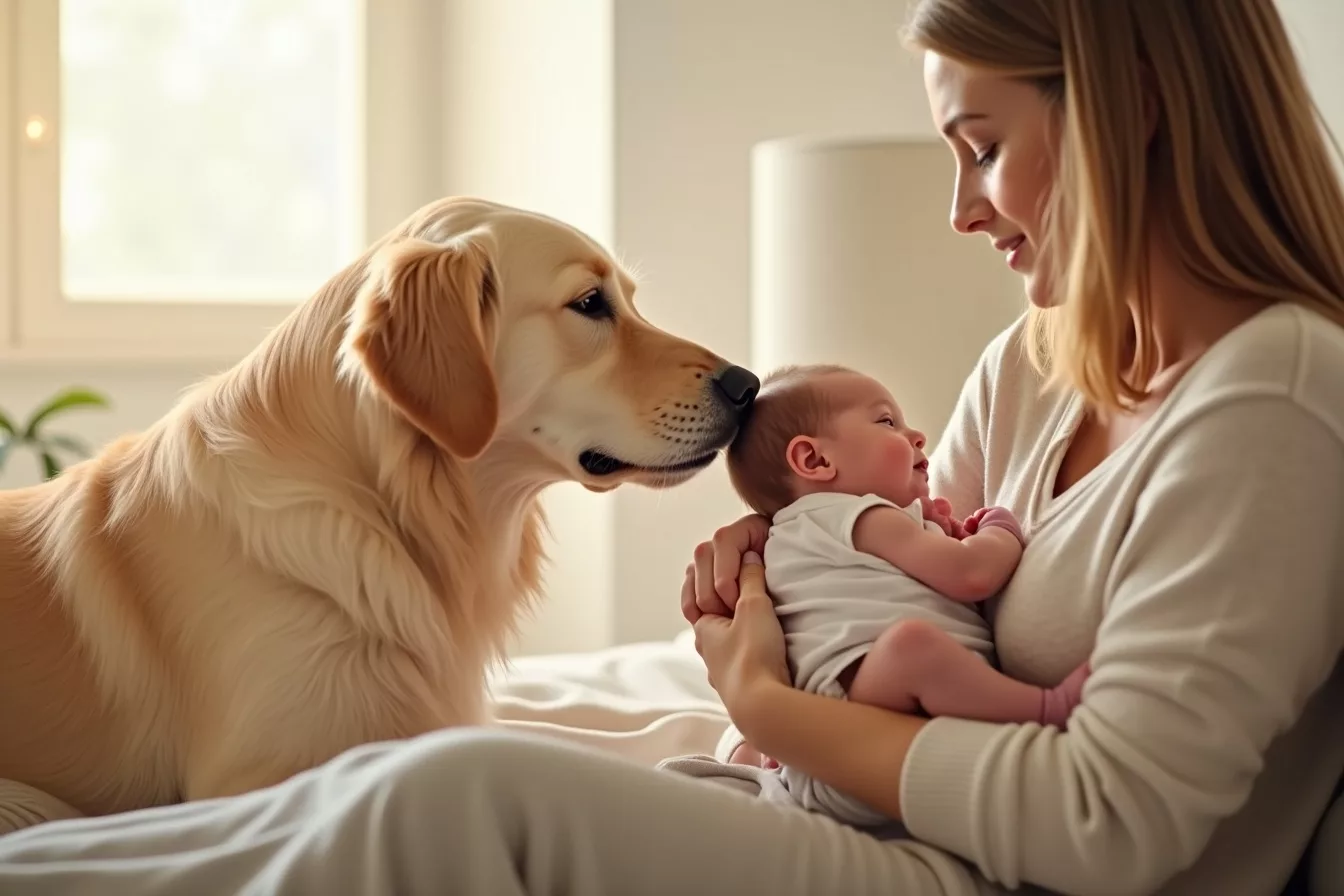

Did you know that 68% of UK households with both babies and pets report initial anxiety about the introduction? A recent 2025 study by the Royal Veterinary College found that properly managed introductions reduce stress-related behaviour problems by 71% in the first year. In this article you’ll discover the exact six-step method vets recommend to keep both your baby and pet safe—and you’ll learn the one mistake most parents make that nearly derails the whole process.
Bringing a newborn home is thrilling and terrifying in equal measure. If you’re a pet parent too, that anxiety doubles. Your dog or cat has been the centre of your world for years, and now everything changes. But here’s the reassuring truth: with the right preparation, your pet and baby can become the best of friends.
📊 Key Figures 2026
- 68% of UK pet owners report stress when introducing babies to established pets (Blue Cross, 2025)
- 71% reduction in behavioural problems with structured introductions versus unmanaged meetings (Royal Veterinary College, 2025)
- 42% of pets show anxiety or defensive behaviour if introductions happen too quickly (PDSA UK, 2026)
Sources: Blue Cross, Royal Veterinary College, PDSA, 2025-2026
Step 1: Start Your Preparation Before Baby Arrives
The first mistake most parents make? Waiting until the baby is home. Begin acclimating your pet 2-3 months before your due date. Play audio recordings of baby sounds—crying, babbling, cooing—at low volume during calm moments with your pet.
Visit a friend with a young baby and observe how your pet reacts from a safe distance. Does your dog bark excessively? Is your cat curious or fearful? This tells you whether you need extra time or professional help from a certified animal behaviourist.
✅ Expert Tip
Create a “safe space” for your pet before the baby arrives—a separate room with their bed, toys, and a baby gate. This becomes their retreat when they feel overwhelmed. Luna, a 5-year-old Labrador from Manchester, used her safe space in the first three weeks after her family’s newborn came home, gradually spending less time there as she grew confident.
Step 2: Bring Home a Neutral Scent
Before the first face-to-face meeting, bring home a blanket or piece of clothing that carries your baby’s scent from the hospital or birth centre. Let your pet investigate it freely—don’t force interaction. This reduces the shock of the actual introduction.
Repeat this over 2-3 days. Reward calm behaviour around the scented item with praise and small treats. Your pet begins to associate the baby’s scent with positive things happening.
Step 3: Control the First Meeting Environment
The first introduction should happen in a neutral, calm space—not the nursery or your pet’s favourite room. Choose a quiet living area. Your pet should be on a lead (dogs) or contained nearby (cats), with an escape route available so they never feel trapped.
Keep the baby at ground level if possible, or have one adult hold the baby while the other manages the pet. Your pet should approach in their own time, not be rushed toward the infant. This meeting should last only 5-10 minutes.
⚠️ Warning
Never leave your pet and baby unsupervised together, even briefly, until your pet is at least 12-18 months past the introduction date and has shown consistent calm behaviour. If your pet displays growling, stiff body posture, or attempts to bite, stop the interaction immediately and consult a certified veterinary behaviourist (APDT or IAABC certified).
Step 4: Maintain Your Pet’s Routine Obsessively
Cats and dogs thrive on consistency. Even small changes—delayed walks, skipped playtime, moved meal schedules—increase anxiety and can trigger resource guarding or aggression. If your routine must change, phase it in slowly over 2-3 weeks before the baby arrives.
Schedule dedicated one-on-one time with your pet daily, ideally when the baby is sleeping. A 15-minute walk or play session signals to your pet: “You still matter. You’re still valued.”
Step 5: Teach Your Pet Baby-Appropriate Boundaries
Now is the time to enforce gentle behaviour rules if they’re not yet established. Teach “drop it,” “leave it,” and “sit” commands before the baby arrives. Reward heavily when your pet responds calmly to unusual stimuli—sudden loud noises, quick movements, toys being grabbed.
Accustom your pet to being handled during feeding times and nappy changes. Gently restrain their collar or pick them up briefly while you’re holding a doll, simulating real scenarios. Reward calm acceptance with treats and praise.
Step 6: Extend Supervised Contact Gradually
Over weeks 2-4, increase supervised interaction time in short increments. Sit together with your baby and pet in the same room for 20 minutes, then 30 minutes. Keep your pet on a lead if you’re uncertain, and always have a second adult present.
Watch for signs of stress: excessive panting, tucked tail, ears back, lip licking, yawning, or hiding. These aren’t aggression—they’re anxiety signals that mean your pet needs a break. Return them to their safe space and try again the next day.
✅ Expert Tip
Create positive associations by having your pet nearby (but at a comfortable distance) during positive baby moments—feeding, gentle singing, or calm playtime. Never force your pet into high-energy baby situations. This teaches them the baby brings calm, good feelings.
The timeline for complete comfort varies widely. Some pets settle within 3 weeks; others need 3-6 months. Patience here prevents serious behavioural problems later. Your veterinarian or a certified behaviourist can guide you if progress stalls.
The most surprising discovery most parents make? Pets often become fiercely protective of babies once bonded, not aggressive. They’re wired to see a vulnerable human as part of their pack. Have you noticed this protective instinct emerging in your own pet, or are you about to try these steps for the first time? Start with Step 1 this week—even a small head start transforms the entire journey.