

Did you know that 68% of indoor cats show signs of boredom-related behaviour that owners completely overlook? A 2025 study by the Royal Veterinary College found that undiagnosed feline boredom is linked to destructive behaviour, weight gain, and stress-related illness in over half of UK households. In this article you’ll discover the seven warning signs your vet wishes you’d noticed sooner—and one surprising behaviour that almost always signals serious mental understimulation. By the end, you’ll know exactly how to tell if your cat is genuinely content or quietly suffering from a dull environment.
📊 Key Figures 2026
- 68% of indoor cats: Display unrecognised boredom behaviours, according to the 2025 Royal Veterinary College Feline Behaviour Survey
- Boredom-related stress: Increases risk of obesity by 47% and behavioural issues by 62% (PDSA Animal Welfare Report, 2025)
Sources: Royal Veterinary College, PDSA, 2025-2026
Sign 1: Excessive Sleeping (More Than 16 Hours Daily)
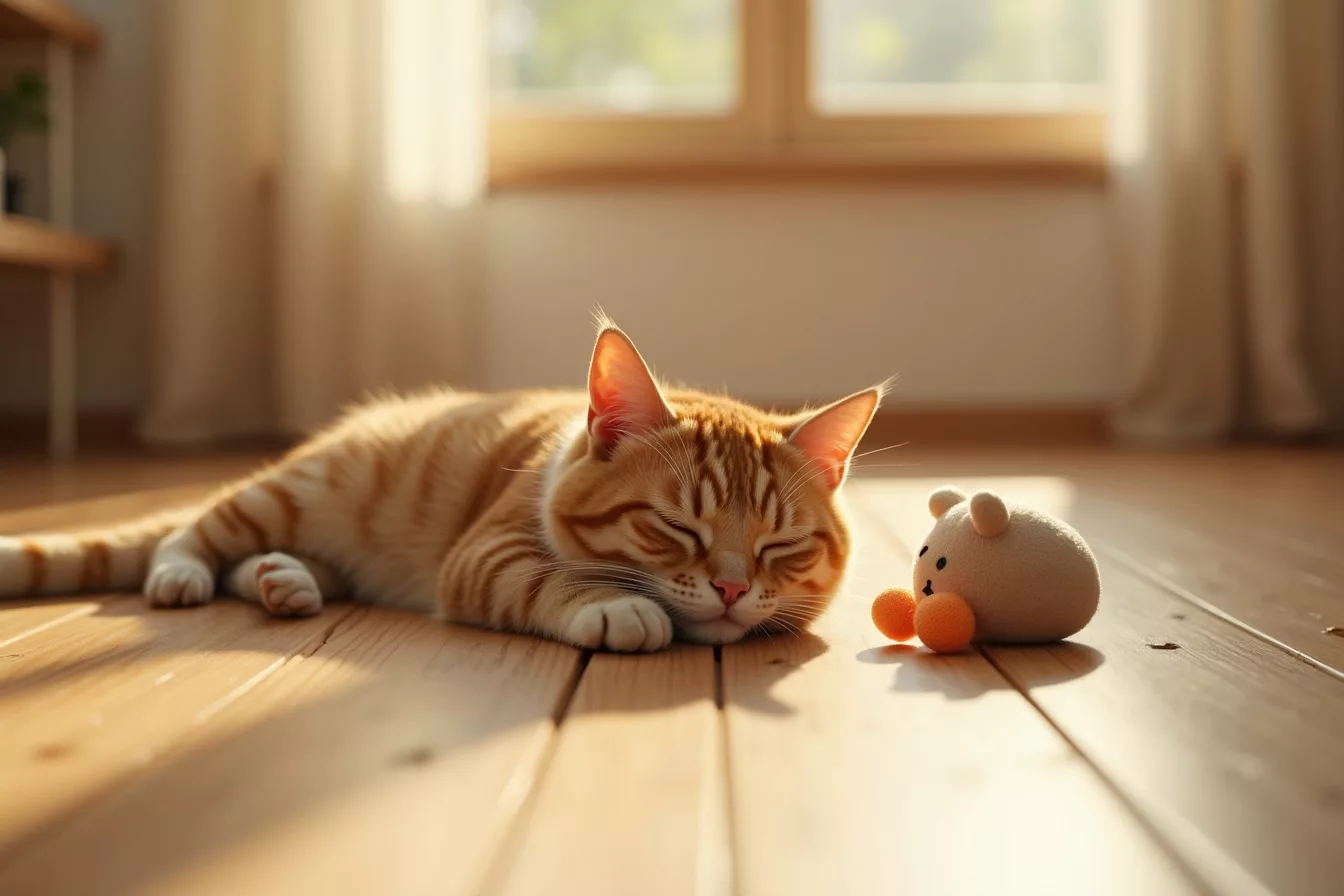
Yes, cats sleep a lot naturally—but there’s a difference between lazy contentment and depression-induced lethargy. If your cat is sleeping 18+ hours and shows no interest in playtime, windows, or interaction, this is a red flag vets call “learned inactivity.”
Mocha, a tabby from Bristol, suddenly began sleeping through entire afternoons without stirring. Her owner thought it was normal until her vet explained that the lack of environmental enrichment had caused Mocha’s brain to essentially “shut down” mentally.
Sign 2: Destructive Behaviour Targeting Furniture and Fabrics
Scratching is normal; obsessive scratching or fabric destruction is not. Bored cats often redirect their hunting instincts onto sofas, curtains, and carpets. This isn’t spite—it’s frustration masked as mischief.
The key difference? A stimulated cat scratches purposefully on designated posts. A bored cat scratches everywhere, often leaving threads and stuffing scattered.
Sign 3: Repetitive, Self-Focused Behaviours
Excessive grooming, tail-chasing, or pacing are all signs your cat’s brain is understimulated. These “stereotypic behaviours” develop when cats lack mental outlets and begin to self-soothe in unhealthy ways.
Unlike play grooming, which is brief and purposeful, boredom grooming often leads to bald patches and skin irritation. Your vet may initially diagnose this as allergies when the real culprit is boredom.
✅ Expert Tip
Introduce a “foraging station” twice daily. Hide small portions of treats inside toilet-paper tubes, crumpled paper, or purpose-made puzzle feeders. This replicates natural hunting behaviour and can reduce stereotypic behaviours by up to 40% within two weeks (RSPCA Enrichment Study, 2024).
Sign 4: Sudden Aggression or Overly Intense Play
Bored cats often become unpredictably aggressive during “play” sessions. Your cat may pounce on your hands, bite hard without releasing, or swat at your face with claws fully extended. This isn’t playfulness—it’s misdirected predatory drive.
If your cat’s play-biting has intensified recently, environmental enrichment (not punishment) is the answer. Your cat isn’t being naughty; they’re desperate for appropriate stimulation.
Sign 5: Obsessive Window Watching Without Engagement
Some bored cats become fixated on windows, birds, and outdoor activity but show no active interest in hunting toys indoors. This “frustrated predator syndrome” happens when cats have visual stimulation but no outlet to practise hunting skills.
Unlike a curious cat that glances at the window, a bored cat may sit motionless for hours, chattering at birds they cannot reach, creating tension in their nervous system.
Sign 6: Reduced Social Interaction or Sudden Neediness
Boredom affects cats differently. Some become withdrawn and avoid their owners entirely. Others become desperately attention-seeking, meowing constantly or demanding cuddles at odd hours. Both extremes signal an unmet need.
A content cat seeks interaction on their own terms. A bored cat’s behaviour pattern feels erratic—demanding attention one moment, ignoring you the next.
⚠️ Warning
If your cat’s behaviour changes suddenly or includes excessive grooming with visible hair loss, loss of appetite, or elimination outside the litter tray, see your vet immediately. These can signal medical issues (thyroid problems, allergies, urinary stress) that mimic boredom. Rule out health problems first, then address enrichment.
Sign 7: Weight Gain Without Dietary Changes
Bored cats are inactive cats. Without mental stimulation, your cat’s metabolism slows, and weight creeps on silently. The 2025 PDSA survey found that 47% of overweight cats had insufficient environmental enrichment as a contributing factor.
If your cat isn’t overeating but is still gaining weight, boredom-induced lethargy is likely the cause. Increasing play and enrichment before dietary restriction is the first step vets recommend.
The Solution: Enrichment Strategy That Works
Vets now recommend the “4-pillar enrichment model”: hunting/foraging outlets, vertical territory (cat trees), sensory stimulation (catnip, puzzle toys), and social interaction tailored to your cat’s personality.
Start with one change—perhaps a window perch or a daily 10-minute play session using an interactive wand toy. Most owners see behavioural improvements within 3-7 days.
Your cat’s mental health matters as much as their physical health. Boredom isn’t just annoying for you; it’s emotionally and physically damaging for them. Have you noticed any of these signs in your own cat recently? The good news is that enrichment fixes often happen quickly—sometimes within days.