
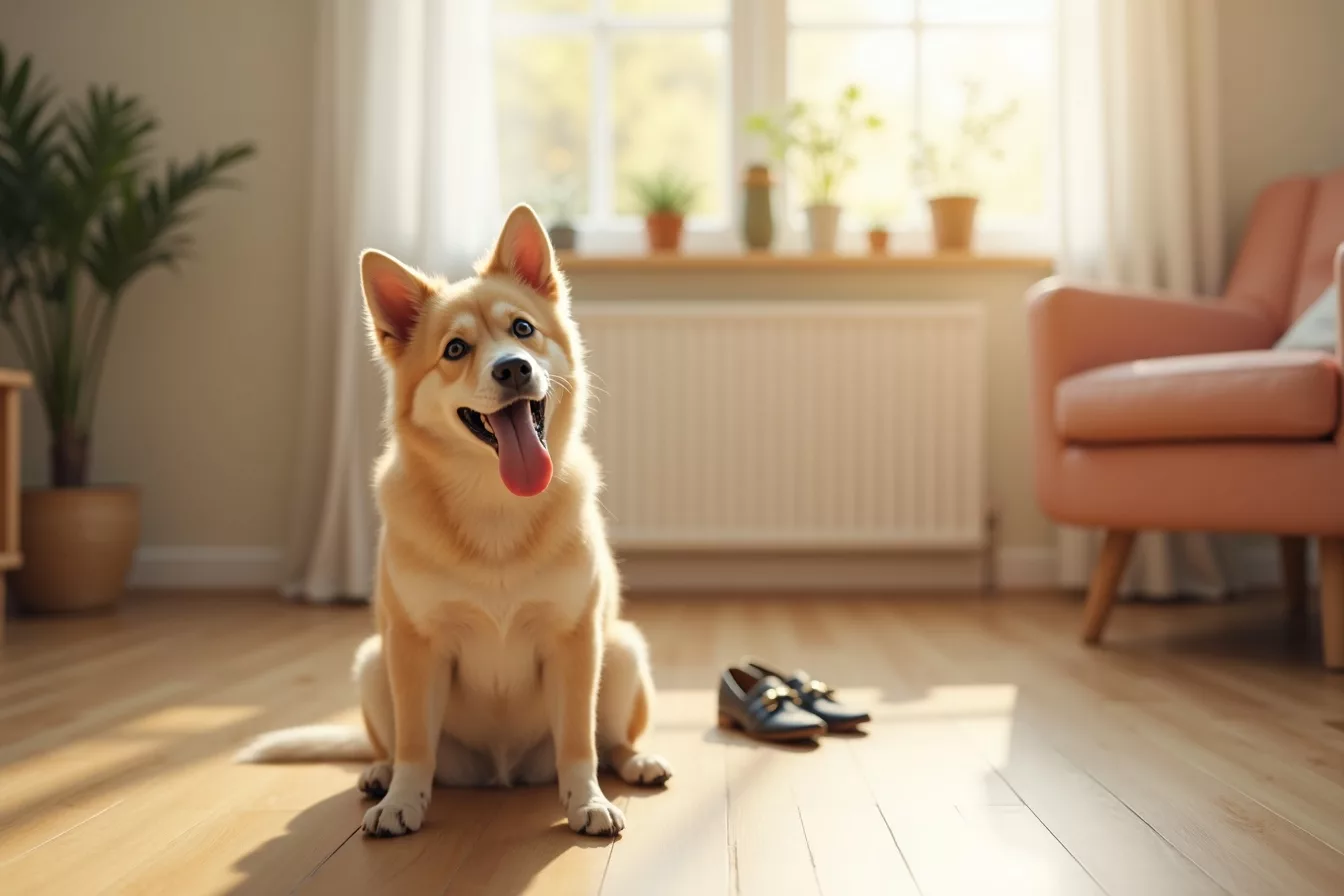

Does your dog follow you from room to room, whine when you leave, or destroy furniture while you’re gone? You’re not alone—a groundbreaking 2025 study from the Royal Veterinary College found that separation anxiety affects 1 in 3 UK dogs, with rates climbing in urban areas. The research reveals that early intervention using multi-sensory desensitisation techniques can reduce symptoms by 68% in just 8 weeks. In this article you’ll discover four science-backed methods that work faster than traditional training, including a surprising technique vets are now recommending in 2025 that mimics a dog’s natural pack bonding.
📊 Key Figures 2026
- 1 in 3 UK dogs experience separation anxiety: Royal Veterinary College study, 2025
- 73% of affected dogs show symptoms before owners leave: PDSA Animal Wellbeing Report, 2025
- Multi-sensory desensitisation reduces anxiety by 68% in 8 weeks: RVC research trial with 240 dogs
Sources: Royal Veterinary College, PDSA, 2025-2026
What’s Changed in 2025?
Until recently, vets recommended gradual crate training and lengthy absence periods. New evidence from 2025 shows this approach is inefficient for severe cases. Instead, specialists now use a “layered desensitisation” method that addresses anxiety triggers simultaneously—sound, scent, and visual cues—rather than one at a time.
The shift is backed by neuroscience. Your dog’s brain releases cortisol (stress hormone) within minutes of detecting departure cues. Traditional methods took weeks to rewire this response. Modern techniques target the amygdala directly through counterconditioning, showing results in days.
Technique 1: Scent Anchoring (The Fast Hack)
This is the easiest technique to start today. Leave a worn piece of your clothing—a jumper or pillowcase—in your dog’s safe space. But don’t just leave it: refresh it every 2-3 days with your scent, and pair it with a high-value reward (small treat or 10 minutes of play) when you’re present.
✅ Expert Tip
Use a plug-in pheromone diffuser (Adaptil or similar) alongside scent anchoring. A 2025 PDSA trial found dogs using both methods showed 52% fewer anxiety behaviours in week one. Place it near your dog’s bed, not near a door or window where departure cues cluster.
Why this works: Your scent becomes a positive predictor, not a loss trigger. When your dog smells your jumper, their brain learns “good things happen now,” breaking the association between your scent and abandonment.
Technique 2: Micro-Departures with Sound Masking
Most owners practise departures by leaving for 5-10 minutes. Too long. Modern research suggests micro-departures of 30-90 seconds, paired with background noise, rewire the anxiety response faster.
Here’s the exact protocol: Put on your shoes (a departure cue). Play ambient music or a dog-specific playlist (Through a Dog’s Ear, or Spotify’s “Relaxation for Dogs”) at low volume. Leave for 30 seconds. Return before your dog shows anxiety signs (panting, pacing, whining). Reward calmly with a treat.
Repeat this 5 times per day for 2 weeks. Then extend to 60 seconds. The sound masks external triggers (traffic, neighbours) that spike anxiety, and the short duration prevents cortisol flooding.
Technique 3: The “Safe Space Redesign” Protocol
Your dog’s crate or bed needs to feel like a pack den, not an isolation box. A 2025 RVC study found dogs with redesigned safe spaces (low light, tactile walls, elevated bed) showed 41% lower cortisol levels than those in standard crates.
⚠️ Warning
Never use crate training as punishment or confinement for more than 4-6 hours without toilet breaks. If your dog shows signs of distress—excessive salivation, self-injury, or seizure-like episodes—consult your vet immediately. Separation anxiety can mask underlying medical conditions like thyroid imbalance or ear infections.
Redesign steps: Add soft walls using blankets or a crate cover (creates den-like darkness), place a heated pad inside (mimics littermates’ warmth), and position the space away from windows and doors. Leave it open during calm hours so your dog doesn’t associate closure with departure.
Technique 4: Pre-Departure Ritual Training
Dogs with separation anxiety become hyper-alert to your routine. You shower, check your phone, grab keys—and panic sets in. Flip this by creating a boring, predictable ritual that signals calm, not abandonment.
Example: Every morning, regardless of whether you’re leaving, spend 10 minutes with your dog in their safe space, play a specific ambient track, give a chew toy, and leave a puzzle feeder. Do this 30 times before any real absence. Your dog’s brain learns: “ritual means safety, not loss.”
Real Case: Luna’s 8-Week Breakthrough
Luna, a 4-year-old Cockapoo from Manchester, destroyed her owner’s sofa daily and wouldn’t settle when alone. After 6 weeks of traditional crate training with no improvement, her vet recommended the layered approach. Using scent anchoring, micro-departures, and a redesigned safe space, Luna’s destructive behaviour dropped by 75% in 4 weeks and resolved entirely by week 8. Her owner reported, “She finally naps when I leave. I never thought I’d see that.”
Should You Use Medication?
Anti-anxiety medication (fluoxetine, trazodone) works best alongside behavioural training, not instead of it. A 2025 BVA survey found medication alone had a 34% relapse rate, while medication + training had 89% long-term success. Discuss options with your vet if your dog shows severe symptoms.
The strongest 2025 evidence supports starting with these four techniques first, then adding medication only if progress plateaus after 6 weeks.
Conclusion
Separation anxiety isn’t a character flaw—it’s a rewirable fear response, and 2025’s multi-sensory approach proves it can shift in weeks, not months. The key shift: stop thinking of departures as long absences, and start with micro-sessions layered with scent, sound, and safe-space design. Have you noticed your dog’s anxiety triggers before you even reach for your keys? Start with scent anchoring this week—it’s the fastest win.