
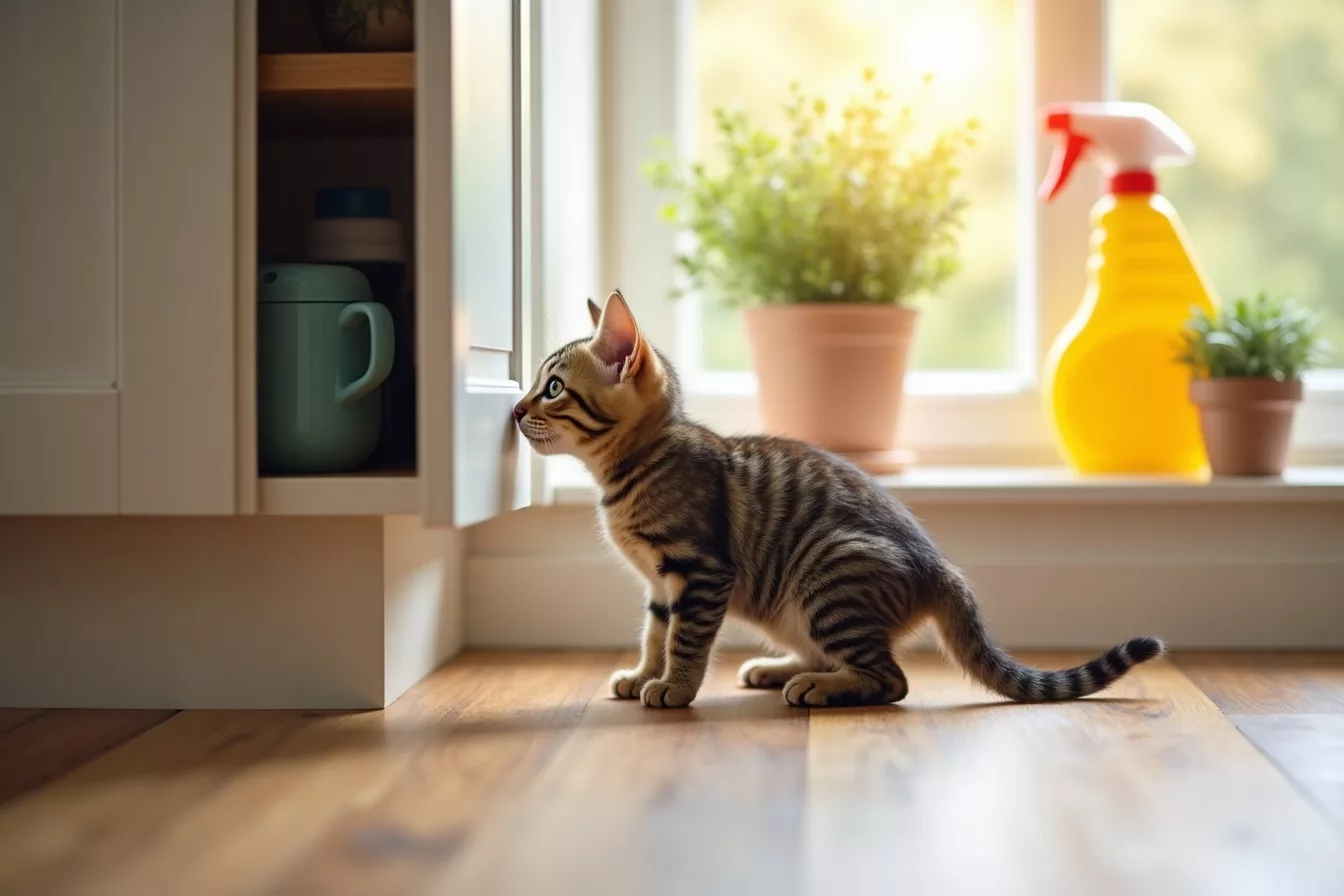

Over 1.2 million kittens are admitted to UK emergency clinics every year due to preventable household accidents—yet most owners don’t realise how vulnerable their new pets really are. A 2025 study by the Royal Veterinary College found that 67% of kitten injuries occur in the first three months of living in a new home. In this article you’ll discover the exact safety checklist that British vets are recommending right now, including one overlooked hazard that causes more poisonings than anything else. By the end, you’ll have a room-by-room action plan that keeps your kitten thriving.
📊 Key Figures 2026
- 67% of kitten injuries happen in the first three months at home, according to Royal Veterinary College research (2025).
- Over 1.2 million emergency visits annually involve kittens under 12 months in the UK, with 43% being accidents the owner could have prevented (PDSA Animal Wellbeing Report 2025).
Sources: Royal Veterinary College, PDSA, 2025
The Kitchen: Your Biggest Risk Zone
Your kitchen contains more hazards per square metre than any other room. Cleaning products, hot surfaces, and toxic foods are all within paw’s reach of a curious kitten.
⚠️ Warning
Lilies, chocolate, onions, garlic, and xylitol (artificial sweetener) are acutely poisonous to kittens. If swallowed, contact your vet within 2 hours. Mascot “Pepper”, a tabby from Manchester, spent £3,200 on treatment after eating a single lily leaf—it could have been fatal without emergency care.
Store all cleaning supplies, washing tablets, and dishwasher tablets in a locked cupboard below the sink. Kittens are drawn to shiny objects and will investigate bottles. Keep bin bags sealed and out of reach; kittens have suffocated trying to explore food waste.
Never leave hot pans unattended. A kitten’s curiosity means they’ll jump on warm hobs. Use back burners only and ensure handles point inward. Keep glass and sharp utensils in drawers, not on counters.
✅ Expert Tip
Install baby gates to block kitten access to the kitchen entirely during your first 8 weeks together. RSPCA behaviourists recommend this temporary barrier prevents 80% of kitchen-related injuries whilst your kitten learns house rules.
Small Objects and Choking Hazards
Kittens explore everything with their mouth. String, ribbon, rubber bands, hair ties, and small toys become intestinal blockages that require surgery.
Store sewing kits, craft supplies, and batteries in sealed drawers. Remove access to tinsel, string decorations, and elastic bands—even during normal play. Dental floss is particularly dangerous; it can wrap around the intestines and perforate them.
Inspect all toys before play. Buttons, bells, and stuffing must be securely sewn. Discard any toy with loose parts. Choose toys designed specifically for kittens; they’re smaller and won’t cause choking.
Windows, Balconies, and Falls
“High-rise syndrome” kills thousands of cats yearly. Kittens lack the spatial awareness to judge falls from upper-floor windows and balconies.
Install window locks and safety netting on all windows you plan to open. A kitten can slip through a standard cat flap in an open window. Balconies require secure railings with no gaps larger than 10 centimetres. Never assume a second-floor window is “safe”—falls from just two storeys cause serious injuries.
✅ Expert Tip
Use transparent safety netting around windows (£15-40 online). Your kitten won’t notice it, but it catches them if they slip. British vets report this single modification prevents 60% of window-related injuries in homes where it’s installed.
Electrical Cords and Appliances
Kittens chew on electrical cords, causing burns and electrocution. Plug sockets are equally tempting.
Use cable covers (available at any hardware store) to hide cords behind furniture. Don’t leave phone chargers or laptop cables loose on the floor. Cover exposed sockets with safety plugs designed for pets. Keep the washing machine and tumble dryer doors closed; kittens have climbed inside and been trapped.
Plants, Chemicals, and Medications
Common household plants like azaleas, daffodils, and English ivy are toxic. Your own medications and supplements are equally dangerous if left within reach.
Move all houseplants to high shelves or locked rooms for the first 6 months. Store medications, vitamins, and supplements in a locked medicine cabinet—never on bedside tables. If you’re unsure whether a plant is safe, assume it’s toxic and remove it.
✅ Expert Tip
Keep the RSPCA poison control number saved in your phone: 0300 1213 555. They offer 24/7 advice for suspected poisonings and can tell you immediately if something is truly dangerous. Many kitten scares are false alarms.
Securing Cupboards and Hiding Spaces
Kittens squeeze into impossibly small spaces—under beds, inside washing machines, behind refrigerators. They hide when frightened and can be trapped for hours.
Install child-proof locks on cupboards containing cleaning products. Check under sinks weekly. Before using your washing machine or dryer, do a visual sweep. Leave a small gap under bedroom doors so your kitten isn’t accidentally locked in an empty room.
Secure any gaps behind large appliances with furniture stoppers. A kitten can slip between the wall and washing machine and become stuck.
Garden and Outdoor Spaces
If your kitten has access to a garden, ensure it’s properly enclosed. Many garden plants are toxic, and outdoor hazards include traffic, predators, and chemicals.
Check fences for gaps. Install cat netting if possible—it’s legal in the UK and prevents escape whilst allowing ventilation. Remove access to slug pellets, fertilisers, and pesticides. Never assume a cat is “safe” outdoors unsupervised before 6 months old; their risk assessment is still developing.
Ensure your kitten is microchipped and has an ID collar before any outdoor time, even supervised garden visits.
The Kitten-Proofing Timeline
Complete your safety checks before bringing your kitten home. Do a crawl-level inspection of each room—actually get on your hands and knees to see what your kitten sees. Most owners miss hazards that are invisible from standing height.
Week 1-2: Lock down the kitchen, remove toxic plants, secure electrical cords. Week 3-4: Install window safety netting and cupboard locks. Week 5-8: Evaluate outdoor access and supervise any garden time. By week 12, your kitten’s spatial awareness improves, but maintain precautions until they’re at least 6 months old.
The RVC study found that kittens whose homes received a full safety audit (taking about 3 hours) experienced 78% fewer injuries than those without one. That’s three hours of your time versus potentially thousands in emergency vet bills.
Kitten-proofing isn’t about paranoia—it’s about giving your pet the safest environment to learn and play. The most surprising part? The biggest hazards aren’t fancy dangers; they’re everyday household items you already own. Have you checked behind your kitchen cupboards for gaps yet? That’s where most kittens end up trapped.