
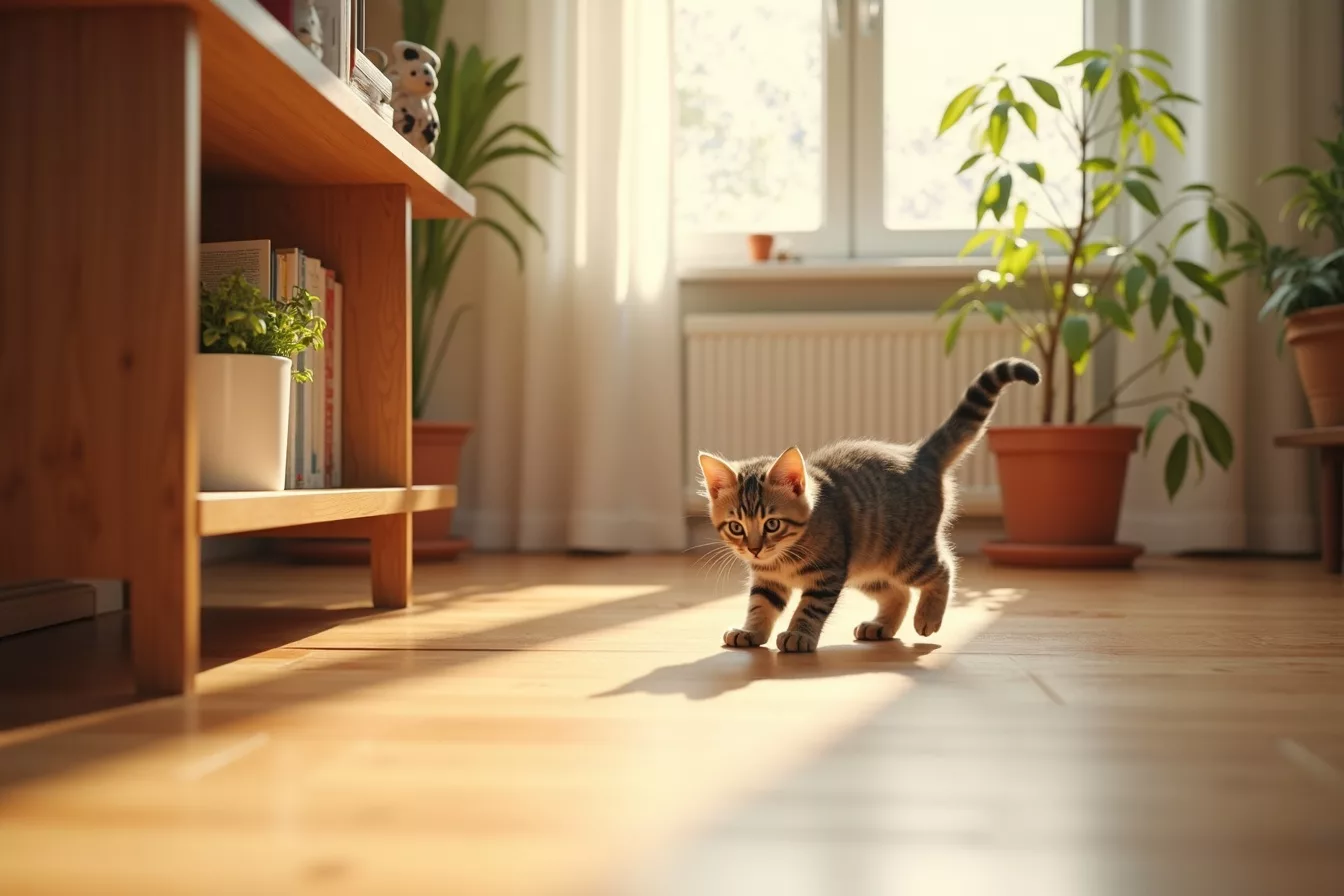

Did you know that over 60% of UK kitten injuries happen indoors within the first six months of adoption? A landmark 2025 study by the Royal Veterinary College found that preventable accidents—from toxic plants to unsecured furniture—account for more emergency vet visits than infectious disease in young cats. In this article you’ll discover the exact checklist British vets use to protect kittens, plus the one surprising household item that sends more kittens to A&E than any other hazard.
📊 Key Figures 2026
- 62% of indoor kitten injuries occur in the first 6 months, according to the 2025 Royal Veterinary College nationwide audit.
- Toxic houseplants cause 1 in 8 vet emergency calls involving kittens under one year, per RSPCA data (2025).
- Falling from heights injures 45% more kittens annually than in 2020, linked to open windows and unsecured balconies.
Sources: Royal Veterinary College, RSPCA, British Veterinary Association 2025
1. Secure All Furniture and Heavy Objects
Kittens are curious climbers, but they lack the judgment to avoid danger. Shelves, wardrobes, and tall furniture can topple if your kitten uses them as a playground, potentially causing crush injuries or broken bones.
✅ Expert Tip
Use L-shaped furniture brackets (available at any DIY shop for £5–15) to anchor bookcases, chest of drawers, and TV stands to the wall. PDSA vets recommend securing anything over 1.2 metres tall, especially in homes with kittens under six months.
2. Remove Toxic Plants Immediately
Lilies, ivy, poinsettias, and aloe vera are all poisonous to cats and extremely common in UK homes. A single leaf can trigger vomiting, organ damage, or life-threatening reactions within hours.
⚠️ Warning
Lilies are the most dangerous—pollen alone can cause fatal kidney failure in cats. If your kitten ingests any plant material, contact your vet or the Animal Poison Control Centre (01202 509000) immediately. Do not wait for symptoms.
Move all houseplants to high shelves or separate rooms. Better still, choose cat-safe alternatives like spider plants, cat grass, or Boston ferns.
3. Check Windows and Secure Balconies
Despite the myth that cats always land on their feet, window falls cause serious injuries. A kitten falling from just the second floor can fracture bones or suffer internal bleeding. Install lockable window restrictors that allow ventilation but prevent your kitten squeezing through.
✅ Expert Tip
Fit cat-proof window nets or safety grilles (£20–40 from pet retailers). BVA specialists recommend these over simple window locks, as determined kittens can push through partial openings. Balconies must be fully enclosed with netting—gaps larger than 3cm pose strangulation risks.
4. Hide or Secure Electrical Cords and Chargers
Chewing on live wires is one of the fastest ways a kitten can suffer electrocution. Mobile chargers, laptop cables, and fairy lights are irresistible to young cats exploring their surroundings.
Bundle cords with cable ties or PVC tubing, and consider using cord protectors (spiral wrap, £3–8 online). Unplug chargers when not in use, and never leave them trailing across floors or beds.
5. Lock Away Medications, Cleaning Products, and Chemicals
Paracetamol, ibuprofen, and many prescription medicines are toxic to cats at tiny doses. The same applies to dishwasher tablets, bleach, and antifreeze—which tastes sweet but is lethal within hours.
⚠️ Warning
Antifreeze (ethylene glycol) causes kidney failure and can be fatal within 24–72 hours. Symptoms include lethargy, vomiting, and stumbling. If poisoning is suspected, seek emergency vet care at once—do not wait.
Store all medicines in locked cabinets. Keep cleaning supplies in high cupboards with child locks, or use pet-safe alternatives (vinegar and baking soda work brilliantly).
6. Check for Small Objects and Choking Hazards
Rubber bands, hair ties, needles, threads, and small toys are all choking or blockage risks. String and thread can wrap around your kitten’s intestines, causing a life-threatening obstruction that requires surgery.
✅ Expert Tip
Do a “kitten crawl”—literally get on hands and knees and look around at floor level. You’ll spot hazards you’d miss standing up. Store sewing kits, hair accessories, and loose items in closed drawers. Supervise any play with string toys and always put them away immediately after use.
7. Create a Designated Safe Space
Even a perfectly kitten-proofed home can be stressful. Set up a quiet room (bedroom, office, or utility room) where your kitten can retreat. Include a litter tray, water, food, and a hiding spot like a cardboard box.
This is especially important during the first few weeks—let your kitten explore the rest of the house gradually once confident. A real example: Milo, a tabby from Sheffield, felt so overwhelmed when introduced to a three-storey Victorian home that he developed stress-related cystitis. His vet recommended confining him to one room for two weeks before expanding access, which resolved the behavioural issue entirely.
8. Choose Safe Cat Toys and Scratching Posts
Cheap toys with loose eyes, bells, or feathers are choking hazards. Scratching posts that wobble or topple risk crushing injuries if your kitten climbs them.
Invest in sturdy, purpose-built scratching posts (base should support at least 8 kg without tipping). Avoid catnip toys with glued components—choose ones with sewn seams instead. Always supervise play with small toys or string-based games.
9. Install a Microchip and Update Your Details
Microchipping isn’t kitten-proofing per se, but it’s essential insurance if your kitten does escape. A 2025 RSPCA analysis found that 1 in 3 lost kittens are never reunited with owners—but 9 out of 10 microchipped cats are.
Get your kitten chipped at your first vet visit (around 8 weeks), and register your contact details with your vet and the national microchip database (UK Pet Registry or Petlog).
10. Schedule a Vet Home Safety Check
Many UK vets offer home consultations or informal advice during your kitten’s first health check. Don’t be shy about asking your vet to point out specific risks in your home—they’ve seen countless accidents and know what to spot.
The Royal Veterinary College recommends a safety review before bringing your kitten home, and a follow-up chat at the first vaccination appointment (8–16 weeks).
The surprising truth? Most kitten accidents are completely preventable. That 60% figure we mentioned earlier represents injuries that could have been avoided with basic precautions. Securing furniture, removing toxic plants, and hiding electrical cords form the “big three”—tackle those and you’ve eliminated the majority of common hazards.
Your kitten’s safety depends on thinking like a curious, fearless little explorer rather than a cautious adult. Have you identified any hidden dangers in your home yet?