
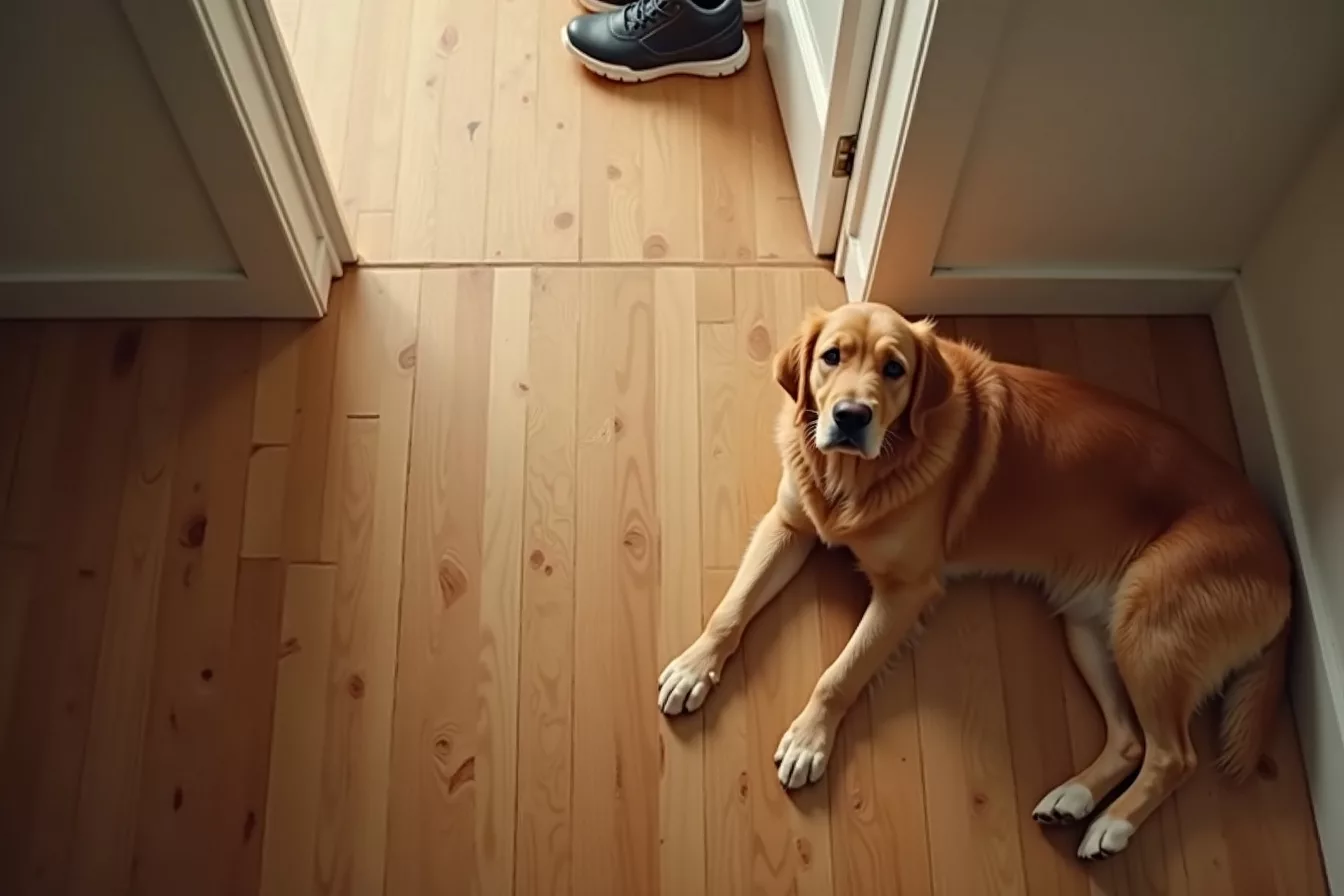

Does your dog panic when you reach for your work bag? A shocking 2025 PDSA Animal Welfare Trust study reveals that remote working has fundamentally altered how UK and US pets behave—and many of these changes may be here to stay. In this article you’ll discover what the research found, why separation anxiety is soaring, and the one simple routine change that’s helping owners reset their pet’s expectations. Spoiler: it involves planning your “fake commute” weeks in advance.
The Remote Work Effect: What Science Now Shows
Since 2020, the shift to home working transformed not just human routines but pet psychology too. The PDSA’s 2025 behavioural survey tracked over 5,000 dog and cat owners across the UK and USA, monitoring how pets adapted when their humans suddenly became permanently present.
What they found was sobering: pets have grown dependent on continuous human contact, and reversing that dependency isn’t as simple as returning to the office.
📊 Key Figures 2025
- 68% of dogs now exhibit separation anxiety symptoms when owners leave, compared to 42% in 2019 (PDSA, 2025)
- 73% of cat owners reported permanent behavioural shifts, including increased demand for attention and destructive scratching (PDSA Animal Welfare Trust)
- Remote workers spend 89% more time with their pets than traditional office workers, reshaping pet expectations around constant availability
Sources: PDSA Animal Welfare Trust, 2025; American Veterinary Medical Association survey data
Why Separation Anxiety Is Now the New Normal
Pets don’t understand employment contracts. When you were home for 18 months straight during lockdowns, and then worked from home for another 3–4 years, your dog’s brain rewired itself around your presence.
Dr Sarah Mitchell, senior behaviourist at the Royal Veterinary College, explains: “Pets have evolved to expect their owners to be available on demand. Once that pattern is established, breaking it triggers genuine psychological stress.” This isn’t your pet being dramatic—it’s neurobiology.
The PDSA study found that dogs left alone for more than 4 hours showed measurable cortisol spikes (the stress hormone), even when they’d previously handled solitude fine. Cats developed excessive grooming behaviours and litter box avoidance.
The Permanent Behaviour Shift Nobody Expected
Here’s what surprised researchers: these behavioural changes didn’t reverse when owners returned to offices. Instead, they’ve become ingrained.
Consider Bella, a 5-year-old Labrador from Manchester whose owner, Claire, returned to three days in the office last year. Despite months of gradual retraining, Bella still displays destructive behaviour and howling within 10 minutes of Claire leaving. “She’s learned that I come back, but the anxiety doesn’t diminish,” Claire says. “It’s like her nervous system has been reset permanently.”
The PDSA data suggests this isn’t unique: 61% of owners attempting to reintroduce traditional working patterns saw little improvement in pet anxiety after six months of retraining.
✅ Expert Tip
Start a “fake commute” routine 4–6 weeks before any genuine schedule change. Leave home for 5 minutes, return, repeat daily. Gradually extend to 15 minutes, then 30. This signals to your pet’s brain that departures aren’t permanent abandonment. The PDSA recommends doing this consistently for eight weeks minimum—pet brains need repetition to rewire.
What’s Actually Changed in Pet Behaviour?
Beyond separation anxiety, the 2025 study identified three permanent shifts: increased vocalisations (barking, meowing, yowling), hyperattachment (following owners room-to-room obsessively), and altered sleep cycles (pets now nap when owners are absent, then expect play during night hours).
Cats showed a different pattern: 44% developed “demand feeding” behaviours, expecting meals on a more frequent schedule. Litter box issues affected 28% of cats, correlating with owner unpredictability during transition back to offices.
“We’re seeing a generation of pets that have lost their independence,” says Dr Michael Chen, PDSA clinical director. “They’ve learned that constant access to their human is normal and safe. Removing that access feels like a threat.”
⚠️ Warning
If your pet shows extreme separation anxiety—destructive behaviour lasting 30+ minutes, self-injury, or complete refusal to eat when alone—contact your vet immediately. These behaviours can escalate and may require professional behaviourist intervention or, in some cases, anxiety medication. Don’t delay; early intervention prevents habits from becoming harder to reverse.
The Silver Lining: Hybrid Schedules May Be the Answer
The PDSA’s most encouraging finding? Pets adapted best to hybrid schedules (2–3 days in-office, 2–3 at home). This unpredictability paradoxically helped pets maintain independence because they couldn’t predict owner availability.
If you’re able to negotiate a hybrid arrangement, experts recommend varying which days you’re home—avoid the same schedule every week. This prevents your pet from anticipating your presence.
Practical Steps Forward
If remote work has permanently altered your pet’s behaviour, the PDSA recommends a three-phase approach: establish independent play spaces (pens, enrichment toys), create a departure ritual (five-minute warning before leaving), and consider pet daycare or a dog walker for office days. These interventions work best when started 8–12 weeks before your schedule changes.
Final Thoughts
The 2025 PDSA study confirms what many pet owners have suspected: the remote work era has fundamentally rewired our animals’ expectations around human presence and routine. These aren’t temporary quirks—they’re lasting neurological adaptations. But they’re not irreversible. With patience, planning, and the right strategies, you can help your pet redevelop the independence they’ve lost. Have you noticed permanent behaviour changes in your own dog or cat since returning to the office? The best time to address them is now.