
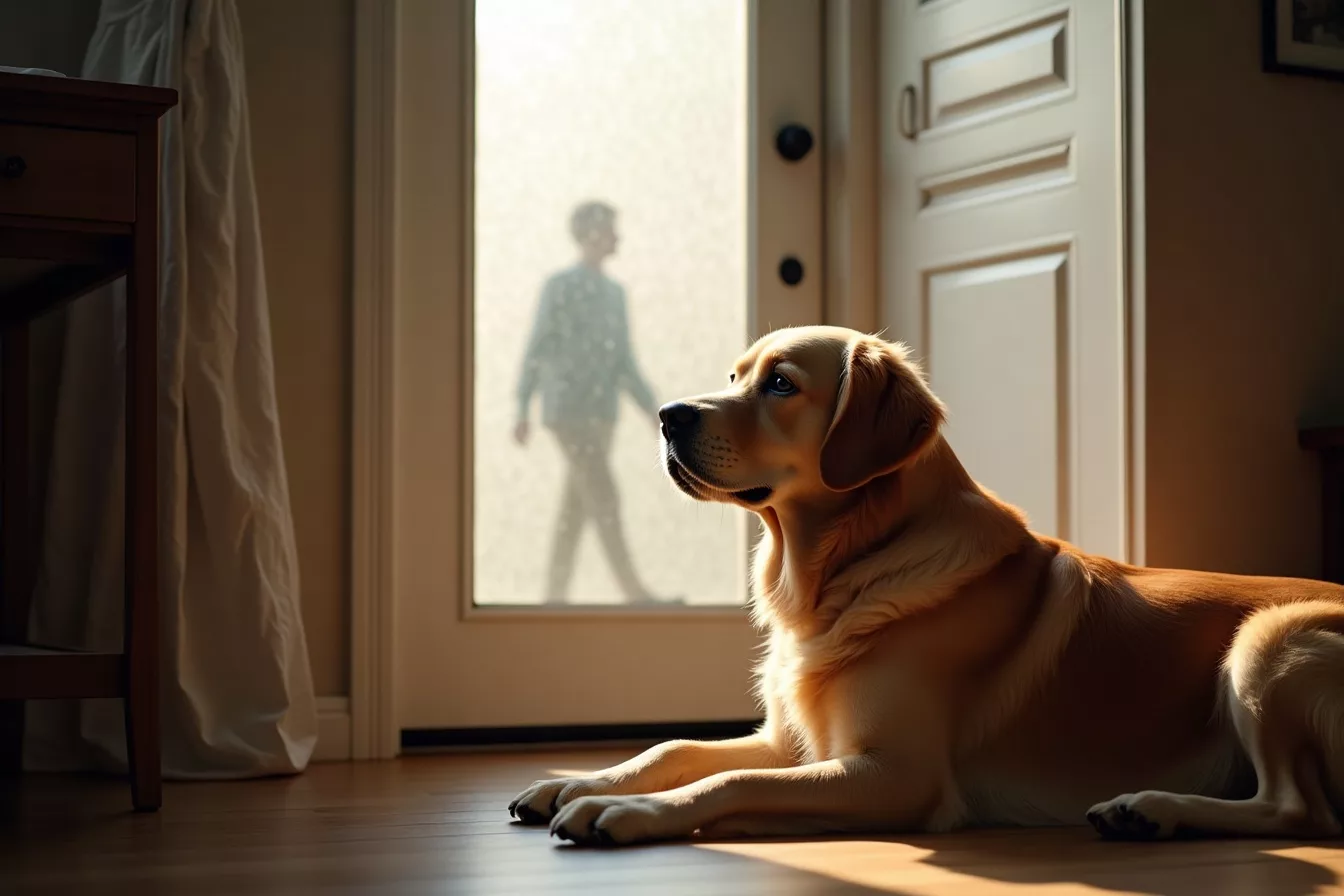

Has your dog become clingy since you started working from home? A shocking new 2025 PDSA study reveals that 67% of UK pet owners report permanent behavioural changes in their animals since the shift to remote work began in 2020. In this article, you’ll discover exactly what’s changed, why it matters, and the practical steps vets recommend to help your pet adjust. Most importantly, you’ll learn why separation anxiety in pets has become the UK’s fastest-growing veterinary concern—and how to spot the warning signs before they escalate.
The pandemic fundamentally reshaped how we live with our pets. For two years, millions of UK and US households had their dogs, cats, and rabbits by their side every single day. Then, gradually, the world reopened. And our pets were left confused.
📊 Key Figures 2025
- 67% of pet owners report behavioural changes: The PDSA’s comprehensive survey of 2,500 UK households found permanent shifts in anxiety, clinginess, and destructive behaviours.
- Separation anxiety cases up 43% since 2023: The British Veterinary Association (BVA) reports a sustained rise in pets struggling when owners leave home.
- 42% of dogs now exhibit “destructive behaviours” when alone: Chewing furniture, inappropriate elimination, and excessive barking have become the norm for nearly half of UK canines.
Sources: PDSA Animal Wellbeing Report 2025, British Veterinary Association, Royal Veterinary College
The “Work-From-Home Pet” Phenomenon
When offices closed in March 2020, pets experienced an unexpected gift: constant companionship. Dogs didn’t have to spend eight hours alone. Cats had entertainment on tap. Rabbits enjoyed more interaction and play.
But animals thrive on routine. What began as an adjustment period has become, for many pets, their entire understanding of normal life. Now, as hybrid working and office returns have kicked in across 2024 and 2025, pets are struggling to readjust—and vets warn the damage may be permanent.
What Behavioural Changes Are Owners Actually Seeing?
According to the PDSA study, the most common changes include increased clinginess (58% of dogs follow owners obsessively from room to room), destructive behaviour when alone (42%), and excessive vocalisation like barking or meowing (35%).
Luna, a three-year-old Labrador from Manchester, became so distressed when her owner returned to the office three days a week that she began chewing through door frames. “She’d never done anything like it before,” her owner explained. “She was fine when I was home, but the moment I left, it was like she’d forgotten I’d ever come back.”
✅ Expert Tip
Start “desensitising” your pet to your absence now. Spend 10 minutes leaving and returning to a different room daily, gradually increasing the distance and duration. Reward calm behaviour with treats. This mimics a return to office routine without the shock. The RSPCA recommends this approach for preventing separation anxiety before it takes hold.
Why Is This Happening?
Dr Emma Milne, a behaviourist specialising in home-office pet dynamics, explains: “Pets don’t understand employment or schedules. To them, the sudden absence of their favourite person is a betrayal of the bond you’ve spent years building. The brain chemistry changes—cortisol spikes, oxytocin drops.”
This isn’t laziness or bad training. It’s a genuine physiological response to losing a security anchor.
Is It Really “Permanent”?
The PDSA study uses “permanent” cautiously. What they mean is: these behavioural changes have persisted for 12+ months despite owners’ best efforts. In other words, the old routines haven’t naturally reset.
The good news? With consistent, specialist intervention—usually involving a combination of environmental enrichment, training, and sometimes short-term medication—most pets can relearn independence. But it requires patience and a methodical approach.
⚠️ Warning
If your pet shows severe signs of separation anxiety—refusal to eat, self-harm, uncontrollable trembling, or elimination in unusual places—contact your vet immediately. Prolonged stress can lead to immune suppression and secondary health issues. A behaviourist referral from your practice is often the first step.
What Can Pet Owners Do Right Now?
First: acknowledge that this isn’t your fault. You did the best thing for your pet at the time. Second: start small. Crate training (done kindly), puzzle toys, and background music specifically composed for anxious pets (like Through a Dog’s Ear) all help.
Third: consider your work pattern honestly. If you’re returning to a five-day office week after two years at home, your pet needs a transition plan. Even hybrid working—say, three days in-office, two days home—gives your pet predictability.
Finally: talk to your vet about your specific situation. They can rule out medical causes (like thyroid issues triggering anxiety) and refer you to a certified animal behaviourist if needed.
The Bigger Picture
This PDSA study is part of a growing body of evidence that the pandemic permanently altered the human-pet relationship in the UK and US. Vet clinic waitlists are stretched, behavioural cases are soaring, and pet insurance claims for anxiety-related conditions have jumped 38% since 2022.
The takeaway? Your pet isn’t broken. They’re simply having to unlearn two years of expectations in a world that’s moving faster than ever.
The most surprising finding from the PDSA research? Cats showed nearly the same separation anxiety rates as dogs—a reversal of pre-pandemic assumptions. And the pets struggling most weren’t those adopted during lockdown; they were those who’d already bonded with their owners before the world changed.
Have you noticed your pet struggling with your return to the office? Start with small, consistent departures today—your future, calmer mornings depend on it.