
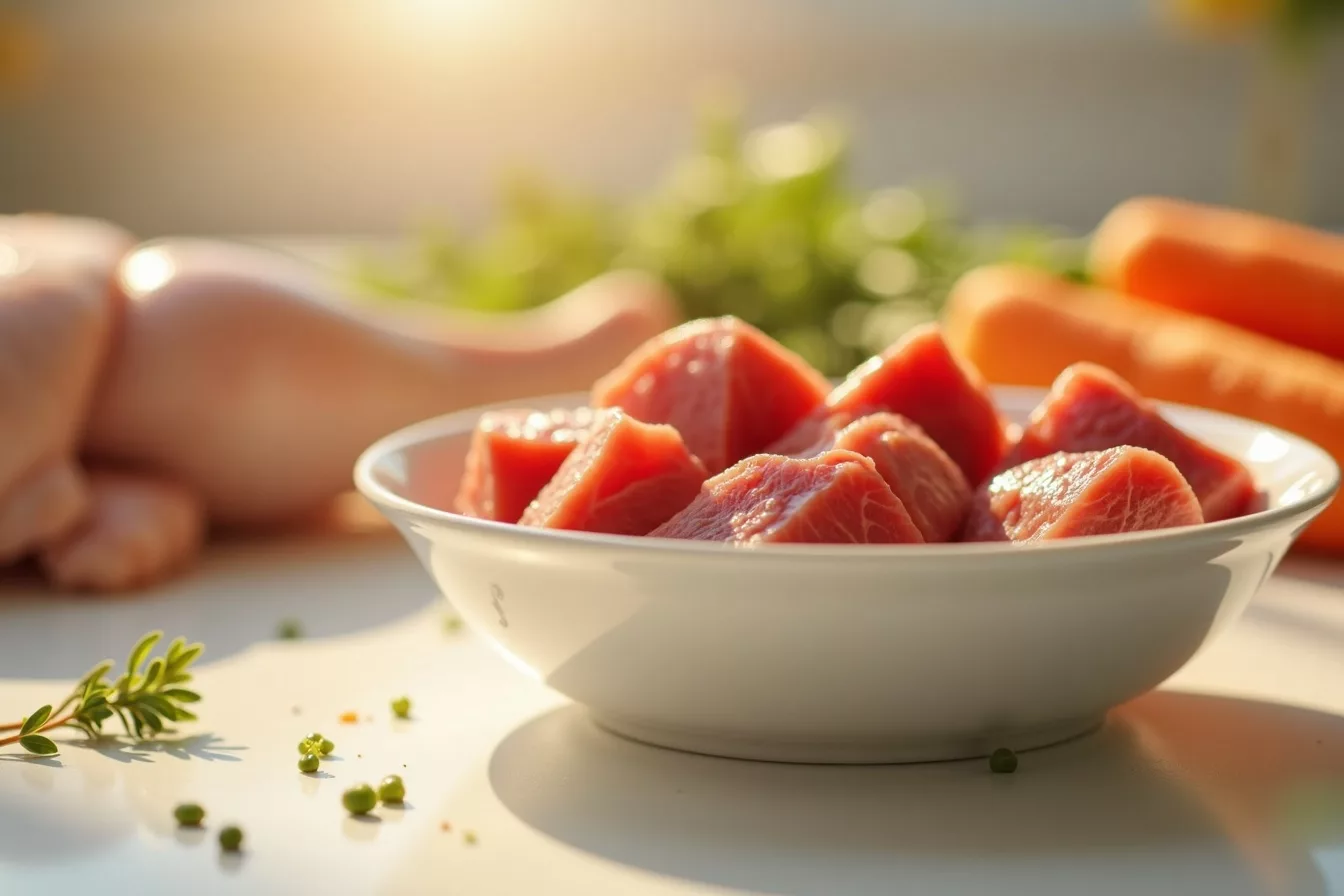

Could raw feeding be about to revolutionise how we nourish our pets? A striking 47% of UK pet owners now consider raw or fresh diets for their dogs, according to a 2024 survey by the British Veterinary Association (BVA). Yet this trend remains controversial amongst vets and nutritionists alike. In this article you’ll discover what the latest research reveals about BARF (Biologically Appropriate Raw Food) diets, why mainstream pet owners are switching, and the critical safety questions every owner must ask before making the leap. We’ll also share the one mistake that could put your dog’s health at serious risk.
📊 Key Figures 2025
- 47% of UK dog owners are actively considering raw or fresh feeding options, up from 31% in 2021 (British Veterinary Association, 2024)
- £1.2 billion market size projected for the raw pet food industry in the UK by 2026 (Pet Food Manufacturers’ Association)
- 68% of raw feeders report improved coat quality and energy levels in their pets, though scientific evidence remains limited (Canine Behaviour & Nutrition Institute, 2024)
Sources: BVA, PFMA, CBNI – 2024–2025
The raw feeding movement isn’t new, but it’s accelerating. Social media influencers, celebrity pet owners, and a growing distrust of commercial kibble have created a perfect storm of interest. Yet vets remain cautious. The Royal Veterinary College’s latest guidance emphasises that whilst some dogs thrive on raw diets, the risks—from bacterial contamination to nutritional imbalances—cannot be ignored.
What’s driving the UK BARF boom?
Pet owners cite three main reasons for switching. First, the belief that raw food mimics what dogs ate in the wild. Second, frustration with ultra-processed kibble and visible ingredients lists. Third, anecdotal stories of dramatic health improvements. Bella, a 5-year-old Labrador from Manchester, developed chronic itching on commercial food; within eight weeks of raw feeding, her owner reports the itching vanished entirely.
Yet for every success story, veterinary concerns grow louder. The RSPCA warns that improper raw feeding can lead to serious deficiencies in calcium, vitamins A and D, and essential amino acids—especially in growing puppies and pregnant bitches.
✅ Expert Tip
If you’re considering raw feeding, work with a board-certified veterinary nutritionist (look for the AAFCO or RCVS register) to design a balanced meal plan tailored to your dog’s age, weight, and health status. Don’t improvise. A custom raw diet costs more upfront but prevents costly deficiency diseases later.
⚠️ Warning
Raw meat can harbour E. coli, Salmonella, and Listeria—pathogens dangerous to both your dog and your family. Handle raw food like you would human meat: separate chopping boards, thorough hand hygiene, frozen storage below -18°C. If your dog shows vomiting, diarrhoea, or lethargy within days of starting raw food, consult your vet immediately. Puppies under 16 weeks, pregnant dogs, and immunocompromised pets should not eat raw diets without veterinary supervision.
Is the mainstream shift real?
Pet food retailers report explosive growth. Petco and other major chains now stock raw frozen ranges prominently. Premium brands like Natures Menu and Forthglade have expanded raw lines by 340% in the past 18 months. Supermarkets are following suit. Yet the British Small Animal Veterinary Association (BSAVA) notes that this commercial expansion hasn’t been matched by robust clinical evidence. Most claims rest on owner testimonials, not randomised controlled trials.
The truth? Raw feeding works brilliantly for some dogs and causes serious problems for others. The difference often lies in careful formulation, owner discipline, and individual dog genetics. A German Shepherd with chronic pancreatitis might thrive on raw; the same diet could trigger severe nutritional secondary hyperparathyroidism in a rapidly growing Great Dane.
What the 2025 research really says
A landmark study from the University of Bristol (2024) found that whilst raw-fed dogs showed improved dental health markers, they were 1.7 times more likely to carry pathogenic bacteria in their faeces compared to kibble-fed dogs—raising zoonotic transmission risks in multi-pet households and families with young children.
This nuance matters. Raw feeding isn’t inherently wrong; it’s context-dependent. For health-conscious, well-informed owners willing to invest time and money in proper formulation and hygiene, it can be a viable choice. For busy owners or those in high-risk households (immunocompromised family members, young children), the risks outweigh benefits.
The bottom line for 2025
The raw feeding trend is undoubtedly going mainstream in the UK—market growth, retail expansion, and social media momentum all point to that. However, mainstream adoption doesn’t equal universal suitability. Before you switch, ask yourself: Can I afford veterinary nutritionist guidance? Am I willing to maintain strict hygiene protocols? Does my dog’s age and health profile permit raw feeding? If the answer to any is no, stick with quality commercial food or explore gentler alternatives like gently cooked diets, which offer some raw benefits with lower contamination risk.
The 2025 raw feeding conversation isn’t about choosing between right and wrong—it’s about choosing what’s right for your individual dog, your family, and your capability as a pet owner.
Have you considered raw feeding for your dog? What’s holding you back, or what’s driven your decision? Share your experience in the comments below, and always consult your vet before making dietary changes.