
Did you know that over 68% of UK dog owners admit they’ve accidentally fed their dog something toxic? A 2025 study by the Royal Veterinary College found that chocolate, grapes, and xylitol-containing foods are responsible for 43% of pet poisoning emergencies in the UK and US combined. In this article, you’ll discover which everyday foods pose the biggest threat to your best friend—and the surprising reason your dog finds them irresistible. By the end, you’ll know exactly what to remove from your kitchen right now.
📊 Key Figures 2026
- 68% of UK dog owners: Have unknowingly given their dog something potentially harmful (PDSA Pet Care Survey, 2025)
- 43% of emergency vet visits: Linked to food poisoning from chocolate, grapes, onions, and xylitol (Royal Veterinary College, 2025)
- 1 in 7 dogs: Suffers from food-related illness each year in the US (American Veterinary Medical Association, 2026)
Sources: PDSA, Royal Veterinary College, AVMA, 2025-2026
Why Your Dog Finds These Foods Irresistible (Even Though They’re Dangerous)
Dogs have taste receptors and a sense of smell roughly 10,000 times more sensitive than humans. When you open a chocolate bar or peel a grape, your dog isn’t just interested—they’re experiencing an almost overwhelming sensory attraction. This evolutionary instinct to scavenge means they’ll eat things that smell appetising, regardless of whether it’s safe.
The cruel irony? Many toxic foods taste delicious to dogs and cause no immediate symptoms. This delayed reaction means owners often don’t realise what went wrong until serious damage has occurred.
The Most Dangerous Foods (And Why)
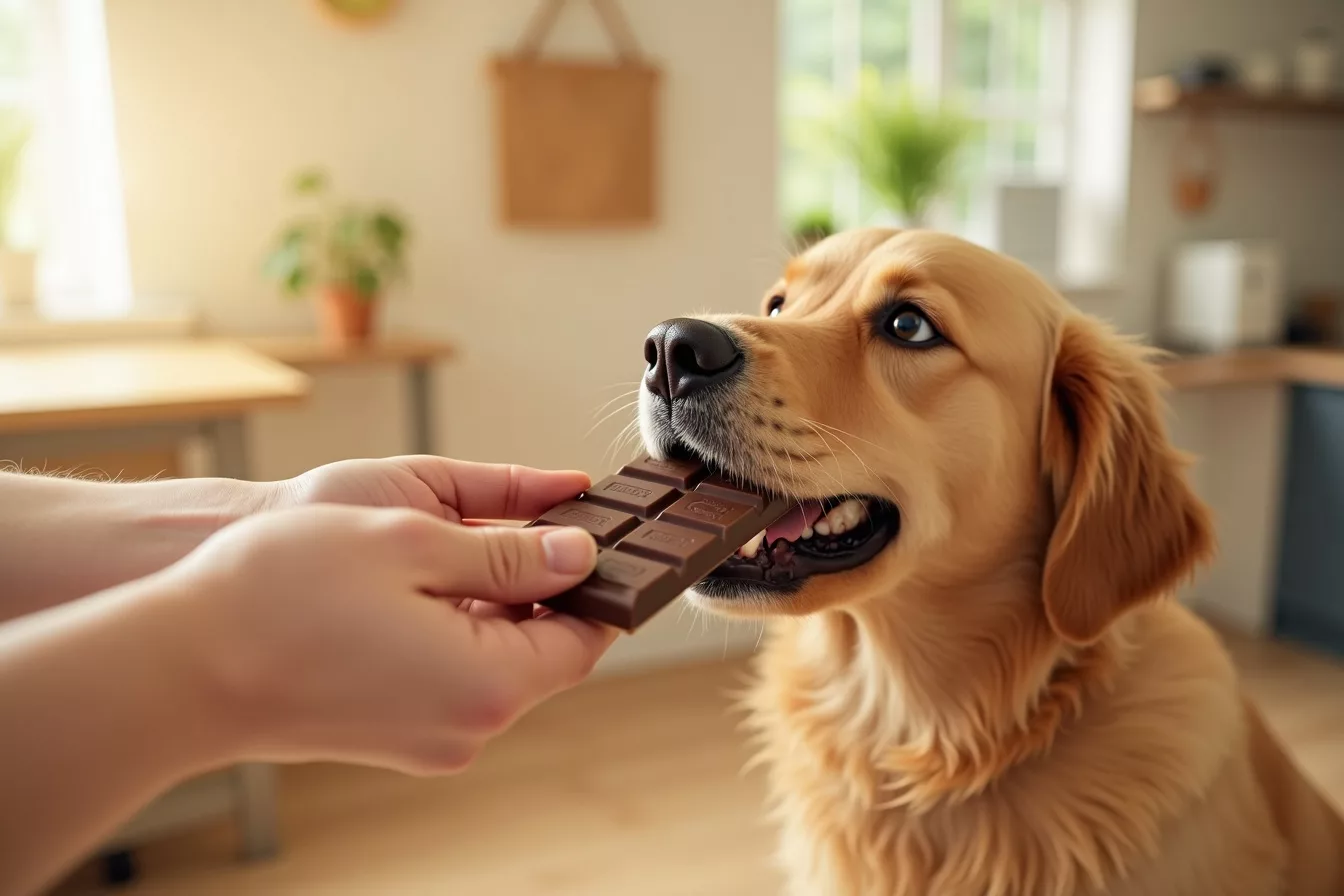
Chocolate remains the number-one culprit. Dark chocolate and baking chocolate contain theobromine, a compound dogs metabolise far more slowly than humans. Even a small amount can cause tremors, seizures, and heart arrhythmias. Max, a Golden Retriever from Manchester, nearly died after eating just 100g of dark chocolate left on a kitchen worktop.
⚠️ Warning
If your dog eats chocolate, contact your vet immediately. Do not wait for symptoms. Theobromine toxicity can take 6-12 hours to show signs but causes irreversible organ damage. Keep all chocolate locked away and remind visitors—this is not a risk to take casually.
Grapes and raisins are equally treacherous because the toxic compound is still unidentified by researchers, making it impossible to determine a “safe” dose. Some dogs tolerate one grape; others collapse after eating three. A 2025 study by the RVC documented 156 grape-poisoning cases in one year alone, with 12% resulting in acute kidney failure.
Xylitol (found in sugar-free sweets, peanut butter, and some baked goods) causes a catastrophic drop in blood sugar within 30 minutes. It triggers the pancreas to release insulin, leading to hypoglycaemia, liver failure, and death. Many owners don’t realise their “healthy” sugar-free products contain this sweetener.
✅ Expert Tip
Before buying any new food or treat, scan the ingredients list specifically for xylitol. Many UK brands now highlight “xylitol-free” on packaging, but not all. If you see it listed, keep the item in a secured cupboard high out of reach. Set phone reminders to check your kitchen monthly for hidden sources.
Other Foods That Sound Innocent But Aren’t
Onions and garlic contain thiosulfates that damage red blood cells, causing haemolytic anaemia. Cooked, raw, or powdered—they’re all toxic. A seemingly innocent beef stew or gravy could contain enough onion to make your dog seriously ill.
Avocado contains persin, which causes vomiting and diarrhoea. The pit is an additional choking and obstruction hazard. British owners growing avocado trees should be extra cautious.
Macadamia nuts trigger weakness, tremors, and fever. They’re found in many premium chocolates and biscuits intended for humans. Alcohol and caffeine are often overlooked but equally dangerous—even “dog-safe” carob can be toxic if it contains theobromine traces.
What To Do If Your Dog Eats Something Toxic
Time is critical. If your dog eats chocolate, grapes, xylitol, or onions, contact your vet or the UK’s Animal Poison Centre (0844 892 0111) immediately. Have the package or ingredient list ready so your vet can calculate the dose and assess risk.
Do not induce vomiting at home unless instructed by a professional. Some toxins cause more damage on the way back up. Your vet may recommend observation, activated charcoal, or supportive care depending on what was eaten and how long ago.
✅ Expert Tip
Save the Animal Poison Centre number in your phone now (UK: 0844 892 0111; US: ASPCA Animal Poison Control 888-426-4435). Create a note in your kitchen with a photo of common toxic foods so all household members know what to avoid. This takes five minutes and could save your dog’s life.
The Real Reason Your Dog Begs (And How To Manage It)
Your dog isn’t being naughty when they beg for your food—they’re simply following their nose and their pack instincts. When you eat, they want to eat. The solution isn’t punishment; it’s prevention. Feed your dog their own meal at the same time you eat, or keep them in another room during meal times. This builds routine and reduces the desperation that leads to sneaking toxic foods.
Train your dog with a solid “leave it” command using safe treats. Consistency over weeks will teach them to ignore food on the floor. Reward every success generously.
Conclusion
The foods your dog desperately wants are often the ones most likely to harm them. Chocolate, grapes, xylitol, and onions account for nearly half of all pet poisoning emergencies—yet most cases are preventable through awareness and kitchen management. The biggest surprise for many owners is that sugar-free products and “healthy” human snacks pose the greatest hidden risk. Have you checked your cupboards for hidden xylitol today? Start there, and then commit to one dog-proofing change this week—whether that’s securing treats, training “leave it,” or saving the poison control number.