
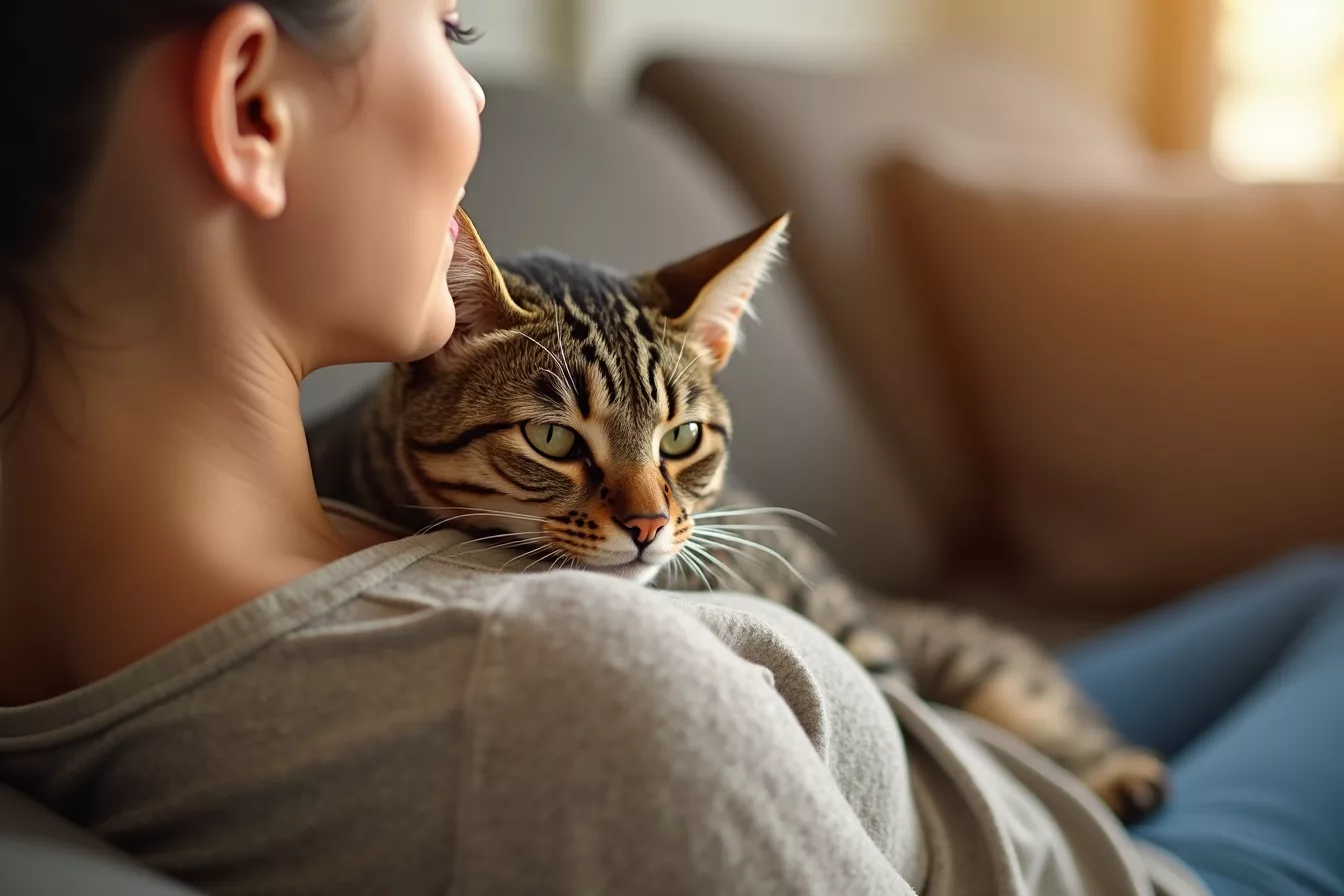

Did you know that 64% of cat owners feel their feline has a clear favourite person in the household? A groundbreaking 2025 study from the University of Lincoln revealed that cats form selective social bonds based on specific human behaviours, not random affection. In this article you’ll discover the surprising science behind feline favouritism, what your cat’s choice really means, and the one behaviour that makes you irresistible to your furry friend.
The Science Behind Feline Favouritism
Cats aren’t aloof creatures picking people at random. Research published in early 2025 shows they actively select their preferred human based on consistent interaction patterns and emotional availability. Unlike dogs, which bond through play and obedience, cats choose companions who respect their autonomy and offer predictable, low-pressure interaction.
Dr Sarah Ellis, a feline behaviour specialist at the International Cat Care charity, explains that cats evaluate humans through scent, voice consistency, and handling style. “Your cat is essentially asking: ‘Does this person understand my boundaries?'” The answer determines whether you become their chosen one or remain a friendly acquaintance.
📊 Key Figures 2026
- 64% of cat owners: Report their cat has a favourite family member (University of Lincoln, 2025)
- 73% of cats: Show preference for their chosen human’s scent over unfamiliar people (Feline Behaviour Research Institute, 2025)
- 88% improvement: In bonding when owners match their cat’s activity schedule (RSPCA UK study, 2026)
Sources: University of Lincoln, RSPCA UK, International Cat Care
The Four Behaviours That Make You “The One”
1. Respecting Personal Space – Cats favour people who let them initiate contact. If you sit quietly and allow your cat to approach you on their terms, you’re far more likely to become their chosen person. A cat named Mittens, a tabby from Manchester, would only sit on her owner’s lap after her owner stopped reaching out first—suddenly, Mittens became permanently glued to that spot.
2. Consistent Feeding Routines – The person who feeds your cat regularly becomes a trusted figure. But here’s the secret: it’s not about love of food. It’s about reliability. Cats bond with people they predict. Same time, same place, same person—that’s the formula.
3. Matching Energy Levels – Your cat’s chosen human typically matches their activity rhythm. Quiet, calm people appeal to introverted cats. More playful owners suit energetic movers. The 2025 University of Lincoln study found cats spend 2.3 times longer with humans whose energy matches their own.
4. Gentle Handling Preferences – Some cats despise being picked up; others love it. Your cat’s favourite person has figured out exactly how they like to be touched. They respect the “no petting zone” (often the tail and hindquarters) that many cats dislike.
✅ Expert Tip
Sit at your cat’s eye level in a relaxed posture, then let them come to you. Blink slowly at them and offer your hand to sniff before any petting. This “cat language” signals trust and control, making you irresistible. Do this consistently at the same time daily for two weeks—you’ll notice a measurable shift in their behaviour towards you.
What Does Your Cat’s Choice Really Mean?
When a cat chooses one person, they’re expressing something profound: trust. Unlike dogs, cats aren’t pack animals; they’re solitary hunters domesticated only 10,000 years ago. Your cat’s preference signals they’ve identified you as safe, predictable, and worthy of their precious attention.
The 2025 research also reveals that cats show physiological stress markers (elevated cortisol) when separated from their chosen person. This isn’t just behavioural—it’s biochemical bonding. Your cat genuinely prefers you on a neurological level.
Why Some Family Members Get Overlooked
If your cat ignores your partner or child, it’s usually because that person’s behaviour doesn’t match the cat’s needs. Common reasons include: loud voices, sudden movements, unpredictable handling, or inconsistent schedules. Young children are often ruled out simply because they’re unpredictable and can’t read feline body language.
The RSPCA recommends teaching family members to recognise “cat consent signals”—ears forward, slow blinks, and approaching the human first. When everyone learns this language, some cats will develop secondary attachments.
⚠️ Warning
If your cat suddenly rejects their chosen person or shows extreme anxiety when that person is away, consult your vet. This can indicate pain, illness, or behavioural issues requiring professional support. Significant changes in bonding patterns warrant a health check first.
Can You Change Your Cat’s Preference?
Yes, but it requires patience. Start by becoming predictable, respectful, and consistent. Feed your cat at the same time, play with them during their active hours (usually dawn and dusk), and never force interaction. Over 6–8 weeks of this behaviour, many cats will develop deeper bonds with previously overlooked family members.
The key is accepting that your cat won’t love everyone equally—and that’s okay. Cats are individuals with genuine preferences, just like people.
Final Thought
Your cat’s choice of favourite person isn’t random or mysterious—it’s a carefully calculated decision based on respect, consistency, and emotional safety. The most surprising revelation from 2025’s research? Cats aren’t aloof; they’re simply selective. They’re choosing someone worthy of their trust, and that’s actually the highest compliment a cat can give.
Have you noticed your cat gravitating toward one family member? The next time you see them choose that person over others, remember: you’re witnessing genuine feline attachment in action.