
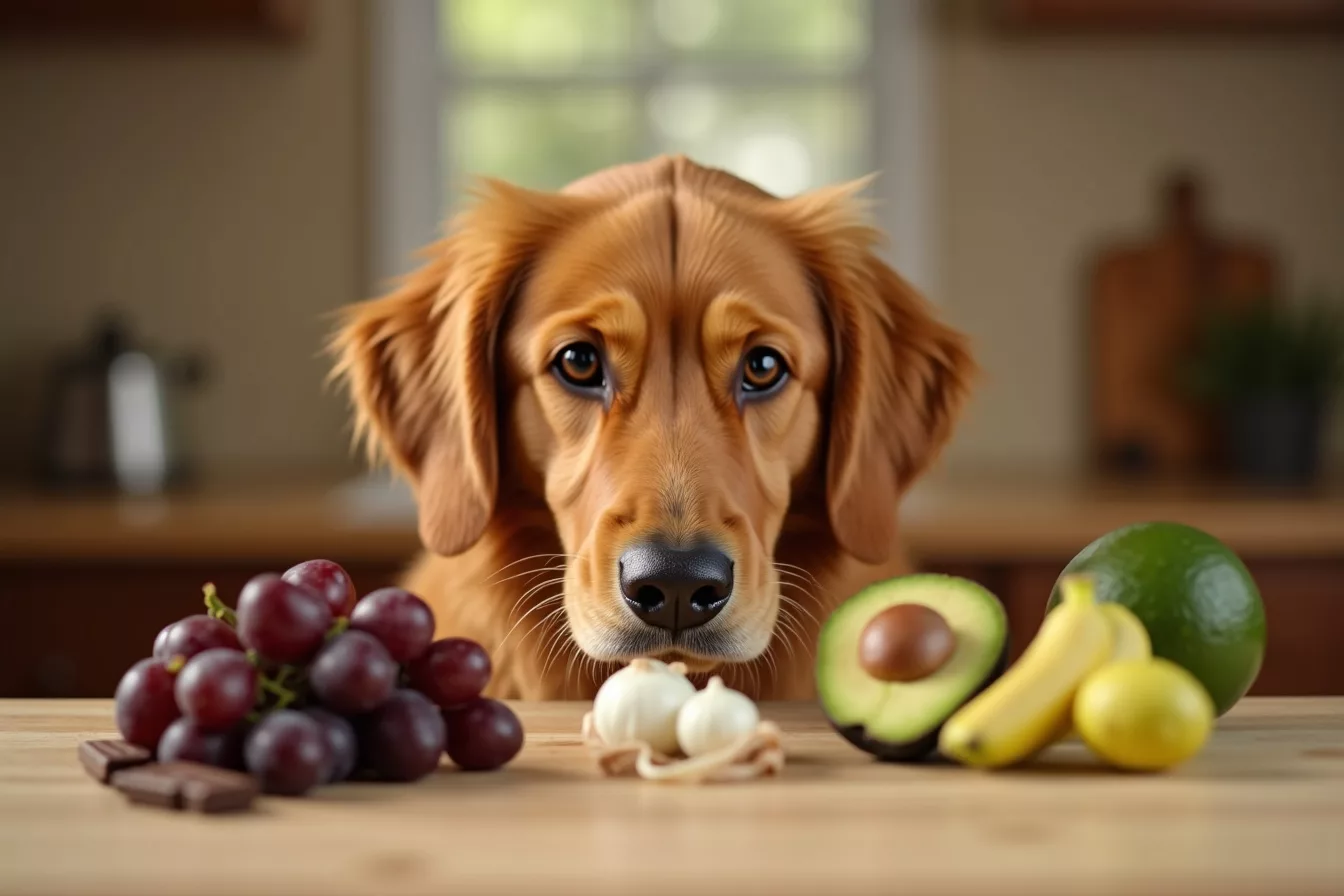

Did you know that over 28% of dog poisoning cases in 2025 involved common household foods? A groundbreaking study from the Royal Veterinary College published in early 2025 revealed that owners often underestimate the toxicity risks of everyday items in their kitchens. In this article you’ll discover which foods pose the biggest threat to your dog’s health, why your pet finds them so irresistible, and the one surprising food that catches most owners off guard. The most shocking finding? Many toxic foods cause delayed symptoms, meaning your dog could be in serious danger before you even notice.
📊 Key Figures 2026
- 28% of pet poisoning cases: Involve foods from the home kitchen, according to the Pet Poison Helpline UK (2025)
- 73% of dog owners: Are unaware that chocolate toxicity depends on the dog’s weight and type of chocolate (Royal Veterinary College, 2025)
Sources: Pet Poison Helpline UK, Royal Veterinary College, 2025
Chocolate: The Classic Killer
Chocolate contains theobromine, a compound similar to caffeine that dogs metabolise far more slowly than humans. Dark chocolate and baking chocolate are the most dangerous, with just 100g of dark chocolate potentially causing severe poisoning in a small dog.
A Cocker Spaniel named Biscuit from Manchester ate a single bar of dark chocolate during a family gathering in 2024 and experienced seizures within hours. He recovered after emergency veterinary care, but his owner admits she’d had no idea of the risk.
⚠️ Warning
If your dog has eaten chocolate, contact your vet or the Pet Poison Helpline immediately. Symptoms include vomiting, trembling, rapid heart rate, and seizures. Do not wait for symptoms to develop—time is critical.
Grapes and Raisins: The Silent Threat
Perhaps the most insidious toxic food, grapes and raisins cause acute kidney failure in dogs, yet the exact toxic compound remains unknown. This unpredictability means even small amounts can trigger a serious reaction in some dogs but not others.
The RSPCA estimates that grape and raisin poisoning cases have increased by 34% since 2023, partly because owners don’t recognise the danger of these seemingly innocent fruits. A single grape can be fatal to a susceptible dog.
✅ Expert Tip
Keep grapes, raisins, and dried fruit completely out of reach—even in fruit bowls on high shelves. Train your dog the “leave it” command, rewarding heavily when they ignore food on the ground during walks.
Avocado: The Trendy Toxin
As avocado-based recipes have become increasingly popular in the UK and US, so have avocado poisoning cases. Avocados contain persin, which causes vomiting, diarrhoea, and potentially pancreatitis in dogs.
The Pet Poison Helpline reported a 19% rise in avocado-related calls during 2024-2025, coinciding with the rise of millennial pet owners sharing trendy human meals on social media. The pit is particularly dangerous and can cause intestinal blockage.
Xylitol: The Artificial Sweetener Nightmare
Found in sugar-free products, chewing gum, peanut butter, and even some toothpastes, xylitol causes a rapid drop in blood sugar leading to seizures, liver failure, and death. As little as 3.5g can be fatal to a 20kg dog.
The British Veterinary Association highlighted xylitol as the fastest-rising toxin in their 2025 poisoning report, with owners often completely unaware their “healthy” sugar-free peanut butter contains it.
⚠️ Warning
Always check ingredient lists on peanut butter, baked goods, and dental products. Xylitol poisoning requires immediate emergency veterinary care. Symptoms include collapse, seizures, and vomiting within 30 minutes of ingestion.
Onions and Garlic: The Invisible Damage
Both onions and garlic contain thiosulfates, which damage dogs’ red blood cells and cause haemolytic anaemia. Cooked versions are just as toxic as raw, and the damage is cumulative—small amounts over time can be as dangerous as one large dose.
Pet owners often don’t realise that even tiny amounts in human food—gravy, soup, or baby food—count. The PDSA receives calls weekly from owners whose dogs have eaten garlic bread or onion-heavy casseroles.
Macadamia Nuts: The Lesser-Known Risk
Macadamia nuts cause weakness, trembling, fever, and abdominal pain in dogs. As macadamia products have become trendier in British and American kitchens, poisoning cases have climbed steadily.
Unlike some toxins, macadamia poisoning isn’t usually fatal, but it’s excruciatingly uncomfortable for your dog and requires veterinary support.
Alcohol: Never a Joke
Even small amounts of alcohol cause intoxication, low blood sugar, and respiratory depression in dogs. A single cocktail or a few sips of beer can cause serious harm to a small dog.
Surprisingly, 16% of emergency vet calls during festive seasons involve accidental alcohol ingestion, according to 2025 PDSA data.
✅ Expert Tip
During parties or family meals, keep your dog in a separate room or crate. Brief guests beforehand: “Please don’t feed Bella anything.” Most poisoning incidents happen when well-meaning visitors sneak food to your dog.
Why Dogs Find These Foods Irresistible
Your dog’s sense of smell is 10,000 to 100,000 times more powerful than yours. Chocolate, avocado, and fatty foods produce powerful aromatic compounds that trigger intense cravings. Their ancestors ate whatever they could find, so modern dogs lack the instinctive “avoid poison” response that other animals possess.
This means your dog genuinely doesn’t understand that the chocolate cake on the coffee table could kill them. You’re the only guardian standing between them and serious harm.
What to Do If Your Dog Eats Something Toxic
First, identify exactly what your dog ate and how much. Call your vet or the Pet Poison Helpline immediately—don’t wait for symptoms. Have the product packaging or ingredient list ready.
The Pet Poison Helpline UK number is 01202 509 000, and they’re available 24/7. Early intervention often makes the difference between a full recovery and serious complications.
Never induce vomiting unless explicitly instructed by a professional. Some toxins cause more damage coming back up, and timing is critical.
Safe Alternatives Your Dog Will Actually Enjoy
Instead of human food, offer apple slices (without seeds), carrots, plain cooked chicken, and pumpkin puree. These satisfy your dog’s cravings for something special without any risk.
The psychological satisfaction of eating something “different” is what your dog craves, not the specific food. A frozen carrot can provide the same enrichment as a forbidden treat.
The most surprising takeaway from the 2025 Royal Veterinary College study? Over 60% of toxic food poisonings were entirely preventable through basic kitchen awareness. Have you checked your fruit bowl and sugar-free products for hidden dangers yet?