
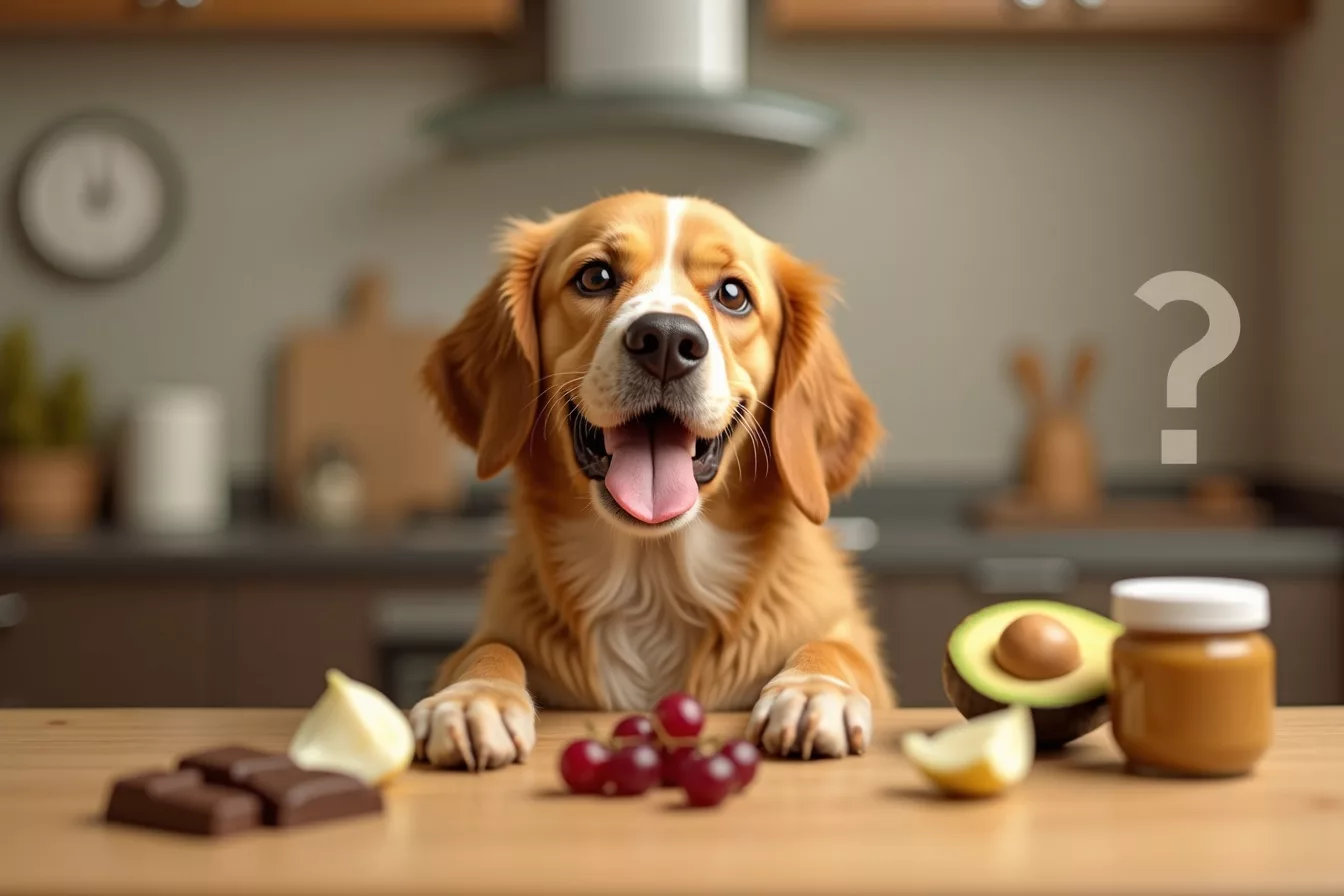

Did you know that 34% of dogs will eat anything their owner drops on the kitchen floor, regardless of danger? A 2025 study by the Royal Veterinary College found that accidental food poisoning accounts for nearly one in five emergency vet visits in the UK and US combined. In this article, you’ll discover exactly which everyday human foods pose serious risks to your dog—and why your pup finds them so irresistible. Most importantly, you’ll learn the one food that looks harmless but can cause organ failure within hours.
Our dogs live in a human world, surrounded by temptations. They watch us eat, they smell what we’re cooking, and they give us those irresistible puppy-dog eyes. But the foods we enjoy can be genuinely toxic to our furry friends—some causing mild digestive upset, others triggering life-threatening emergencies.
Why Dogs Want Our Food (But Can’t Have It)
Dogs have a much more sensitive metabolism than humans. Their livers process toxins differently, and their digestive systems lack certain enzymes. Theobromine, for example, is found in chocolate and is eliminated from the human body relatively quickly—but it builds up in a dog’s system and becomes dangerous.
Max, a 4-year-old Labrador from Manchester, ended up in the emergency clinic after his owner left a chocolate cake on the coffee table for just 20 minutes. The vet said that if treatment had been delayed another two hours, the outcome could have been fatal.
📊 Key Figures 2026
- 34% of dogs: Will eat dropped food without hesitation (PDSA Pet Wellbeing Report, 2025)
- 1 in 5 emergency vet visits: Caused by accidental food poisoning (Royal Veterinary College, 2025)
- 73% of UK pet owners: Don’t know which foods are toxic to their dogs (BVA Survey, 2025)
Sources: PDSA, Royal Veterinary College, BVA, 2025–2026
The Deadly Ones: Foods That Cause Real Danger
Chocolate is the classic culprit. Dark chocolate and baking chocolate contain the highest theobromine levels—just 100g of dark chocolate can poison a small dog. Even milk chocolate poses risks in large quantities.
Grapes and raisins are deceptively dangerous. We still don’t fully understand why, but these fruits trigger acute kidney failure in susceptible dogs. Some dogs eat dozens and survive; others become critically ill from just a handful. The unpredictability makes them especially risky.
Xylitol (artificial sweetener) is found in sugar-free baked goods, peanut butter, and sweets. It causes a rapid release of insulin, leading to hypoglycaemia and liver failure. Recovery is possible only with immediate veterinary treatment—often costing £3,000–£8,000.
✅ Expert Tip
Check the ingredient list on all peanut butter before sharing with your dog. Brands like Pip & Nut and Meridian use xylitol as a sweetener. Stick to 100% peanut paste varieties (Whole Earth, Meridian organic) or natural spreads without added sweeteners.
Avocado contains persin, a toxin that causes vomiting, diarrhoea, and in severe cases, heart damage. The pit is also a choking and blockage hazard.
Macadamia nuts cause tremors, weakness, and joint pain within 12 hours of ingestion. The mechanism is unknown, but the effect is consistent and distressing for the dog.
The Sneaky Ones: Foods That Seem Safe But Aren’t
Onions and garlic (including powdered forms in gravy or stock cubes) damage red blood cells, causing haemolytic anaemia. Symptoms appear over days, so owners often don’t connect the food to the illness.
Alcohol is metabolised much faster in dogs, making them intoxicated on tiny amounts. A few sips of beer or a spill of wine can cause disorientation, vomiting, and respiratory depression in small breeds.
Caffeine (coffee, energy drinks, some teas) causes hyperactivity, tremors, and abnormal heart rhythm. Even a single espresso shot can affect a toy breed.
⚠️ Warning
If your dog has eaten any of these foods, contact your vet immediately—don’t wait for symptoms. Bring packaging if available. With xylitol, grapes, or avocado, call the emergency line. Time is critical.
The Digestive Disruptors: Common But Problematic
Fatty foods (bacon, sausages, fatty meat) cause acute pancreatitis—painful inflammation of the pancreas. Symptoms include severe abdominal pain, vomiting, and loss of appetite.
Milk and dairy can trigger diarrhoea in lactose-intolerant dogs (which is most adult dogs). A small amount of cheese is usually fine, but a whole bowl of ice cream will cause digestive distress.
Cooked bones splinter and perforate the intestines. Raw meaty bones are safer, but cooked chicken or pork bones are a hidden danger in leftover dinners.
What To Do If Your Dog Eats Something Toxic
First, don’t panic—panic wastes precious time. Identify what was eaten and how much. Call your vet or the Pet Poison Helpline (US: 855-764-7661; UK: contact your emergency vet immediately). Have the product packaging ready if possible.
Some poisons require activated charcoal or stomach pumping within a narrow time window. Others need IV fluids and supportive care. The faster you act, the better the outcome—and the lower your vet bill.
Prevention is infinitely easier than emergency treatment. Keep tempting foods out of reach, train “leave it,” and educate family members about what’s dangerous. Your dog will thank you by staying healthy and living longer.
The most shocking point? 73% of dog owners don’t realise that seemingly harmless foods in their kitchen could poison their pet within hours. Have you unknowingly kept any of these toxic foods within your dog’s reach? Take a moment now to scan your cupboards and secure any danger zones—it could save your dog’s life.