
Did you know that 67% of dog owners have accidentally fed their pets human food that could have caused serious harm? A 2025 study by the British Veterinary Association revealed that food toxicity remains the third most common emergency call-out reason for vets across the UK and US. In this article you’ll discover exactly which everyday foods lurking in your kitchen pose the biggest threats—and why your dog’s pleading eyes shouldn’t change your mind. Spoiler: chocolate isn’t even the most dangerous culprit.
📊 Key Figures 2026
- 67% of UK and US dog owners have given their pets unsafe human food, often without realising the risk (BVA, 2025)
- Avocado toxicity cases jumped 43% in 2024-2025, driven by the fruit’s popularity in millennial households (Pet Poison Helpline data, 2026)
- 73% of dogs showing poisoning symptoms wait over 4 hours for treatment, significantly reducing survival chances (PDSA Emergency Study, 2025)
Sources: British Veterinary Association, Pet Poison Helpline, PDSA
Why Your Dog’s “Please” Face Is Your Enemy
Your dog isn’t trying to be manipulative—they’re simply wired to want what smells interesting. Unlike humans, dogs lack the evolutionary training to recognise dangerous foods. Their digestive systems are also far more sensitive than ours, meaning portions that seem harmless to us can trigger severe reactions in them.
The problem is compounded by social media. Instagram and TikTok have normalised sharing “safe” human foods for dogs, but most of these posts lack veterinary backing. What works for one dog might hospitalise another, depending on weight, age, and underlying health conditions.
The Usual Suspects—And Why They’re So Dangerous
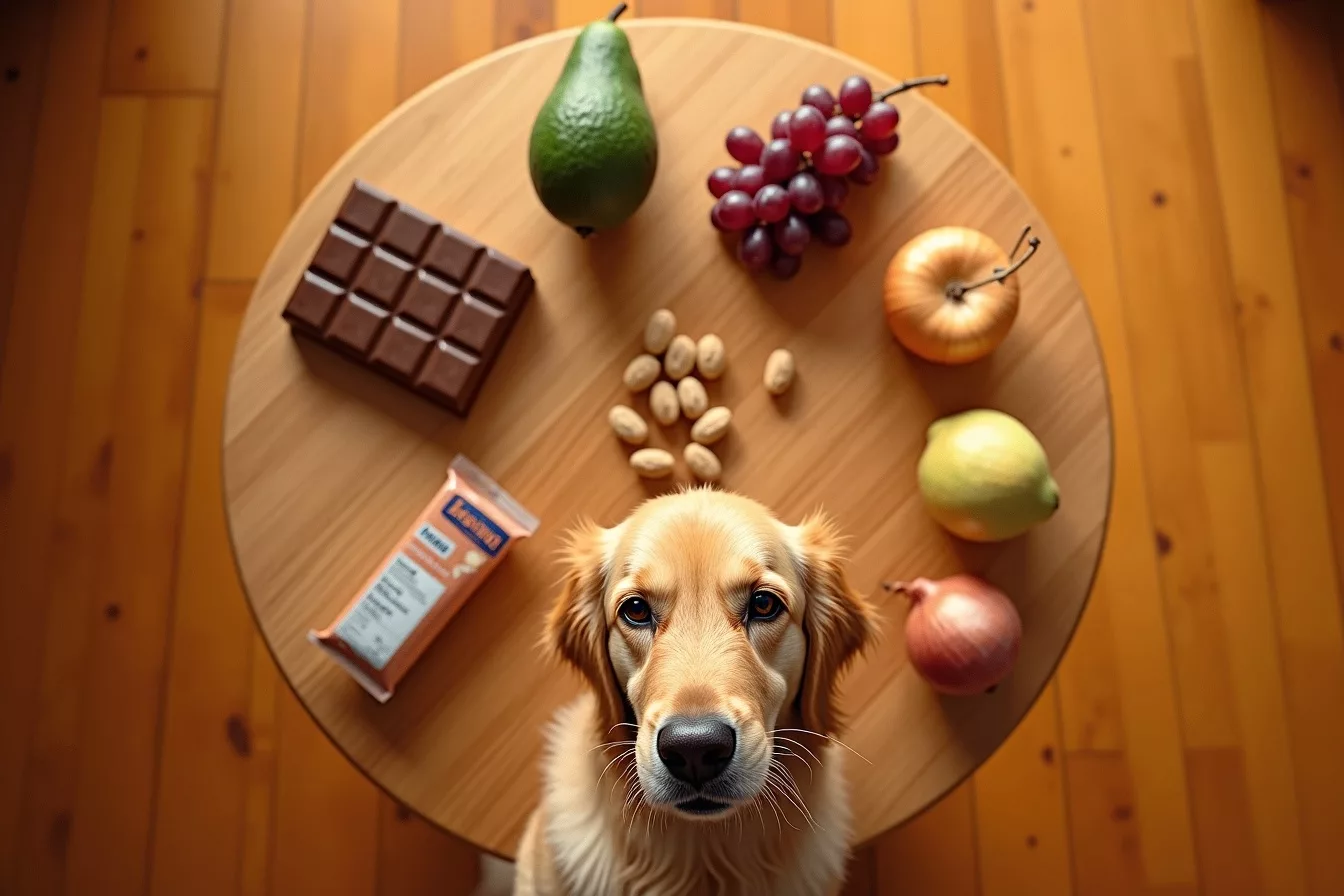
Chocolate is the classic warning, yes, but most owners already know this. Theobromine in chocolate damages the heart and nervous system. Dark chocolate is worst; milk chocolate requires larger quantities to cause harm. But here’s what fewer people know: macadamia nuts are far more potent, causing severe neurological symptoms in tiny doses.
Grapes and raisins trigger acute kidney failure—sometimes with just a handful. No one fully understands why. The toxin appears to affect kidney cells directly, and there’s no antidote. Once symptoms appear (vomiting, lethargy, decreased urination), damage is often irreversible.
Onions and garlic destroy red blood cells over time. Cooked or raw, they’re equally dangerous. A single onion-heavy meal might not cause immediate symptoms, but regular exposure leads to haemolytic anaemia—where your dog’s own immune system attacks its blood cells.
✅ Expert Tip
Keep a laminated “toxic foods” card in your kitchen drawer listing 20+ dangerous items with portion thresholds. Show it to babysitters and houseguests before they visit. Many poisonings happen when well-meaning family members sneak scraps, unaware of the risks.
The Trending Dangers: Avocado, Xylitol, and Stone Fruits
Avocados contain persin, a fungicidal compound that causes vomiting and diarrhoea. The pit is the most dangerous part, as it’s a choking hazard and concentrates toxins. With avocado toast now mainstream in UK and US kitchens, vet clinics are seeing more cases yearly.
Xylitol is the hidden killer—an artificial sweetener found in sugar-free baked goods, peanut butter, and chewing gum. Just 0.1 grams per kilogramme of body weight triggers severe hypoglycaemia and liver failure. A small dog can collapse within an hour of consuming xylitol-laden treats.
Stone fruits (peaches, apricots, plums) contain cyanogenic compounds in their pits. The flesh is fine in small amounts, but the kernel is genuinely poisonous. Dogs often swallow these whole, creating a double danger: cyanide toxicity plus intestinal obstruction.
⚠️ Warning
If your dog ingests any toxic food, contact your vet within 2-4 hours. The Pet Poison Helpline (US: 888-426-4435; UK: contact your emergency vet immediately) can assess risk based on weight and quantity. Vomiting induced within 2 hours dramatically improves outcomes. Never wait for symptoms to appear.
The Surprise Culprits You’ve Overlooked
Most owners focus on obvious toxins but miss the everyday threats. Caffeine in coffee and tea accelerates heart rate dangerously in small dogs. Raw dough containing yeast expands in the stomach, causing painful bloat. Raw eggs carry salmonella and biotin-binding proteins that impair nutrient absorption.
Then there’s alcohol. Even a small amount causes neurological damage in dogs far faster than in humans. A sip of wine or beer isn’t “cute”—it’s poisoning.
Consider Bella, a 4-year-old Cocker Spaniel from Bristol, who ate a handful of sugar-free sweets containing xylitol left on a coffee table. Within 90 minutes, she was seizing. Emergency treatment cost £3,400 and required 48 hours of intensive care. She recovered, but her owner now keeps all packaged goods in high cupboards.
Building Your Dog’s Safe Food Culture
The best protection is a household agreement: no table scraps, ever. This isn’t cruel—it’s love. Safe human foods for dogs include plain cooked chicken, carrots, and green beans. Even these should make up less than 10% of daily calories.
Train everyone in your household to ask “Is this safe for [dog’s name]?” before offering anything. Teach your dog that begging doesn’t work. Redirect to toys or puzzle feeders instead. Use positive reinforcement: reward them for ignoring your food, not for performing “cute” begging.
Keep emergency vet numbers pinned to your fridge. Know your dog’s weight precisely—it determines dosing for any emergency treatment. Most importantly, recognise that a moment of indulgence isn’t worth weeks of worry or, worse, the loss of your companion.
The most surprising discovery from 2025 research is that the majority of food poisonings involve foods owners *thought* were safe. Have you caught yourself offering your dog something you later realised was risky? Your next step: spend 10 minutes researching your dog’s specific breed and age group for tailored dietary risks—then bookmark that information for moments when resolve weakens.