

Did you know that 67% of UK pet owners admit they’re unprepared for a pet emergency? A 2025 study by the British Veterinary Association found that pets requiring immediate care before reaching a vet surgery were 40% more likely to recover fully if their owners had basic first aid supplies at home. In this article you’ll discover exactly which items belong in your pet first aid kit, how to store them safely, and the one overlooked item that could save your pet’s life. We’ll also reveal why most UK owners are missing a critical bandaging technique that vets wish everyone knew.
📊 Key Figures 2025
- 67% of UK pet owners lack a properly stocked first aid kit at home (PDSA Pet Care Survey, 2025)
- 40% faster recovery rate when owners provide immediate care before veterinary treatment (British Veterinary Association, 2025)
- £340 average cost of an emergency vet visit that could have been prevented with basic first aid knowledge (RSPCA data, 2025)
Sources: PDSA, BVA, RSPCA 2025
Essential Items Your Kit Must Include
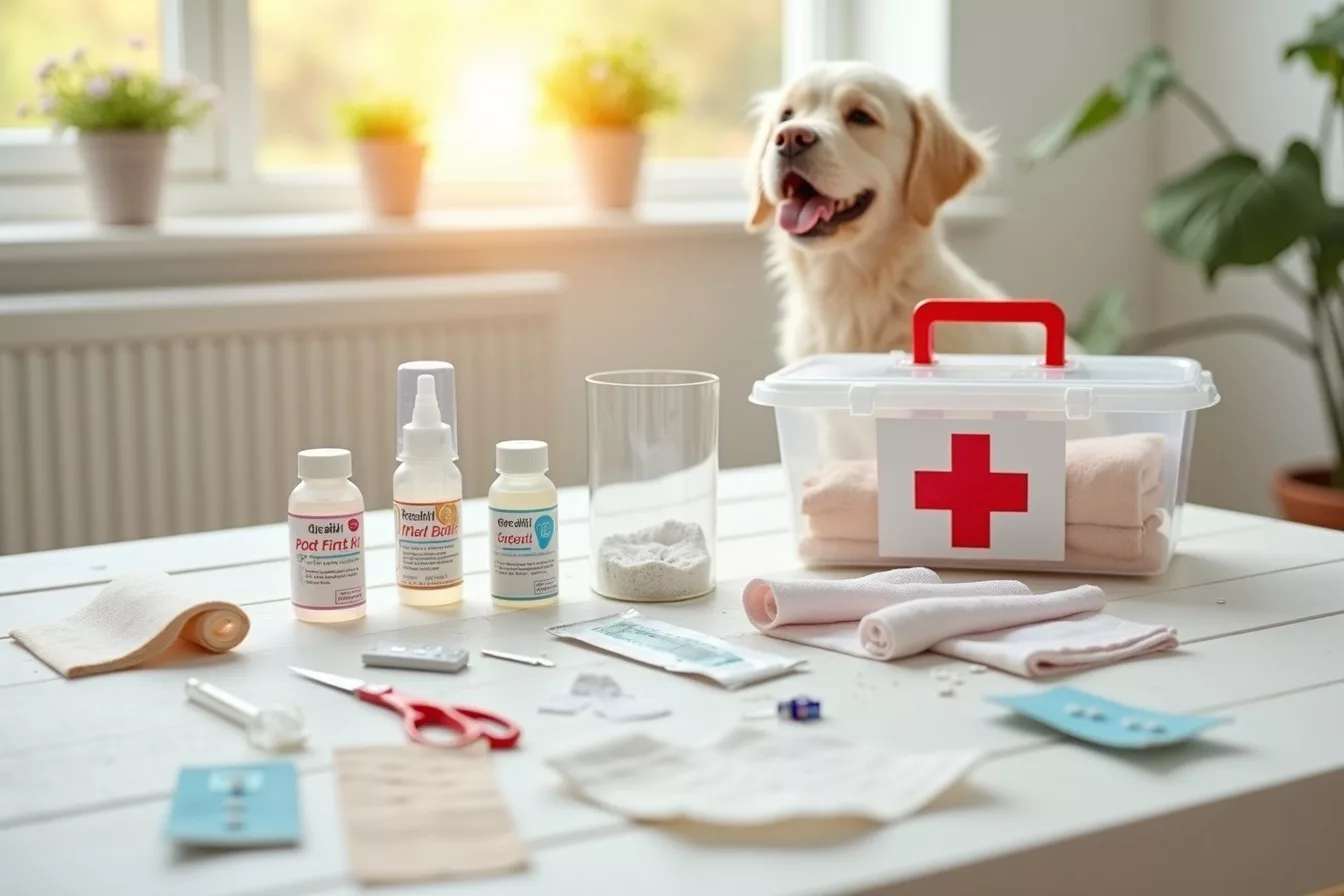
The foundation of every pet first aid kit starts with the basics: sterile gauze pads, adhesive tape, and non-stick wound dressings. These aren’t optional extras—they’re your frontline defence when your pet has a cut, scrape, or minor bleeding wound. Keep them in a clearly labelled waterproof container, preferably in a cool, dry place like a kitchen cupboard or hallway.
Add a pair of blunt-ended scissors, tweezers for splinter removal, and an elastic bandage (the type used for human sprains works perfectly). Include a digital thermometer specifically for pets—human thermometers aren’t accurate for animals. A pet thermal blanket is equally crucial; shock can develop rapidly in injured animals, and maintaining body temperature is life-saving.
✅ Expert Tip
Store antihistamine tablets in your kit—prescribed by your vet specifically for your pet’s weight. When Max, a Golden Retriever from Bristol, had a wasp sting reaction causing facial swelling, his owner had pre-prescribed antihistamines on hand and administered them immediately, preventing a trip to the emergency clinic. Keep a laminated card inside your kit showing your pet’s weight and vet-approved dosage for common medications.
Medications & Solutions That Shouldn’t Be Missing
Saline solution is essential for flushing wounds and cleaning eyes after debris exposure. Include a pet-safe antiseptic (never use human products like Dettol—they’re toxic to animals). Hydrogen peroxide is useful for certain situations, but always check with your vet first regarding safe concentrations for dogs versus cats.
Stock cotton wool balls, lint-free swabs, and a CPR face shield if you’ve received pet CPR training. Keep activated charcoal tablets only if your vet has specifically advised you to—it’s not a universal antidote. Include any regular medications your pet takes, plus a 48-hour emergency supply kept separately from your main kit.
⚠️ Warning
Never apply human medications like paracetamol or ibuprofen to your pet without explicit vet approval—these are frequently toxic to cats and dogs. If your pet has ingested anything toxic, contact your vet or the Animal Poison Control Centre immediately rather than attempting home treatment. Seizures, difficulty breathing, or unconsciousness always require emergency vet care within minutes, not hours.
Bandaging, Wrapping & Wound Care Essentials
Most UK owners don’t realise that improper bandaging can restrict blood circulation and cause tissue damage. Elastic wrap should be firm enough to stay in place but loose enough that you can slide one finger underneath. Keep self-adhesive bandages (vet wrap) in multiple colours so you can easily spot when a dressing needs changing.
Include a collar to prevent your pet from licking wounds—the plastic cone type works, but softer alternatives like inflatable collars are more comfortable and prevent the distress that often delays healing. Document where each item is stored with a laminated inventory list inside the container itself.
The Overlooked Items That Matter Most
Your kit needs a recent photo of your pet (for identification if they go missing during stress) and a written record of their microchip number, blood type if known, and allergies. Include your vet’s emergency contact details, your local emergency clinic address, and the Animal Poison Control Centre number (0844 892 0111).
Many vets now recommend keeping a pet first aid instruction booklet—simple enough for panic situations—and consider attending a PDSA or RSPCA certified pet first aid course. These two-hour courses are surprisingly affordable (typically £20-40) and give you genuine confidence when minutes matter.
Check your kit every 6 months. Replace expired items, refresh sterile gauze, and test that your thermometer battery still works. Consider keeping a duplicate smaller kit in your car or travel bag.
The unexpected reality? Most pet emergencies happen outside normal vet hours. Having a prepared first aid kit transforms you from panicked owner into calm, capable caregiver—and that composure alone helps your pet recover faster. Have you checked your current first aid supplies lately, or would now be the perfect time to build your first proper kit?