
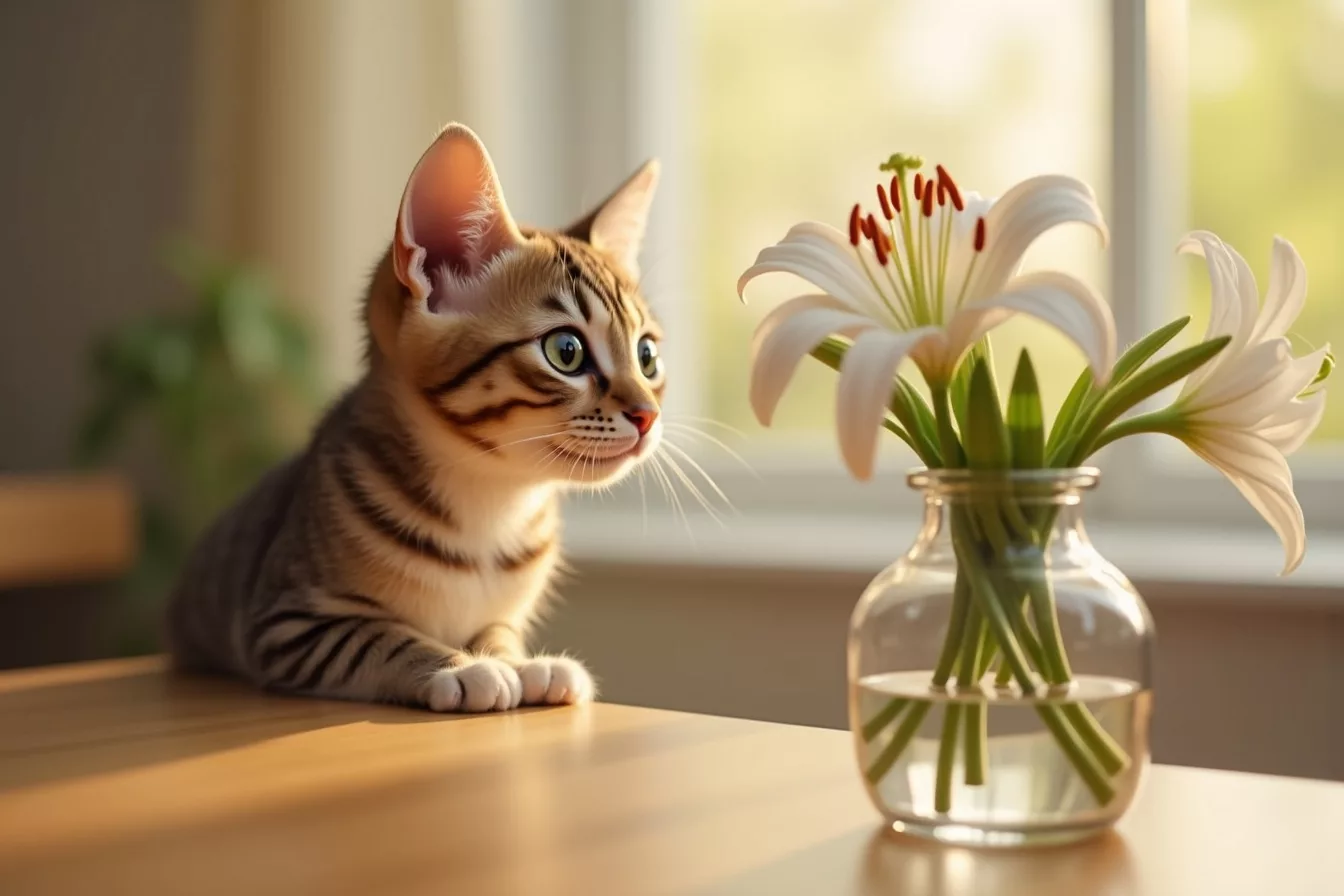

A shocking new warning from UK veterinarians has cat owners scrambling to check their homes. The British Veterinary Association’s 2024 Pet Poisoning Report revealed that lilies remain the leading cause of feline poisoning cases, with emergency admissions up 34% year-on-year. In this article you’ll discover which household plant poses the greatest risk to your cat, the early warning signs of poisoning, and the one action that could save your pet’s life.
If you’ve got lilies anywhere in your home—whether in a vase, potted plant, or even dried arrangements—your cat is in serious danger. All parts of the lily plant are highly toxic to cats: the petals, leaves, stems, pollen, and even the water in the vase. A single petal or just a few grains of pollen can trigger severe kidney failure within hours.
“We’re seeing preventable tragedies every single week,” says Dr Sarah Mitchell, emergency veterinarian at the Royal Veterinary College (RVC) in London. “Owners often don’t realise how dangerous lilies are until it’s too late.”
📊 Key Figures 2024–2025
- 34% increase in feline lily poisoning cases reported to UK emergency vets (BVA, 2024)
- 73% of affected cats required intensive care and kidney function monitoring (RVC Emergency Data, 2025)
- Lilies account for 1 in 5 of all plant-related pet poisoning calls to Animal Poison Control (PDSA, 2024)
Sources: British Veterinary Association, Royal Veterinary College, PDSA
The danger isn’t limited to cut lilies. Potted lilies—including Asiatic lilies, Oriental lilies, Stargazer lilies, and Tiger lilies—are equally toxic. Even dried lily arrangements used in decorative displays pose a risk if your cat chews on them or ingests fallen petals.
Real case: Mabel, a 3-year-old tabby from Manchester, consumed just two lily petals from her owner’s funeral flower arrangement. Within 8 hours, she became lethargic and stopped eating. By the time she reached the emergency vet, her kidney enzymes were dangerously elevated. Mabel survived thanks to 72 hours of intensive IV fluid therapy, but her owner now lives with the knowledge it was entirely preventable.
⚠️ Warning Signs of Lily Poisoning
If your cat has been exposed to lilies, watch for: vomiting, loss of appetite, lethargy, excessive thirst, or reduced urination. Contact your vet immediately if you suspect exposure, even if your cat seems fine. Kidney damage can occur silently—early treatment within 18–24 hours dramatically improves survival rates.
✅ Expert Tip
Remove all lily plants and flowers from your home immediately—not just from countertops, but from windowsills, bedroom shelves, and anywhere your cat can reach. Ask friends and family to do the same before they visit. If you receive lilies as a gift, remove the stamens (pollen-bearing parts) and place arrangements in a room where your cat cannot access them, preferably with the door closed. Better yet: politely request lily-free flowers.
Other toxic houseplants also deserve attention. Sago palms, oleander, and dieffenbachia are common culprits, but lilies remain uniquely dangerous due to their rapid onset of kidney toxicity. The RSPCA reports that many owners are unaware of these risks and assume all common decorative plants are safe.
“Prevention is everything,” Dr Mitchell adds. “We can’t always reverse the damage once poisoning occurs. The best medicine is never bringing the plant into your home.”
If your cat does ingest lily material, contact your vet or the Animal Poison Control Centre immediately (available 24/7). Bring the plant with you or take a photo—positive identification helps vets administer the most effective treatment. Activated charcoal and aggressive IV fluid therapy are standard protocols, but timing is critical.
The 2024 BVA poisoning data shows that cats are far more vulnerable than dogs to lilies, making feline households especially high-risk. Ensure your entire family knows about the danger, and educate children that lilies are not to be touched or played with.
The takeaway: Lilies save lives with humans, but they end them with cats. The surprising truth emerging from this year’s vet warnings is how easily preventable these tragedies are. One simple action—removing lilies from your home—could save your cat’s life. Have you checked your house and garden for lilies today? If you’ve got houseplants, take 10 minutes now to verify each one against a pet-safety plant list—your cat will thank you.