
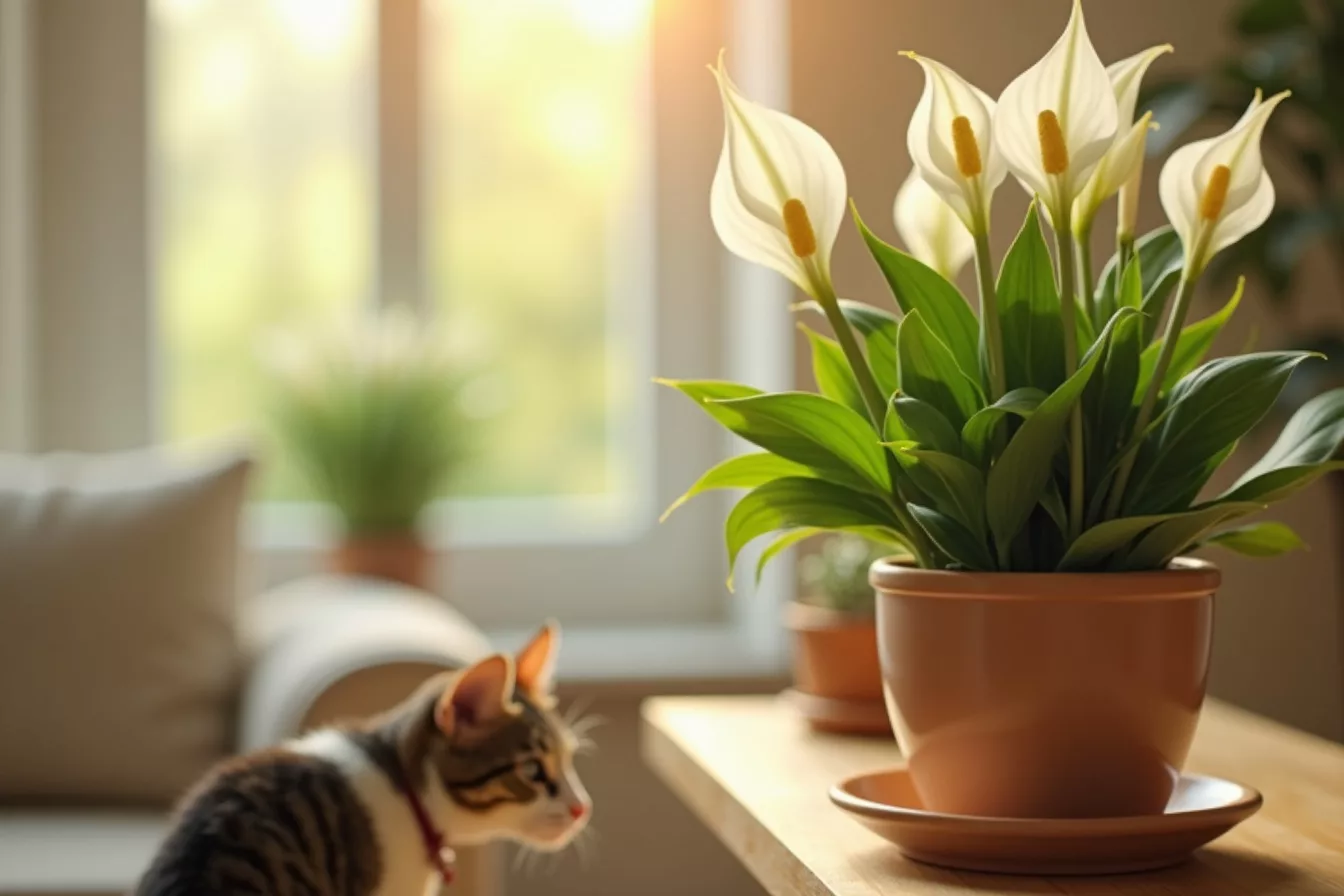

A shocking new warning from British veterinarians has cat owners frantically checking their living rooms. According to a 2025 RSPCA report, poisoning from common household plants has risen 34% in the past two years, with one plant in particular becoming a leading culprit. In this article you’ll discover which everyday plant poses the biggest risk to your feline friend—and the single most important step you can take right now to keep them safe.
The plant in question? The humble peace lily (Spathiphyllum wallisii), a decorative favourite in UK homes that’s lurking in millions of living rooms, kitchens, and bedrooms.
📊 Key Figures 2026
- 34% increase in plant-related cat poisoning cases reported to UK vets between 2023–2025 (RSPCA Animal Hospital data)
- 1 in 7 UK cat owners have a peace lily in their home, unaware of the toxins (Pet Health Council survey, 2025)
- Peace lilies cause irritation within 1–3 hours of ingestion; veterinary treatment is essential (Royal Veterinary College)
Sources: RSPCA, Pet Health Council, Royal Veterinary College, 2025
What Makes the Peace Lily Toxic to Cats?
The peace lily contains calcium oxalate crystals, microscopic needle-like structures that cause severe irritation to a cat’s mouth, throat, and digestive system. When a curious cat chews on or ingests the leaves, these crystals trigger an immediate inflammatory response.
The real danger? Many cat owners don’t recognise the symptoms until their pet is in distress. Unlike some toxins, peace lily poisoning doesn’t require a huge amount of plant material to cause a reaction—even a few leaves can trigger discomfort.
Early Warning Signs Your Cat May Have Eaten Peace Lily
Within the first hour: drooling, pawing at the mouth, difficulty swallowing. Your cat may seem confused or restless.
1–3 hours in: vomiting, loss of appetite, and oral pain. Some cats become withdrawn or hide away.
Severe cases: laboured breathing, swollen throat, and inability to eat or drink properly.
⚠️ Warning
If your cat shows any of these signs after contact with a peace lily, contact your vet immediately or call the Animal Poison Control Centre (APCC). Do not wait for symptoms to worsen. Bring a photo or sample of the plant with you to the appointment.
Real Case: Luna’s Close Call
Luna, a 2-year-old tabby from Manchester, nearly died after chewing on her owner’s peace lily in January 2025. Her owner noticed excessive drooling and found Luna hiding under the sofa, refusing food. Within two hours, the cat’s mouth was visibly swollen. Emergency treatment at an RSPCA clinic involved IV fluids, pain relief, and anti-inflammatory medication. Luna recovered after four days but could have faced far worse complications.
“I had no idea the plant was dangerous,” Luna’s owner told the RSPCA. “It’s sold everywhere as a ‘low-maintenance’ houseplant. Vets need to make this warning much louder.”
✅ Expert Tip
Place peace lilies in a closed room or on a very high shelf (at least 1.8 metres high) where your cat cannot reach them, even by climbing furniture. Better yet? Replace it with a cat-safe alternative like the spider plant or Boston fern. If you must keep a peace lily, use a hanging basket in a room your cat never enters—such as a locked study or bedroom.
Other Common Household Plants Vets Are Warning About
The peace lily isn’t alone. The British Veterinary Association (BVA) 2025 guidance highlights several other everyday plants that pose serious risks:
Lilies (especially Easter and Tiger lilies): Extremely toxic. Even ingesting pollen or a single leaf can cause acute kidney failure within 24–72 hours.
Sago palm: Highly poisonous; causes severe liver damage.
Oleander: Contains cardiac glycosides; can cause heart problems and death.
Philodendron: Similar to peace lily—causes oral irritation and difficulty swallowing.
What Should You Do Right Now?
If you have a peace lily at home: move it out of your cat’s reach today. Don’t wait for an incident.
Check your home for other toxic plants using the RSPCA’s online plant database (rspca.org.uk/pets/dangerous-plants). Take a photo of any plant you’re unsure about and ask your vet during your next visit.
Stock your home with cat-safe plants instead. Cats actually benefit from having safe vegetation to chew on—it aids digestion and keeps their teeth healthy.
Final Thoughts
The rise in plant-related poisoning cases is a stark reminder that pet safety starts at home. Your peace lily might look harmless, but to a curious cat, it’s a potential medical emergency. The good news? This is entirely preventable. Remove the plant, replace it with something safer, and you’ve eliminated the risk entirely. Have you checked your plant collection yet? Your cat will thank you.