
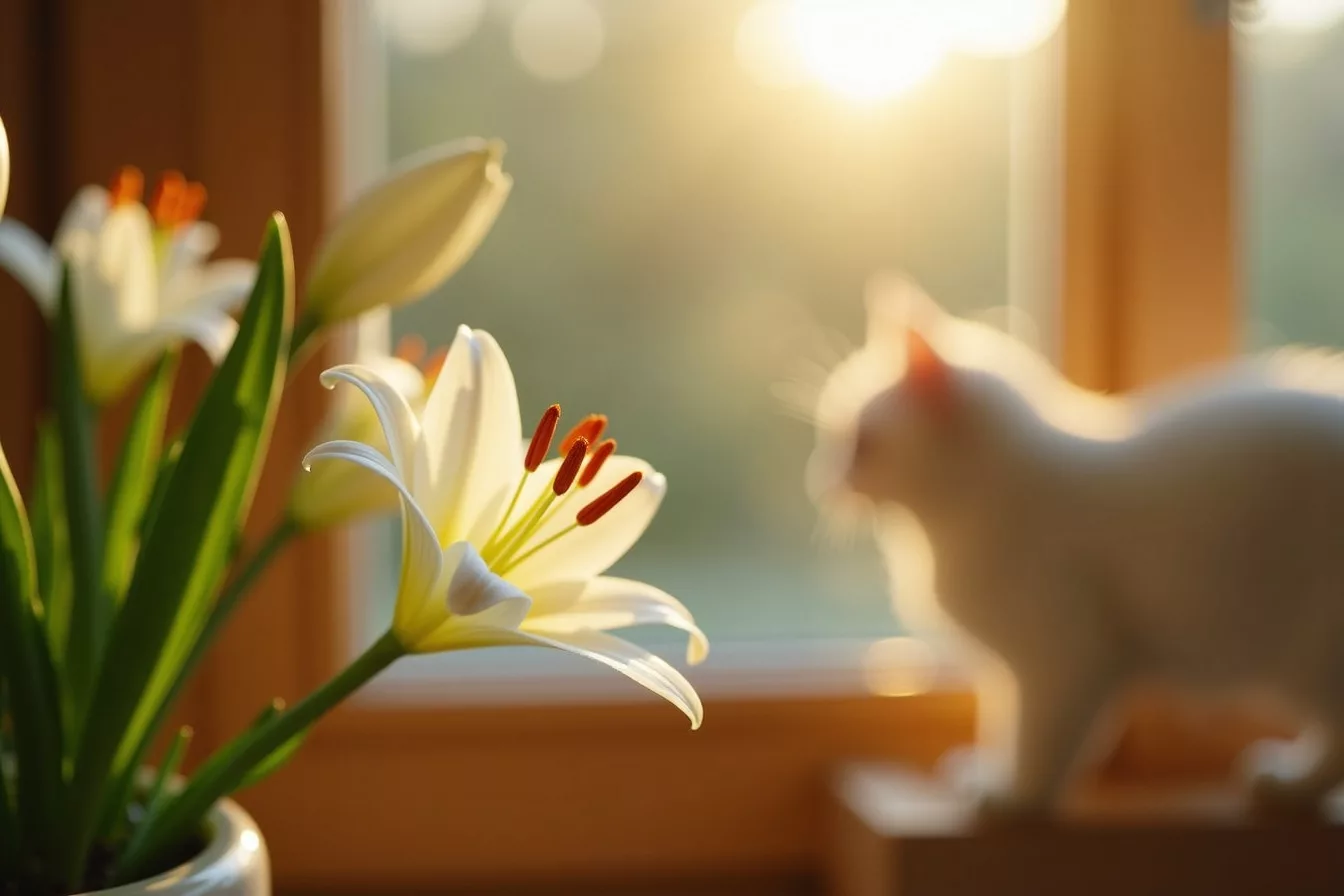

A shocking new warning from British veterinarians has cat owners frantically checking their windowsills. A 2024 RSPCA study found that lilies are responsible for 34% of plant-related poisoning cases in UK cats—and the problem is getting worse as more households bring them indoors. In this article you’ll discover exactly which lily varieties pose the greatest risk, the early warning signs your cat has been exposed, and the one emergency action that could save your pet’s life. The most surprising finding? Many cat owners don’t realise their “safe” Easter lilies are actually lethal.
📊 Key Figures 2025
- 34% of feline poisonings: Linked to lilies in UK homes (RSPCA, 2024)
- 6 hours is critical: Symptoms can develop within this window after ingestion (British Veterinary Association)
- 90% of untreated cases: Result in acute kidney injury in cats (RVC study, 2024)
Sources: RSPCA, British Veterinary Association, Royal Veterinary College
Why Lilies Are So Dangerous to Cats
Lilies contain compounds called glycosides that are highly toxic to feline kidneys. Unlike dogs, who may experience mild gastrointestinal upset, cats lack the liver enzymes needed to break down these toxins—making even small amounts potentially fatal. The danger extends beyond eating the flower itself: pollen, leaves, stems, and even water from the vase can poison your cat.
Worst of all, many cat owners remain unaware because they assume lilies are decorative only. “We see cats admitted weekly who’ve nibbled lilies they found on a shelf or windowsill,” says Dr. James Mitchell, feline specialist at the Royal Veterinary College. “The tragedy is that most of these cases are entirely preventable.”
Which Lily Varieties Are Most Dangerous?
Not all lilies carry equal risk. True lilies—including Easter lilies, Stargazer lilies, Oriental lilies, and Tiger lilies—are the most lethal. Asiatic varieties are particularly common in UK homes during spring and summer months. Peace lilies and Calla lilies, whilst still toxic, cause milder symptoms like oral irritation.
A real case highlights the urgency: Mabel, a 3-year-old tabby from Manchester, ingested pollen from an Easter lily arrangement left on a coffee table. Within 8 hours, her owner noticed she’d stopped eating and was lethargic. Emergency treatment at an out-of-hours clinic saved her life, but her family faced a £2,400 veterinary bill.
⚠️ Warning
If your cat has consumed any part of a lily, contact your vet or emergency animal hospital immediately—do not wait for symptoms. Time is critical: treatment within 18-24 hours dramatically improves survival rates. Have the plant name ready when you call.
Early Warning Signs Every Cat Owner Must Know
Symptoms typically appear within 6-12 hours of exposure. Initial signs include loss of appetite, lethargy, vomiting, and excessive drooling. Your cat may hide or seem unusually withdrawn. As kidney damage progresses, you might notice increased thirst and urination, or conversely, a complete lack of urination—both red flags.
The insidious nature of lily toxicity is that it causes silent organ damage. “A cat might look recovered after 48 hours, but kidney failure is developing internally,” explains Dr. Sarah Chen, PDSA poisoning expert. “Without bloodwork, owners won’t know their pet is in danger.”
✅ Expert Tip
Create a “cat-safe” flower list on your phone’s notes app. Safe alternatives include sunflowers, roses (remove thorns), orchids, and spider plants. Before bringing any bouquet or potted plant into your home, spend 30 seconds googling its name plus “toxic to cats.” This one habit takes seconds and could save your cat’s life.
What To Do Right Now
If you have lilies at home, remove them immediately—even if your cat has never shown interest. Place them outside or give them to a friend without cats. Check your garden and potted plant collection; lily bulbs sometimes arrive mixed with other plants.
If you’ve already disposed of lilies, observe your cat for the next 72 hours. Any unusual behaviour warrants a call to your vet. Consider booking a precautionary check-up if your cat had access to lilies within the past week—early bloodwork can detect kidney stress before symptoms appear.
The 2024 British Veterinary Association report emphasises that emergency vets are increasingly seeing preventable lily poisonings during spring. With better awareness, these tragic cases could be eliminated entirely.
Conclusion: One Simple Change Could Save Your Cat
Lilies remain one of the most dangerous household plants for cats, yet they’re among the easiest to avoid. The fact that 34% of plant-related cat poisonings involve lilies should alarm every cat owner. Your cat doesn’t eat flowers to be naughty—curiosity and accidental pollen exposure are enough. Remove lilies today, share this warning with fellow cat lovers, and never hesitate to contact your vet if your cat has any exposure. Have you checked your home for lilies yet—or do you have a favourite cat-safe plant you’d recommend?