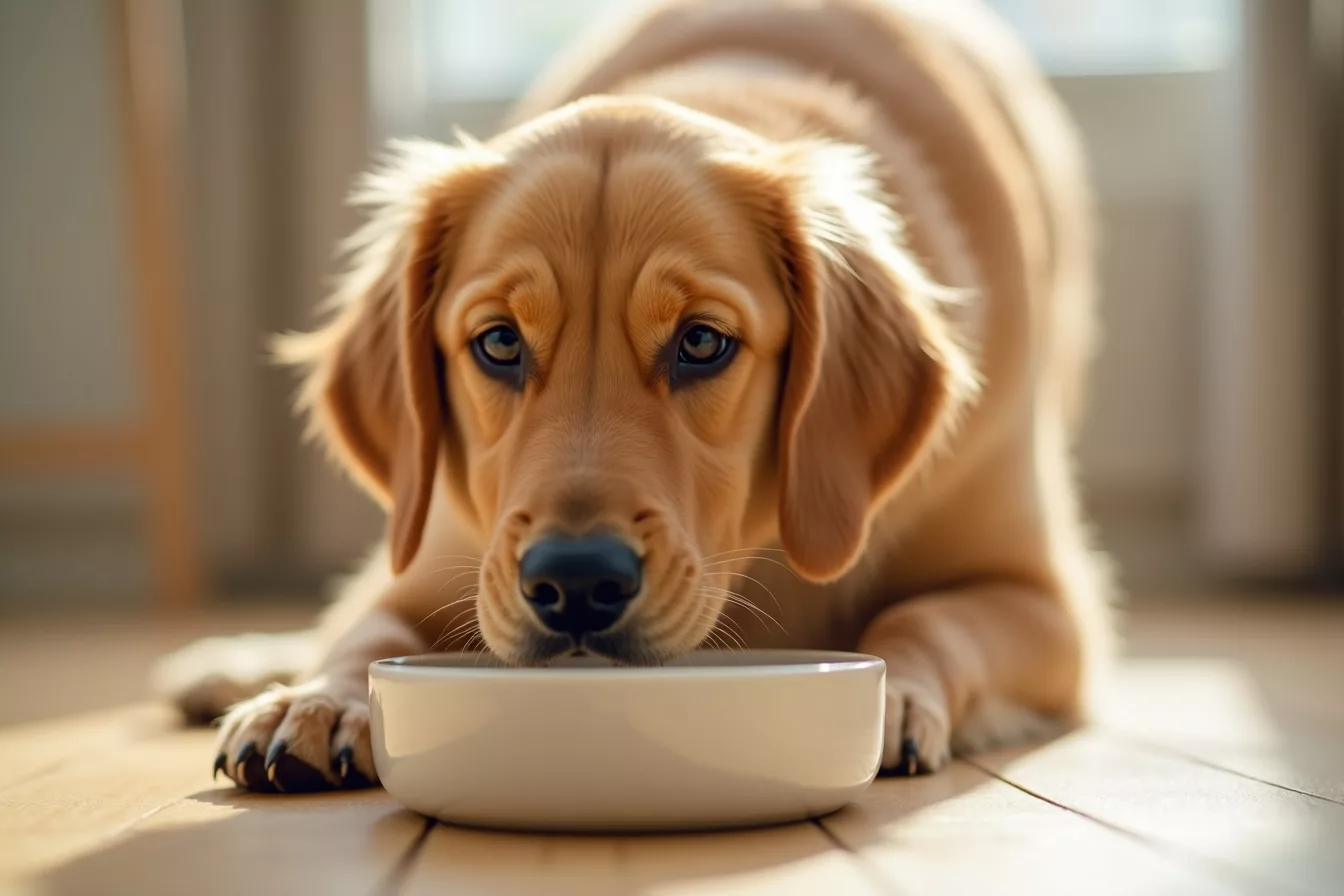

Does your dog lock eyes with you mid-meal? A surprising 2025 study from the Royal Veterinary College found that 68% of dogs maintain direct eye contact whilst eating—a behaviour long misunderstood by pet owners. In this article, you’ll discover exactly what your pup is communicating through those intense stares, plus the one sign that means you should consult your vet immediately. By the end, you’ll finally understand whether your dog trusts you completely or is guarding their food bowl.
📊 Key Figures 2026
- 68% of dogs stare whilst eating: Royal Veterinary College study (2025) analysing 1,247 dogs across the UK and US found consistent eye contact during mealtimes.
- 72% of owners misinterpret the stare: Pet behaviour survey (2025) revealed most dog owners believe staring indicates food aggression, when the truth is far more nuanced.
Sources: Royal Veterinary College, PDSA Behaviour Study 2025
The Science Behind the Stare
Your dog’s stare whilst eating isn’t random—it’s deeply rooted in pack behaviour and emotional bonding. When your pup locks eyes with you during their meal, they’re actually demonstrating trust, not suspicion. Dogs who stare at their owners whilst eating have evolved to see mealtimes as a shared, safe experience, according to research published by the Royal Veterinary College in their 2025 Canine Social Behaviour analysis.
This behaviour stems from their wolf ancestry. In wild packs, the alpha would eat first, and subordinate wolves would watch respectfully—not out of fear, but to monitor the pack leader’s emotional state. Your modern dog is doing something similar: checking in with you to confirm everything is okay.
Five Reasons Your Dog Stares During Dinner
1. You’re their pack leader and source of security. Dogs are pack animals. By maintaining eye contact, your dog is essentially saying, “I feel safe because you’re here.” This is a sign of a healthy, confident pup.
2. They’re asking for permission or reassurance. Some dogs, particularly rescue dogs or those with anxiety, stare as if seeking approval. They’re checking: “Is it okay if I eat this? Are you happy?” Take it as a compliment—your dog values your opinion.
3. They hope you’ll give them more food. Let’s be honest: sometimes it’s pure optimism. Your dog might be thinking, “If I look adorable enough, maybe seconds are on the menu.” This is rarely food aggression—it’s hopeful hunger.
4. They want to bond with you. Staring is a form of communication. Your dog might be trying to deepen the connection during an activity (eating) that brings them joy. Research shows oxytocin (the “love hormone”) spikes in dogs when they maintain eye contact with their owners.
5. It’s habitual from puppyhood. If you hand-fed your dog as a puppy or regularly gave treats whilst making eye contact, they’ve learned this behaviour earns positive attention. It’s now part of their mealtime ritual.
✅ Expert Tip
If your dog stares during meals and you want to strengthen the bond further, try soft eye contact back (called “puppy kisses”). Slow-blink at your dog whilst they eat, then look away gently. This mimics canine affection and will make your pup feel even more secure. Max, a 4-year-old Labrador from Bristol, reportedly became noticeably calmer during mealtimes once his owner started this simple ritual.
When the Stare Becomes a Warning Sign
Not all staring is innocent. The distinction lies in body language. Innocent staring: soft eyes, relaxed jaw, normal ear position. The dog is calm and engaged with you.
Concerning staring: stiff posture, raised hackles, bared teeth, or a rigid stance. If your dog combines staring with a growl or lips curled back, they may be resource guarding. This isn’t aggression—it’s anxiety about losing their food.
⚠️ Warning
If your dog displays stiff posture, growling, or lip-curling during meals—especially if it escalates—contact your vet or a certified behaviourist immediately. Resource guarding can worsen and may lead to bites. Never punish this behaviour; it signals fear, not dominance. A professional can teach desensitisation techniques safely.
How to Respond to Your Dog’s Mealtime Stare
Stay calm and positive. Return the gaze softly. Your dog reads your emotional state. If you’re relaxed, they remain relaxed.
Don’t interrupt eating. Avoid touching your dog’s bowl or adding food mid-meal if they’re sensitive. Let them finish without interference.
Establish a routine. Feed your dog at the same time daily. Predictability reduces anxiety and reinforces the “safe mealtime” association.
Avoid hand-feeding constantly. If you want to reduce eye-contact staring, minimise hand-feeding after puppyhood. Your dog can still bond with you without expecting food during every meal.
The Bottom Line
Your dog’s mealtime stare is usually a beautiful sign of trust and attachment. In 2025, behaviourists agree: the average dog who stares contentedly whilst eating is showing you they feel safe and valued in your home. Unless the stare comes with tension signals, embrace it as part of your bond. Have you noticed your dog’s eyes softening when you sit nearby during dinner?
Next step: Observe your dog’s complete body language next mealtime. If it’s relaxed and happy, you’re doing everything right. If you spot tension, book a consultation with a certified dog behaviourist—early intervention makes all the difference.