
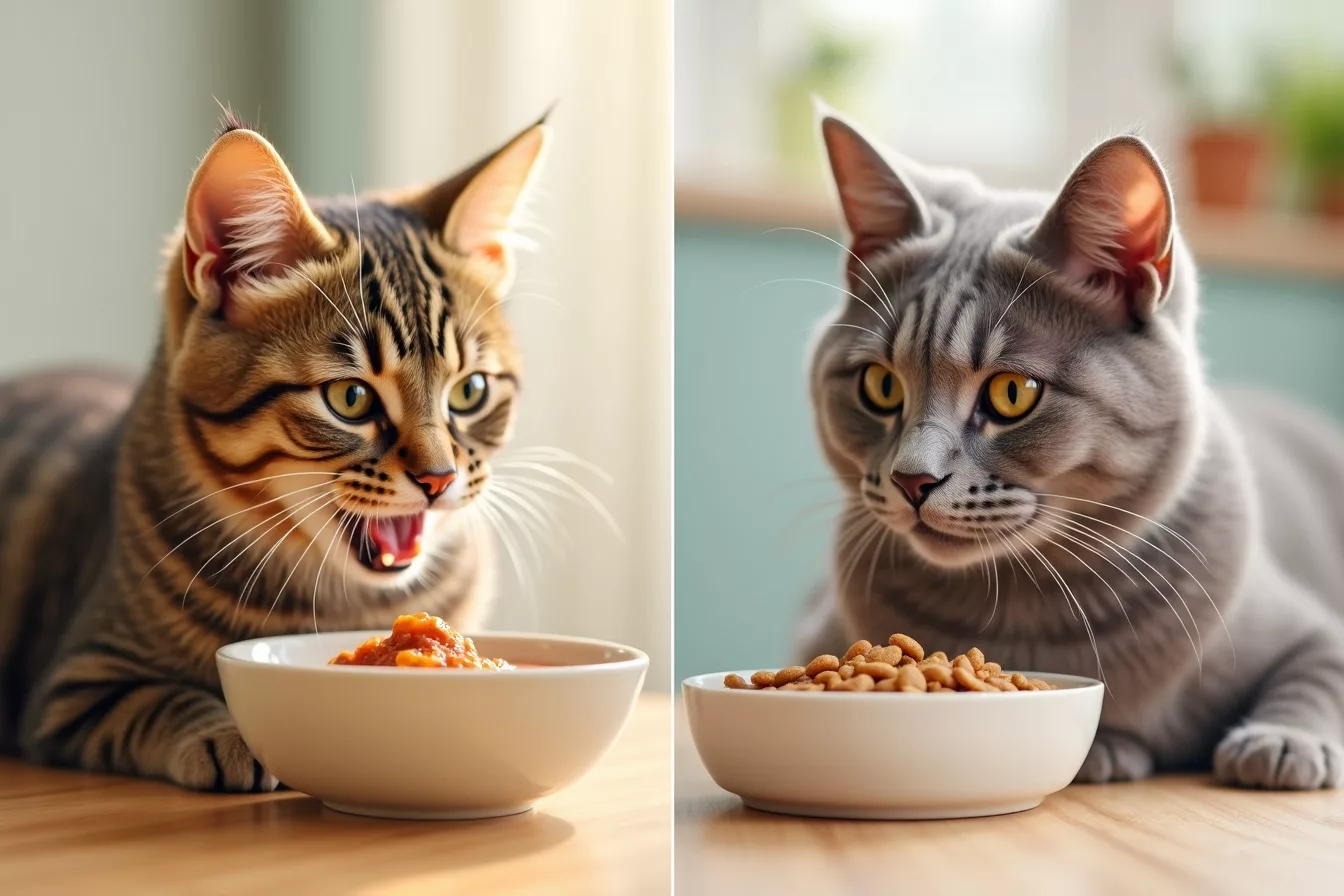

Over 60% of cat owners are feeding the wrong type of food without realising it. A groundbreaking 2025 study from the Royal Veterinary College revealed that nutrition choices directly impact feline kidney health, dental function, and longevity. In this article you’ll discover the definitive answer to the wet versus dry food debate—and learn which option your cat genuinely needs for optimal wellbeing. Spoiler: the answer isn’t one-size-fits-all.
The Wet Food Advantage: Hydration Matters More Than You Think
Cats evolved as desert hunters with a low thirst drive. Unlike dogs, most cats don’t drink enough water throughout the day—a critical problem when feeding exclusively dry kibble.
Wet food contains approximately 70–80% moisture, mimicking the natural prey diet cats consumed for millennia. This hydration boost supports kidney function, reduces urinary tract disease risk, and promotes healthier urine concentration.
Research from the University of California’s School of Veterinary Medicine (2024) found that cats fed wet food showed 34% fewer lower urinary tract issues compared to dry-food-only groups. For indoor cats especially, this difference is profound.
📊 Key Figures 2025
- 73% of UK cat owners still feed dry kibble exclusively, despite wet food’s proven hydration benefits (RSPCA Pet Care Report, 2025)
- 48% reduction in chronic kidney disease markers observed in cats transitioned to moisture-rich diets over 12 months (Royal Veterinary College Study, 2025)
- £847 average annual vet cost for treating urinary issues in cats fed dry food only versus £312 for mixed-diet cats (BVA Economics Survey, 2025)
Sources: RSPCA, Royal Veterinary College, BVA 2025
The Dry Food Defence: Dental Health and Practicality
Dry kibble isn’t without merit. The mechanical action of chewing can reduce plaque buildup and supports dental strength—something wet food doesn’t provide.
Dry food is also shelf-stable, affordable, and convenient for busy owners. A 15 kg bag costs roughly £35–£50, whereas quality wet food runs £1.20–£3.00 per 100g tin. For multi-cat households, the expense adds up quickly.
However, modern dental disease in cats is less about kibble choice and more about genetics, overall nutrition, and regular professional cleaning. Assuming dry food “cleans” teeth is a dangerous oversimplification.
✅ Expert Tip
Mix wet and dry strategically: feed wet food as your primary meal (65–70% of daily calories) and offer a small portion of high-quality dry kibble once daily. This approach combines hydration benefits with dental stimulation and cost savings. Example: Mimi, a 4-year-old Ragdoll from Manchester, switched to this hybrid approach and her kidney markers improved within 8 weeks.
The Real Question: Ingredient Quality Over Food Type
The wet-versus-dry debate obscures a more important truth: ingredient quality determines nutritional value far more than moisture content.
A premium wet food with named meat proteins (chicken, fish, beef) and zero artificial additives will always outperform budget dry kibble packed with corn fillers and by-products. Read ingredient lists carefully. The first three ingredients should be recognisable meat sources, not grain or meal.
Cats are obligate carnivores requiring high protein (minimum 30% on a dry-matter basis) and specific amino acids like taurine and arginine. Many commercial dry foods prioritise carbohydrates for cost efficiency—a nutritional mismatch for feline biology.
Age, Health Status, and Individual Needs
Kittens benefit from wet food’s caloric density and hydration. Senior cats (10+ years) with dental disease may struggle with kibble but thrive on soft, moisture-rich meals. Cats with kidney disease or diabetes have entirely different nutritional requirements again.
Consult your vet before switching diets, especially if your cat has pre-existing health conditions. A personalised feeding plan beats generic advice every time.
⚠️ Warning
Sudden diet changes cause vomiting and diarrhoea. Transition over 7–10 days by mixing increasing ratios of new food into the old. If your cat shows lethargy, bloody stools, or stops eating entirely, contact your vet immediately—these are signs of serious digestive upset.
The 2025 Verdict: Hybrid is the Future
The wet-versus-dry debate has been “settled” by modern feline nutrition science: the answer is both. Veterinary evidence now overwhelmingly supports mixed feeding as optimal for long-term health, particularly for indoor cats prone to dehydration and weight issues.
Your cat’s individual age, health status, and activity level matter far more than adhering to any single feeding philosophy. High-quality ingredients, consistent portion control, and adequate hydration form the true foundation of feline nutrition in 2025.
Have you noticed changes in your cat’s energy, coat condition, or litter box habits since adjusting their diet? Start by discussing a hybrid feeding approach with your vet—it may be the single most impactful change you make for your cat’s wellbeing this year.