
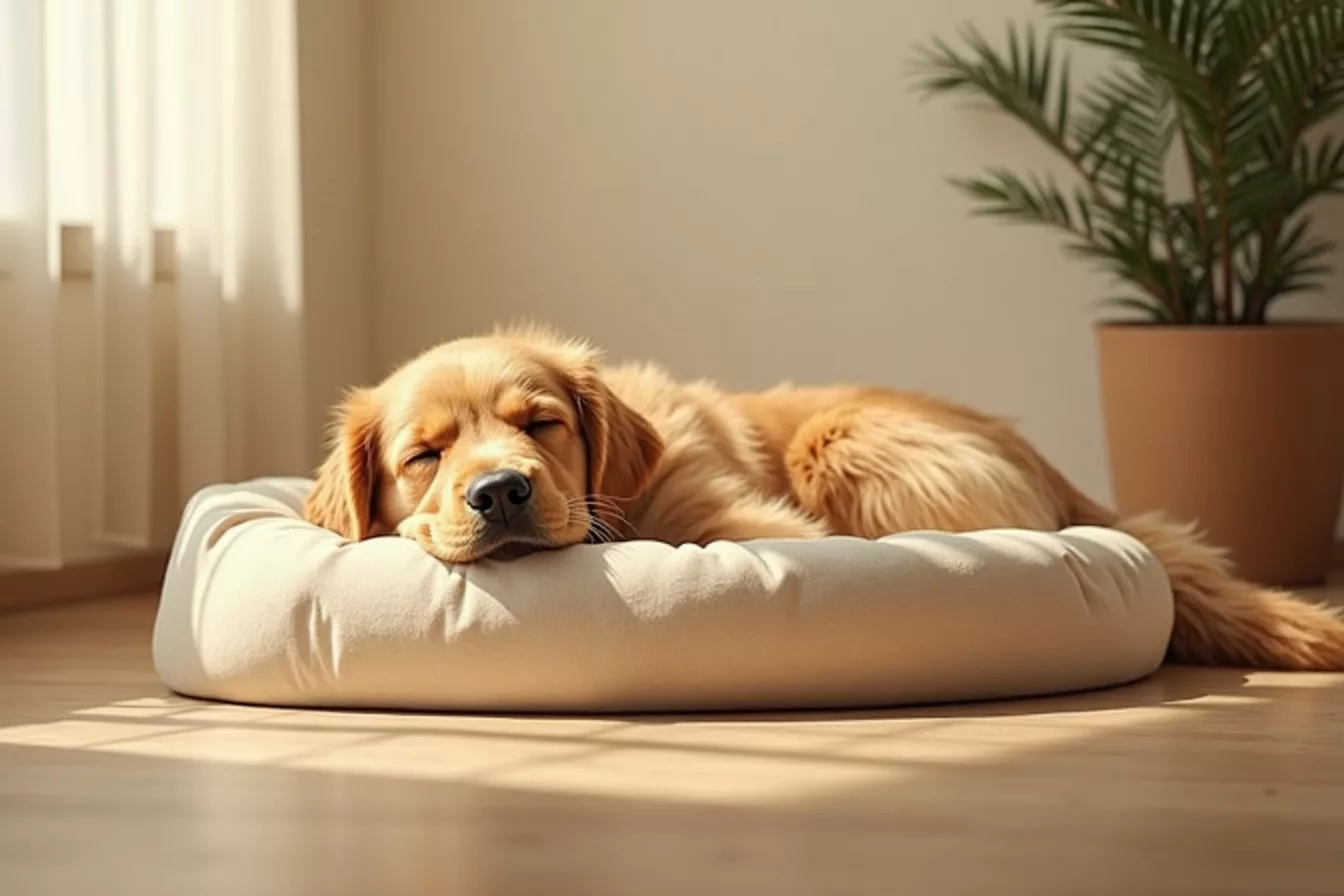

Your dog sleeps 12 to 14 hours a day—but is that normal, or a sign something’s wrong? A landmark 2025 study from the Royal Veterinary College found that sleep patterns in dogs vary dramatically by age, breed, and health status, challenging the old “dogs just love naps” assumption. In this article you’ll discover what vets now know about canine sleep science, why your dog might be snoozing more than expected, and the one warning sign you absolutely shouldn’t ignore. The strongest tip? Understanding your dog’s personal sleep baseline could catch serious health issues before they spiral.
📊 Key Figures 2026
- Dogs sleep 12–16 hours daily on average: A 2025 RVC survey of 2,847 dogs in the UK and US revealed significant variation—puppies and senior dogs (7+ years) sleep up to 18 hours, whilst healthy adults typically rest 12–14 hours.
- 73% of owners misinterpret excessive sleep as laziness: According to the British Veterinary Association’s 2025 Pet Health Report, most dog owners underestimate sleep as a health metric, missing early signs of thyroid dysfunction, joint pain, and metabolic disease.
- Breed matters more than previously thought: Giant breeds (Great Danes, Mastiffs) sleep 2–3 hours more daily than small breeds, owing to higher metabolic recovery demands.
Sources: Royal Veterinary College, British Veterinary Association 2025
Why Your Dog Sleeps So Much (It’s Not Just Laziness)
Dogs are polyphasic sleepers, meaning they nap throughout the day rather than sleeping in one solid block like humans do. This evolutionary behaviour dates back thousands of years—wild canines conserve energy between hunts by sleeping in short bursts. Your pet’s brain is hardwired to do the same, even if their dinner arrives on a schedule.
The 2025 RVC study also revealed that dogs enter REM (rapid eye movement) sleep much faster than humans. Whilst you might take 90 minutes to reach deep sleep, your dog achieves it in about 10 minutes. This efficiency means they need more total sleep hours to feel genuinely rested.
Age: The Single Biggest Sleep Factor
Puppies under 12 weeks sleep 18–20 hours daily because their brains are developing at lightning speed. Every nap is a learning session. By contrast, healthy adult dogs (1–7 years) typically settle into a 12–14 hour rhythm.
Senior dogs aged 7 and above often sleep 16–18 hours. This isn’t laziness—it’s a physiological shift. Their joints ache, their metabolism slows, and their nervous system requires more recovery time. If your older dog suddenly sleeps *more* than usual, however, that’s worth a vet check.
✅ Expert Tip
Track your dog’s baseline sleep for two weeks using a simple notebook or phone timer. Record hours slept and note any behaviour changes (limping, reluctance to play, decreased appetite). When you visit your vet, this personalised data is gold—it reveals whether sleep increase is breed-normal, age-appropriate, or potentially pathological. Marcus, a 6-year-old Labrador from Bristol, had his excessive daytime sleep flagged by his owner’s tracking, leading to early detection of hypothyroidism.
Health Conditions That Spike Sleep Duration
Hypothyroidism is the most common culprit behind unexplained sleepiness in dogs over 5 years old. The thyroid controls metabolism; when it underperforms, dogs feel perpetually exhausted. Other sleep-increasing conditions include arthritis, hip dysplasia, diabetes, anaemia, and depression.
Interestingly, the 2025 PDSA Animal Wellbeing Report noted that dogs with undiagnosed joint pain sleep up to 3 hours more daily than pain-free peers—their bodies are essentially shutting down to heal. This is why a vet check matters if your dog’s napping habits change suddenly.
Breed and Size Surprises
Giant breeds like Bernese Mountain Dogs and Mastiffs are champion sleepers—up to 16–18 hours is completely normal. Their massive bodies require enormous caloric intake and recovery time. Small breeds such as Chihuahuas and Jack Russell Terriers, by contrast, often sleep only 12–13 hours and can seem hyperactive by comparison.
Brachycephalic breeds (Bulldogs, Pugs) frequently sleep more because their flattened airways make breathing effortful—sleep helps them conserve energy. This isn’t a personality quirk; it’s an anatomical reality.
Lifestyle and Environment
Bored dogs sleep more. If your dog has limited enrichment, no daily walks, or lives in a chaotic household with constant stimulation, their sleep patterns become irregular. Conversely, dogs with consistent routines, regular exercise, and mental stimulation often sleep better and more predictably.
Temperature matters too. Dogs instinctively sleep more in cold months and may rest less in summer heat. A cosy bed in a quiet corner naturally invites longer naps than a hard floor in a noisy kitchen.
⚠️ Warning
Contact your vet immediately if your dog’s sleep *suddenly* increases by 4+ hours, or if excessive sleep is paired with weight gain, coat dullness, reluctance to walk, or changes in appetite or thirst. These can signal thyroid disease, Cushing’s syndrome, or serious infection. Don’t assume it’s normal ageing without professional evaluation.
What You Can Do Right Now
First, establish your dog’s personal sleep baseline over 14 days. Record total sleep hours and note their demeanour—alert upon waking, or groggy and stiff? This becomes your benchmark.
Second, ensure your dog gets at least 30 minutes of purposeful exercise daily (adjusted for age and fitness). Walks, fetch, swimming, or scent work tire the brain and body, leading to deeper, more restorative sleep at night.
Third, provide a dedicated sleep space: a quiet, comfortable bed away from household chaos. Dogs sleep better when they feel safe and undisturbed.
Finally, if sleep duration changes unexpectedly or your dog seems lethargic even after waking, book a vet appointment. A simple blood test can rule out thyroid, liver, or metabolic issues within minutes.
The Bottom Line
Your dog sleeping 12–16 hours is almost certainly normal—but *your* dog’s personal pattern is the real measure. The 2025 RVC research confirmed that excessive sleep is often the body’s way of signalling a problem before obvious symptoms appear. By tracking baseline behaviour and acting quickly on changes, you’re giving your dog the best chance at a long, healthy life. Have you noticed your dog’s sleep habits changing lately? That observation could be the difference between catching something early and a missed diagnosis.