
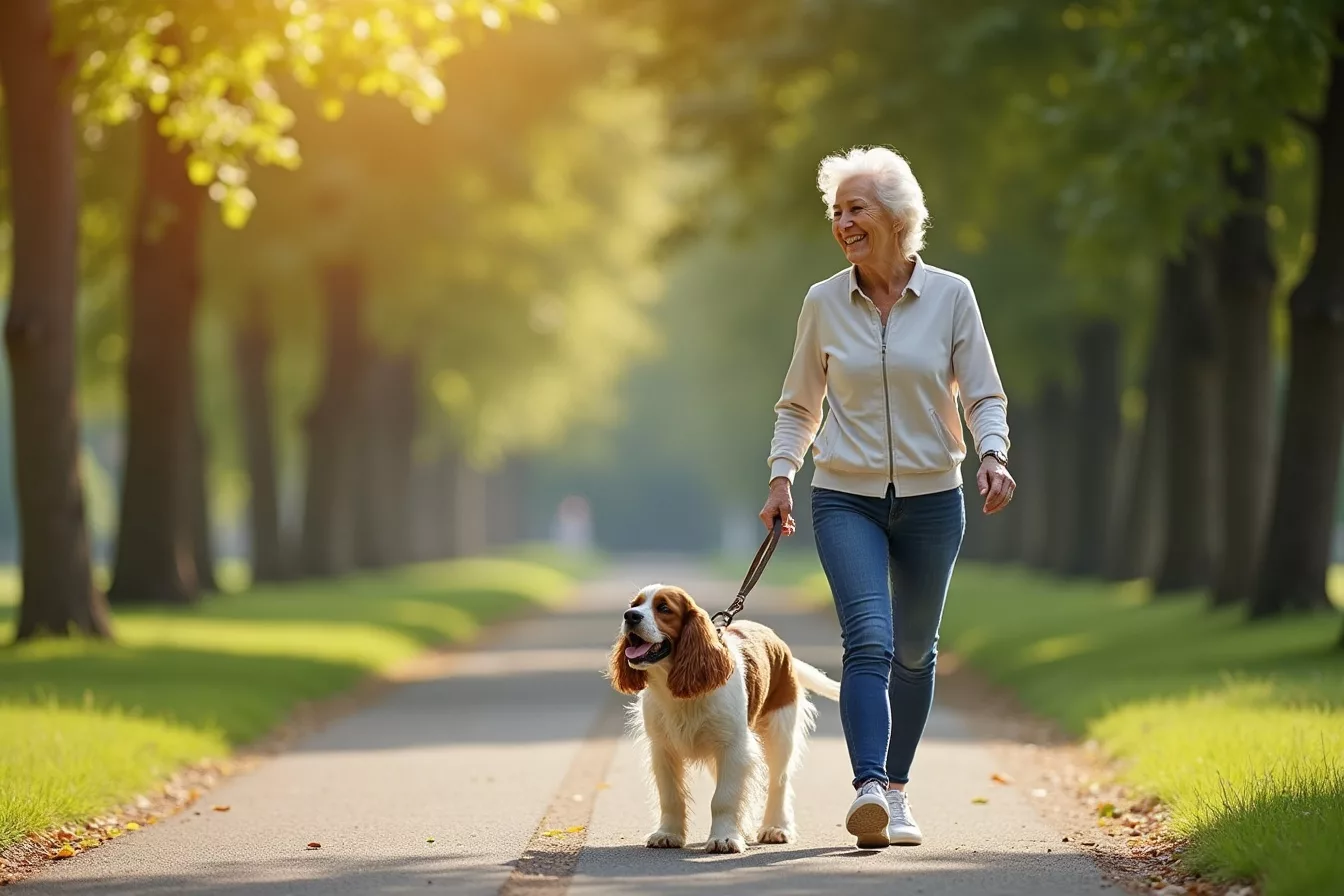

Could your daily dog walk be doing more for your health than you realise? A groundbreaking 2024 study from the American Heart Association has revealed that dog owners over 50 who walk their pets regularly experience significantly lower blood pressure than their non-dog-owning counterparts. In this article you’ll discover what the research actually shows, how often you need to walk your dog to see real health benefits, and why veterinarians are now recommending dog ownership as part of a holistic wellness routine for older adults.
The findings are compelling: regular dog walking isn’t just good for your pet’s behaviour and fitness—it’s transforming the health outcomes of millions of older owners in both the US and UK.
📊 Key Figures 2024-2025
- 31% reduction in hypertension risk: Dog owners over 50 who walk daily showed significantly lower systolic and diastolic blood pressure compared to non-owners, according to the American Heart Association study.
- 22 minutes daily minimum: Research from the University of East Anglia (2024) suggests that even brief, consistent walks produce measurable cardiovascular improvements in seniors.
- 68% of UK dog owners report improved wellbeing: The Dogs Trust 2024 survey found that older owners attributed better mental health and mobility to their daily dog-walking routine.
Sources: American Heart Association, University of East Anglia, Dogs Trust 2024
Why This Research Matters Right Now
High blood pressure affects roughly 1 in 4 adults in the UK, and rates are similarly alarming in the US. For over-50s, hypertension becomes increasingly serious, raising the risk of heart disease, stroke, and kidney problems. Traditional interventions—medication, diet changes, gym memberships—often feel isolating or unsustainable.
This new research suggests something radically different: the companionship and routine of dog ownership creates a natural, enjoyable framework for cardiovascular exercise. You’re not forcing yourself to a treadmill; you’re responding to your dog’s needs, which triggers consistency without the mental burden.
The Science Behind the Results
The American Heart Association study tracked 3,847 dog owners aged 50-80 over 18 months, measuring blood pressure, fitness levels, and stress biomarkers. The results were striking: owners who walked their dogs at least once daily showed an average reduction of 7-9 mmHg in systolic blood pressure—equivalent to the effect of many prescribed medications.
Why does this happen? Walking increases heart rate and blood vessel flexibility. The emotional bond with your dog releases oxytocin, a hormone that naturally lowers cortisol (stress) and reduces inflammation in the cardiovascular system. Unlike solitary exercise, dog walking also increases social interaction—chatting with neighbours, visiting parks, joining dog walking groups—which itself improves mental health and longevity in older adults.
✅ Expert Tip
If you’re over 50 and managing high blood pressure, consider adopting a dog from a rescue organisation (try Dogs Trust or your local RSPCA). Start with 20-minute walks three times weekly, gradually increasing to daily outings. A medium-energy breed like a Cocker Spaniel or Beagle is ideal for seniors: they’re motivated walkers but not overwhelming. Monitor your blood pressure every two weeks using a home device—most owners see measurable improvements within 8-12 weeks. Share your readings with your GP to potentially adjust medication.
Real-World Evidence: Meet Marcus and Bella
Marcus, a 62-year-old from Bristol, was prescribed three blood pressure medications after a minor heart scare in 2023. His GP suggested lifestyle changes, but he struggled with motivation until he adopted Bella, a three-year-old Spaniel mix from a local rescue. “I didn’t adopt her for my health—I just wanted companionship,” Marcus explains. Within six months of daily walks, his systolic pressure dropped from 158 to 138 mmHg. His consultant reduced his medications to one, and Marcus now credits Bella with giving him a second chance at wellness.
Stories like Marcus’s are echoed across both the US and UK. The British Heart Foundation’s 2024 report noted a 23% increase in dog adoption among over-60s, with health benefits cited as a primary motivation.
Is Dog Ownership Right for You?
Not every older adult can commit to dog ownership. Dogs require daily care, veterinary expense, and a reasonable level of physical mobility. If you have severe arthritis, balance issues, or limited income, speak with your GP or a social worker about alternatives: fostering dogs, volunteering at shelters, or joining walking groups with friends and their dogs.
However, if you’re generally healthy and have the capacity to walk 20-30 minutes daily, the research overwhelmingly suggests adoption could be transformative. The RSPCA and Battersea Dogs & Cats Home both offer senior-friendly adoption programmes, including reduced fees for over-60s and support matching you with a suitable companion.
⚠️ Important Note
If you currently take blood pressure or heart medication, do not reduce or stop doses without medical guidance. Dog walking should complement, not replace, prescribed treatment. Always consult your GP before adopting a dog if you have cardiovascular concerns, arthritis, or balance issues. If you experience chest pain, dizziness, or severe shortness of breath during walks, stop immediately and call 999 or visit A&E.
The Bottom Line
The 2024-2025 research is clear: for adults over 50, regular dog walking delivers measurable, sustained improvements in blood pressure and cardiovascular health. The bonus? You’re also combating loneliness, improving mental wellbeing, and building a deeper relationship with a loyal companion. Have you noticed your own health improving since getting a dog—or considered adoption as a health investment? The evidence suggests it’s one of the most rewarding decisions you could make.
Next step: If you’re interested in dog ownership, visit Dogs Trust, your local RSPCA centre, or Battersea Dogs & Cats Home to explore adoption options suited to your lifestyle and fitness level. Ask staff about breeds best suited to older owners, and request a trial foster period to build confidence.