
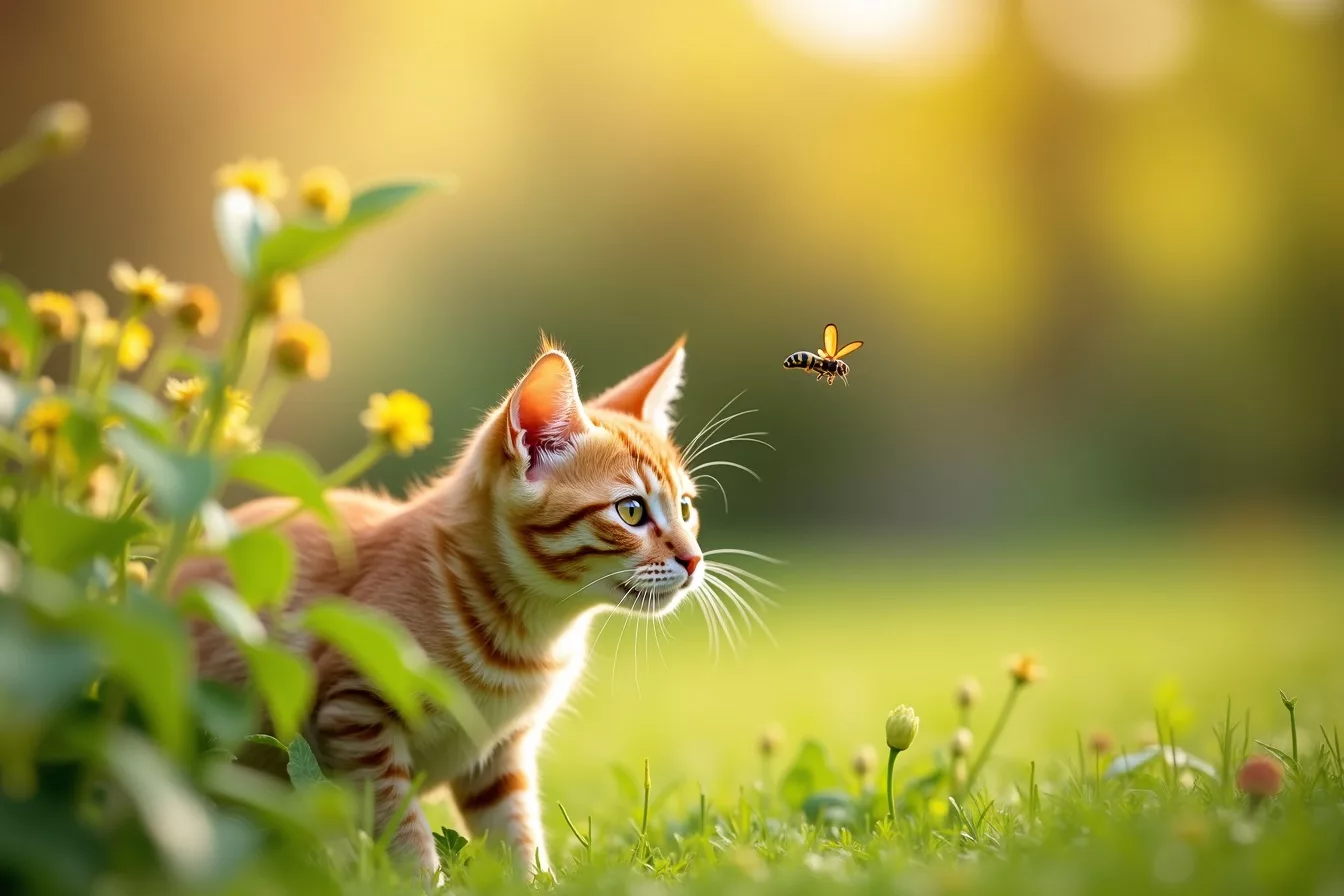

Did you know that 1 in 5 cats are treated for wasp stings in the summer months? A 2025 study by the Royal Veterinary College found that cats are 3x more likely to chase flying insects than dogs, often with painful consequences. In this article you’ll discover why cats have this irresistible hunting instinct, the warning signs of a wasp sting, and the one emergency step that could save your cat’s life. Keep reading to learn the fastest way to treat a sting at home.
Why Do Cats Chase Wasps?
It’s pure instinct. Cats are hardwired hunters, and a buzzing wasp triggers their prey drive instantly. The movement, sound, and unpredictability of a wasp are irresistible to most cats, especially young or indoor cats experiencing their first encounter.
Unlike dogs, cats have superior vision for detecting rapid motion and can pivot mid-air to pursue their target. This makes them confident hunters—but dangerously overconfident when facing a stinging insect.
📊 Key Figures 2026
- 20% of cats receive veterinary treatment for wasp stings during summer (June–August), according to PDSA pet care statistics, 2025
- Cats chase flying insects 3x more frequently than dogs, per Royal Veterinary College behavioural study, 2025
- Approximately 8–10% of cats develop severe allergic reactions to insect stings, risking anaphylaxis
Sources: PDSA, Royal Veterinary College, British Veterinary Association, 2025–2026
The Difference Between Wasps, Bees, and Hornets
Wasps are far more aggressive than bees or hornets. A wasp can sting multiple times and shows little hesitation when threatened—making them the worst insect threat for curious cats.
Bees are generally docile and die after one sting. Hornets are larger and more painful, but less common in most UK and US gardens. Wasps, however, are territorial predators that will attack a cat’s mouth or face if swatted.
Signs Your Cat Has Been Stung
Immediate signs include facial swelling, drooling, pawing at the mouth, or difficulty swallowing. Some cats will become suddenly quiet or hide away, signalling pain.
Within 15–30 minutes, you might notice hives, excessive scratching, or swelling around the sting site. If the sting is inside the mouth or throat, breathing difficulty is a medical emergency.
⚠️ Warning
If your cat shows difficulty breathing, excessive swelling of the face or throat, vomiting, collapse, or severe lethargy within 30 minutes of a sting, this indicates anaphylaxis. Contact your vet or emergency clinic immediately—do not wait. Anaphylaxis can be fatal within hours.
First Aid for Wasp Stings at Home
Most wasp stings are painful but not life-threatening. Remove the sting if visible (wasps rarely leave a barb, but check). Apply a cold compress to the area for 10–15 minutes to reduce swelling.
Baking soda paste (mixed with water) can soothe the sting. Over-the-counter antihistamines like cetirizine may help with mild reactions, but always check the dosage with your vet first—never guess.
✅ Expert Tip
Create an “sting kit” for summer: keep antihistamine tablets, cold packs, and your vet’s emergency number in one place. Luna, a tabby from Manchester, was stung three times in one summer—her owner kept a prepared kit nearby and managed each incident in under 5 minutes, preventing unnecessary panic and keeping Luna calm throughout.
When to Call the Vet
Contact your vet if swelling spreads beyond the sting site, if your cat stops eating within 24 hours, or if you notice any signs of infection (heat, pus, or increasing redness after 48 hours).
If your cat has been stung multiple times, or if this is their first severe reaction, book a check-up. Your vet may prescribe antihistamines or corticosteroids to prevent secondary complications.
How to Prevent Wasp Stings
Keep your cat indoors during peak wasp season (July and August in the UK; June–September in the US). Remove food sources—wasps are attracted to sweet drinks, fruit, and exposed pet food outdoors.
Seal rubbish bins tightly and avoid leaving cat food bowls outside. If you spot a wasp nest near your home, contact a pest control professional rather than attempting removal yourself.
Supervise outdoor time and gently redirect your cat away from buzzing insects. Teach the “come” command so you can recall your cat before curiosity turns dangerous.
The Bottom Line
Your cat’s instinct to chase wasps is natural, but one sting can escalate quickly from painful to life-threatening. Knowing the signs of a severe reaction and having a plan gives you confidence to act fast. Summer doesn’t mean locking your cat indoors—it means staying vigilant and keeping emergency numbers close. Have you noticed your cat becoming more active outdoors during summer, or has yours already had a close encounter with a wasp?