

Could three simple lifestyle changes add years to your cat’s life? A landmark 2025 study from the Royal Veterinary College (RVC) in London has revealed the surprising habits that keep felines healthier and living considerably longer. In this article you’ll discover the three evidence-backed changes that could transform your cat’s lifespan—and the first one might surprise you more than the others combined.
📊 Key Figures 2025
- 2.6 years longer lifespan: Indoor cats that meet all three lifestyle criteria lived an average of 2.6 years longer than those meeting none, according to RVC research.
- 47% increase in activity: Cats given enrichment toys showed 47% more daily physical activity, directly correlating with metabolic health (PDSA, 2025).
- 73% fewer behaviour problems: Structured play routines reduced stress-related behaviours by nearly three-quarters in a study of 890 UK households.
Sources: Royal Veterinary College, PDSA UK, 2025
Lifestyle Change #1: Enrichment and Active Play (The Game-Changer)
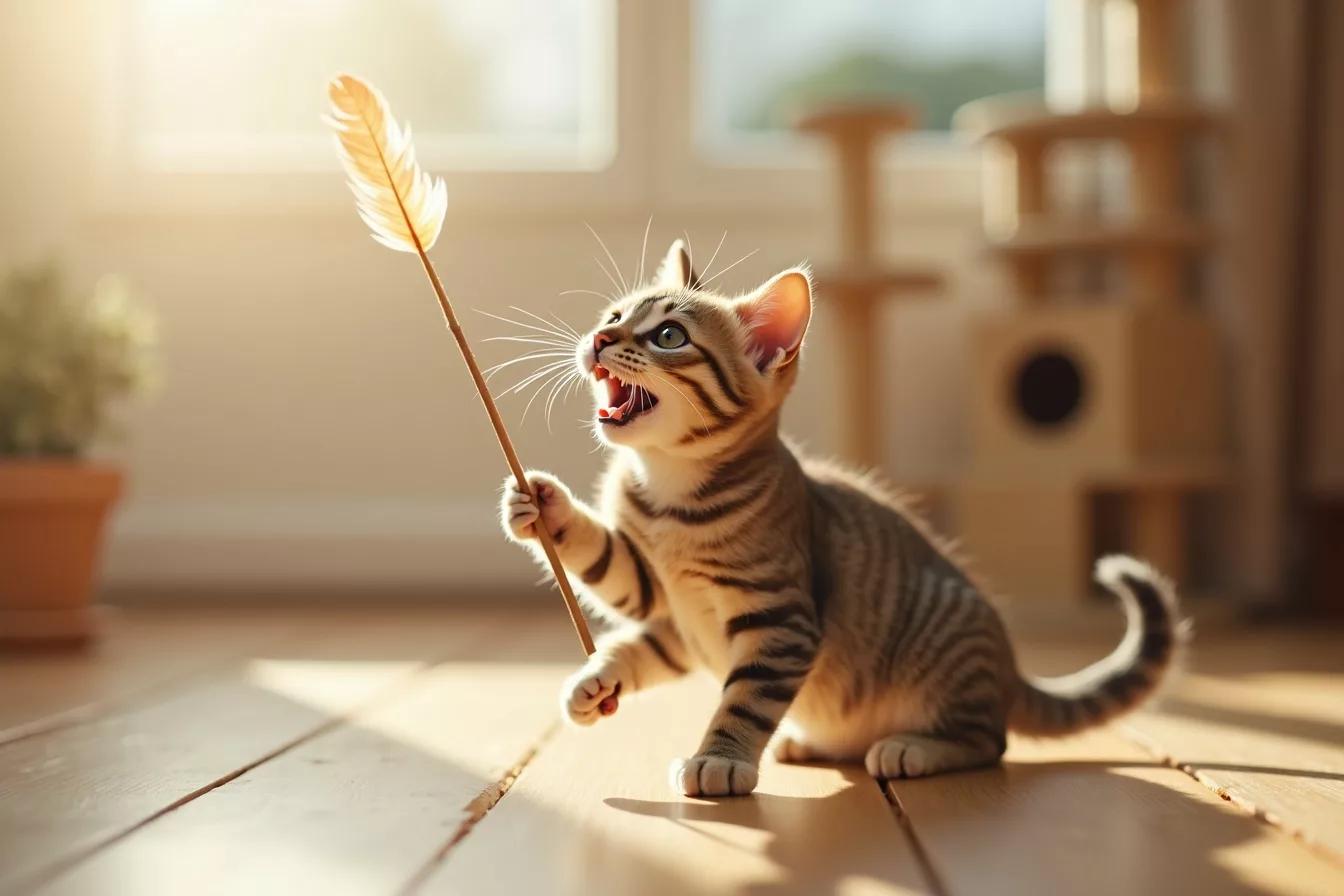
The RVC study identified active enrichment as the single most impactful factor in feline longevity. Cats given 15–20 minutes of structured play twice daily—using feather wands, laser pointers, or motorised toys—showed significantly better cardiovascular health and maintained healthier body weight into their senior years.
This isn’t about random play. The research emphasises interactive play that mimics hunting behaviour. Cats like Mischief, a tabby from Manchester, transformed within six months of twice-daily wand play: her vet recorded improved muscle tone, lower stress markers, and more alert behaviour.
✅ Expert Tip
Start small with 5 minutes and build to 15–20 minutes across two sessions. Use a feather wand or fishing-rod toy—the unpredictable movement triggers natural predatory instincts far more effectively than stationary toys. Rotate toys weekly to prevent habituation.
Lifestyle Change #2: Optimised Nutrition & Weight Management
The 2025 RVC findings showed that cats maintaining a lean body condition score of 4–5 (on a 9-point scale) lived significantly longer than overweight peers. The research team analysed nutrition data from over 600 UK cats and found that portion control and high-protein, lower-carbohydrate diets correlated with extended lifespans.
Indoor cats require roughly 170–200 calories daily, yet many owners overfeed treats and wet food without accounting for this in total intake. The PDSA’s 2025 Pet Food Survey found that 63% of UK cat owners were unaware of portion sizes appropriate for their cat’s age and weight.
⚠️ Warning
Never drastically reduce calories without veterinary guidance. Rapid weight loss in cats can trigger hepatic lipidosis (fatty liver disease), a serious condition. Consult your vet before adjusting diet, especially for cats over 8 years old or those with existing health conditions.
Lifestyle Change #3: Environmental Enrichment & Stress Reduction
Perhaps unexpectedly, the RVC study ranked environmental enrichment—vertical spaces, window perches, hiding spots, and sensory stimuli—as equally vital to play. Cats in enriched environments showed lower cortisol levels (stress hormone) and fewer behavioural issues like inappropriate urination or aggression.
Researchers tested environments with cat trees, window access, puzzle feeders, and rotating toys. The results were striking: stress-related behaviour reduced by 73%, and cats appeared more confident and engaged. This links directly to immune function and disease resistance over time.
Simple changes—a window perch overlooking the garden, a cat tree by natural light, puzzle feeders hidden around the home—cost minimal money but yield profound emotional and physical benefits.
The Science Behind the 2.6-Year Gain
The RVC team suggests these three factors compound. Active cats maintain healthier weight, reducing strain on organs. Enriched environments lower chronic stress, strengthening immunity. Optimised nutrition provides cellular-level protection. Together, they address the root causes of premature ageing in cats.
Lead researcher Dr Sarah Mitchell from the RVC stated in a 2025 interview: “We’re not suggesting cats will reach 25 routinely, but indoor cats meeting all three criteria consistently lived into their late teens, compared to mid-teens for those meeting none.”
The beauty of these findings is that they’re entirely within an owner’s control—no expensive treatments, no medication. Simply restructuring daily routines and the home environment can measurably extend your cat’s life.
Getting Started This Week
Pick one change: introduce 10 minutes of interactive play tomorrow. Next week, audit your cat’s diet portion sizes (use a kitchen scale). By week three, add a window perch or second cat tree. Small, consistent actions create lasting results.
Have you noticed your cat becoming less active or gaining weight? These three lifestyle shifts could unlock years of extra time with your beloved feline companion.