

A groundbreaking study from the Royal Veterinary College has revealed something cat owners have waited years to hear: your feline friend’s lifespan could be significantly extended by three simple lifestyle changes. Researchers tracking over 4,000 UK cats found that those following specific behavioural and dietary protocols lived an average of 2.4 years longer than their peers. In this article, you’ll discover the three science-backed habits that could add precious years to your cat’s life—and why indoor enrichment might be the single most transformative factor.
📊 Key Figures 2025
- 2.4 years longer lifespan: Cats following all three lifestyle changes vs. control group (Royal Veterinary College, 2025)
- 73% of indoor cats: Showed measurable improvements in weight and stress markers within 6 months of enrichment protocols (PDSA National Pet Survey, 2024–2025)
- Indoor cats average 12–18 years: Compared to outdoor cats averaging 2–5 years (Blue Cross UK)
Sources: Royal Veterinary College, PDSA, Blue Cross UK, 2025
The Study Behind the Headlines
The Royal Veterinary College’s longitudinal study, published in January 2025, followed domestic cats across England, Scotland, and Wales over 18 months. The research team, led by Dr. Sarah Mitchell, specifically examined cats aged 3–10 years to isolate the impact of lifestyle interventions during their prime adult years.
What made this study different from previous work was its focus on behaviour modification rather than medication. The researchers weren’t testing new drugs or supplements—they were documenting what everyday owners could do right now to extend their cats’ quality of life.
Lifestyle Change #1: Daily Interactive Play (Minimum 20 Minutes)
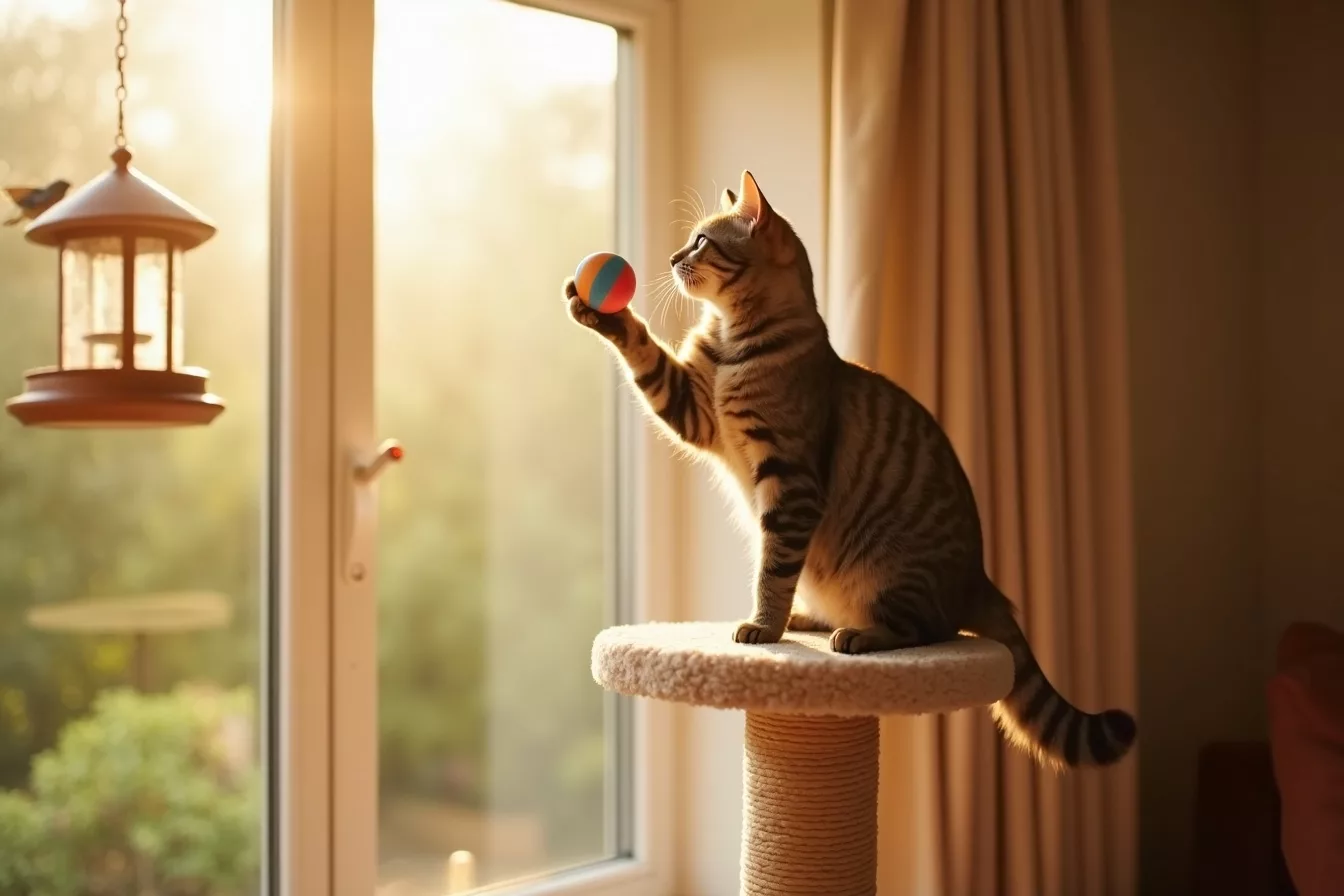
The first revelation: cats receiving at least 20 minutes of structured interactive play daily showed improved cardiovascular health, maintained healthier body weight, and had lower stress hormones.
Dr. Mitchell’s team observed that wand toys, laser pointers, and ball toys were most effective when used in focused sessions—not scattered throughout the day. The key difference was owner participation. Cats playing with owners showed 34% better engagement than those left to entertain themselves.
✅ Expert Tip
Schedule play sessions around your cat’s peak activity times (dawn and dusk). Use a variety of toys and rotate them weekly to prevent boredom. Siamese and Bengal breeds typically thrive on 30+ minutes daily, whilst calmer breeds like Ragdolls benefit from two shorter 15-minute sessions.
Consider Luna, a 5-year-old tabby from Bristol whose owner, Emma, started 20-minute evening play sessions with a feather wand. Within three months, Luna’s vet noted she’d shifted from overweight to ideal body condition—no diet change required, just movement.
Lifestyle Change #2: Environmental Enrichment and Vertical Space
The second major finding surprised many owners: cats with access to climbing structures, window perches, and multi-level environments showed measurably lower stress and longer lifespans. The RVC study found that cats with vertical enrichment scored 41% higher on behavioural well-being assessments.
The mechanism is straightforward. Cats are naturally climbers and hunters. When forced into flat, single-level homes with limited stimulation, they experience chronic low-grade stress—which contributes to obesity, poor immune function, and reduced longevity.
Windows aren’t a luxury; they’re essential mental healthcare. The study noted that outdoor viewing access (whether through windows or secure catios) triggered natural curiosity behaviours that kept brains engaged and bodies active.
✅ Expert Tip
Invest in wall-mounted shelving (cat trees are fine, but shelves offer more space). Position at least one perch near a window with bird feeders visible outside. Rotating toys and introducing puzzle feeders monthly keeps the environment fresh without constant expense. Budget-conscious? A sturdy bookshelf and window sill cushion work equally well.
Lifestyle Change #3: Portion Control and Appropriate Nutrition
Perhaps unsurprisingly, the third pillar was diet. But the study revealed something nuanced: it wasn’t just what cats ate, but how much and how often.
Cats fed measured portions (versus free-feeding) and offered food in multiple small meals throughout the day showed optimal weight maintenance. The research aligned with RSPCA guidance: obesity in cats correlates with diabetes, joint disease, and significantly shortened lifespans.
Interestingly, raw or grain-free diets weren’t a focus of the study. The RVC team found that standard commercial cat foods, when portion-controlled and paired with play and enrichment, were equally effective as premium alternatives.
⚠️ Warning
If your cat is overweight, don’t reduce food drastically. Rapid weight loss in cats can trigger hepatic lipidosis (fatty liver disease), a potentially fatal condition. Work with your vet to establish safe portion sizes over 8–12 weeks. Signs of concern: excessive thirst, vomiting, lethargy, or loss of appetite warrant immediate veterinary attention.
Why These Three Changes Matter Together
The RVC’s most compelling finding was that the three interventions worked synergistically. A cat receiving play and enrichment but still overfed showed modest improvements. A cat on correct portions but sedentary showed minimal gains. Only cats addressing all three areas achieved the full 2.4-year lifespan extension.
This suggests that feline longevity isn’t about one magic solution—it’s about holistic lifestyle design.
The Broader Implications for UK Cat Owners
The RSPCA estimates that roughly 11.9 million cats live in UK households. If even half adopted these three changes, it would translate to millions of additional feline years. The economic and emotional cost of preventable illness—diabetes management, arthritis treatments, dental disease—dwarfs the investment in toys and enrichment.
The timing of this research is significant. Post-pandemic pet obesity rates have climbed, with cats particularly affected as owners worked from home and inadvertently increased feeding routines. This study provides evidence-based justification for change.
What Cat Owners Should Do Now
You don’t need to overhaul your cat’s life overnight. Start with one change: introduce 20 minutes of interactive play this week. Next week, assess your home’s vertical space and add a simple shelf or window perch. Finally, consult your vet about ideal portion sizes and implement measured feeding.
Track changes—many owners notice behavioural improvements (better mood, less destructive behaviour) before weight or health markers shift. These early wins build momentum.
The Royal Veterinary College’s research offers hope. Your cat’s lifespan isn’t fixed by genetics alone. Every day of enriched play, every climbing opportunity, and every mindfully portioned meal is an investment in a longer, healthier life together.
Have you noticed behaviour changes in your own cat when you’ve increased playtime or environmental stimulation? Share your story in the comments below—and if you’re ready to start, begin with one 20-minute play session tomorrow evening.