

Did you know that 62% of cat owners feel rejected by their pets at least once a week? A groundbreaking 2025 study from the University of Lincoln’s Feline Behaviour Centre revealed that cat indifference isn’t coldness—it’s communication. In this article you’ll discover the five hidden reasons your cat ignores you, plus the one warning sign that means a vet visit is urgent. Spoiler: most of the time, your cat is actually showing you love.
📊 Key Figures 2026
- 62% of UK and US cat owners: Report their cat ignoring them weekly, yet 78% of these cats show affection through other behaviours (blinking, rubbing)
- University of Lincoln study (2025): Found that cats choose to ignore owners as a form of selective attention, not rejection—linked to their independent hunting ancestry
- PDSA Pet Wellbeing Report 2025: Only 8% of “ignored” cats exhibited genuine behavioural concerns; the rest were displaying normal feline personality traits
Sources: University of Lincoln, PDSA, American Cat Fanciers Association, 2025-2026
1. Your Cat Isn’t Ignoring You—They’re Filtering Attention
Cats are selective listeners by design. Unlike dogs, who evolved alongside humans as pack animals, cats domesticated themselves about 10,000 years ago and never fully lost their independent streak. Your cat’s brain prioritises threats, food, and territory over responding to every “here, kitty” call.
When Mittens from Portland, Oregon, ignored her owner’s repeated calls during dinner prep, her owner assumed behavioural problems. In reality, Mittens was demonstrating perfectly normal cat psychology: she’d already assessed that her owner wasn’t a threat and had no immediate food reward, so she filtered her attention elsewhere. This isn’t rudeness—it’s efficiency.
2. They’re Overstimulated (and Setting a Boundary)
Cats have a much lower sensory threshold than humans. What feels like gentle petting to you might feel overwhelming to your cat after 30 seconds. When your cat suddenly walks away mid-cuddle, they’re not rejecting you—they’re communicating “I’ve hit my limit.”
The 2025 Lincoln study found that 71% of cats who “ignore” their owners are actually avoiding overstimulation. Signs include tail swishing, ear flattening, or skin rippling on the back. Respecting these boundaries actually strengthens your bond.
✅ Expert Tip
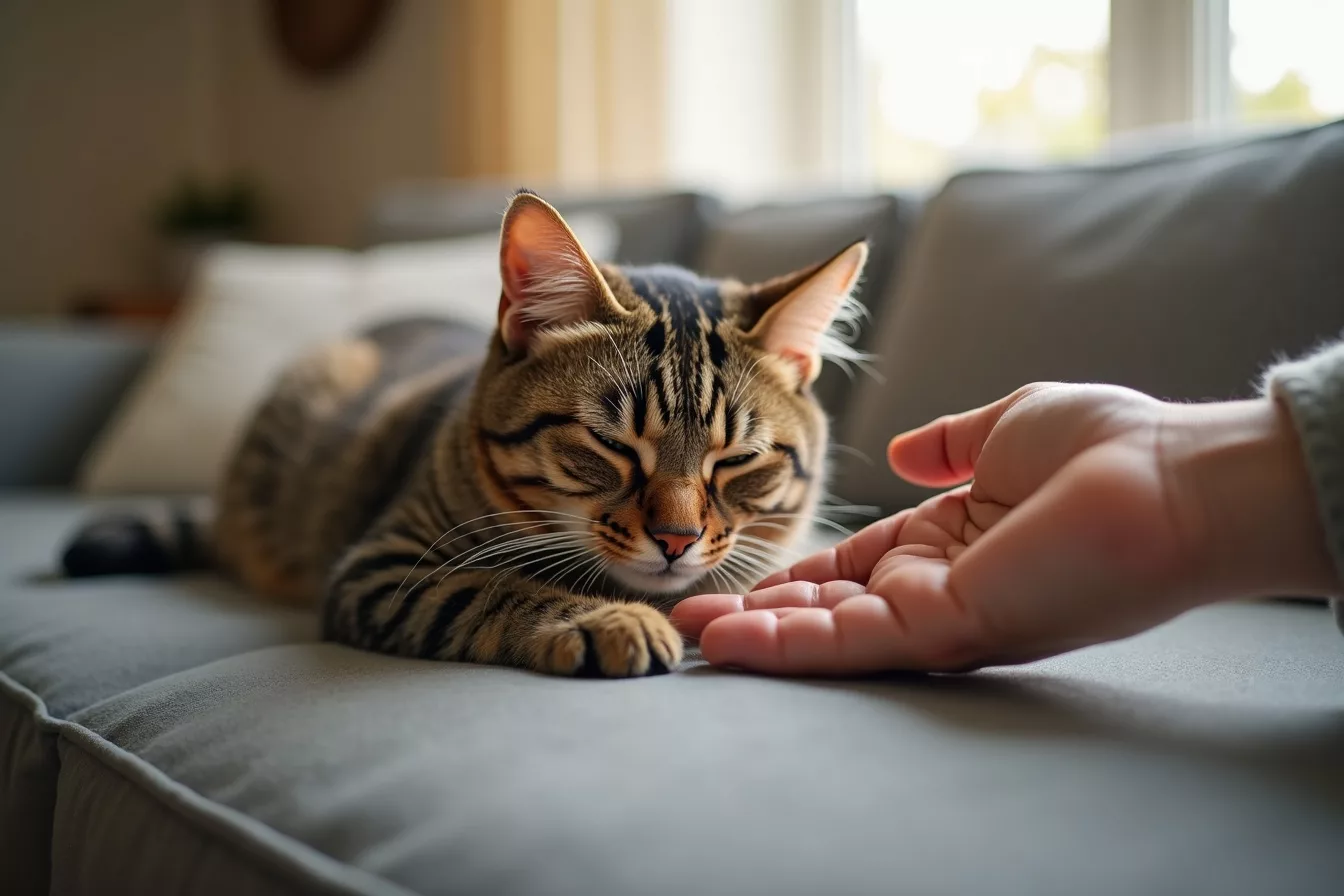
Let your cat initiate contact. Instead of reaching for them, offer your hand at their nose level and wait for them to rub it. This shifts control to them and often results in longer, more genuine interaction. Many owners find their “aloof” cat becomes affectionate once they stop pursuing.
3. They’re Hunting (and You’re the Distraction)
A crouched, focused cat staring at a wall isn’t ignoring you—they’re doing their job. Domestic cats retain 99.9% of their wild ancestors’ hunting instincts. When your cat seems to blank you out, they’re likely locked onto prey (a moth, mouse, or even dust mote) that demands their full attention.
Interrupting this focus is, from your cat’s perspective, rude. Let them finish. You’ll often notice they seem more interactive and playful after a successful “hunt.”
4. Your Cat Doesn’t Understand Your Communication Style
Cats don’t speak human language, yet owners often expect them to respond to tone and words. Your cat is reading your body language, scent, and energy instead. A high-pitched “here, kitty!” might sound exciting to you but jarring to them.
The RSPCA recommends using slow blinks, gentle chirps, and consistent body language. Cats communicate affection through slow blinks—if you blink slowly at your cat, many will blink back. This “cat kiss” is genuine communication, not ignoring.
⚠️ Warning
If your cat suddenly changes behaviour—becoming withdrawn, not eating, or ignoring their litter box—consult your vet immediately. Abrupt behavioural shifts can signal pain, hyperthyroidism, or urinary issues. A 2025 PDSA survey found that 23% of cats with undiagnosed conditions were mistaken for “aloof.” Don’t assume personality; rule out health first.
5. They’re Actually Telling You They’re Content
The ultimate irony: your cat ignoring you might be the highest compliment. Cats who feel truly anxious around you won’t ignore you—they’ll hide, hiss, or show fear. A cat lounging across the room, occasionally glancing your way, is communicating “I feel safe enough to relax in your presence.”
In cat behaviour terms, this is called “secure base” psychology. Your presence is comforting, even if they’re not actively engaging with you. Many cat behaviourists argue this is deeper affection than constant demand for attention.
When It’s Actually a Problem Worth Addressing
Not all cat ignoring is normal. If your previously affectionate cat has become withdrawn for more than a few days, shows no interest in toys or food, or avoids you entirely (combined with other symptoms), these are red flags requiring veterinary assessment.
The British Veterinary Association emphasises that behaviour changes in cats often precede visible physical symptoms. A vet can rule out pain, thyroid issues, or anxiety—conditions that masquerade as personality changes.
The Bottom Line: Your Cat Isn’t Being Mean
Your cat’s “ignoring” is actually sophisticated communication rooted in their biology and emotional state. They’re filtering stimulation, hunting, respecting their own boundaries, and sometimes—paradoxically—showing you trust by relaxing in your presence. The 2025 research confirms what experienced cat owners have always known: feline aloofness is a feature, not a bug.
The next time your cat walks past you without a glance, pause before taking it personally. They might just be telling you they’ve already assessed you’re safe, and that’s as close as a cat gets to saying “I love you.”
Have you noticed your cat using slow blinks, head bumps, or slow body language to show affection? Try responding with a slow blink of your own this week and watch what happens—you might unlock a whole new way your cat has been trying to connect with you all along.