
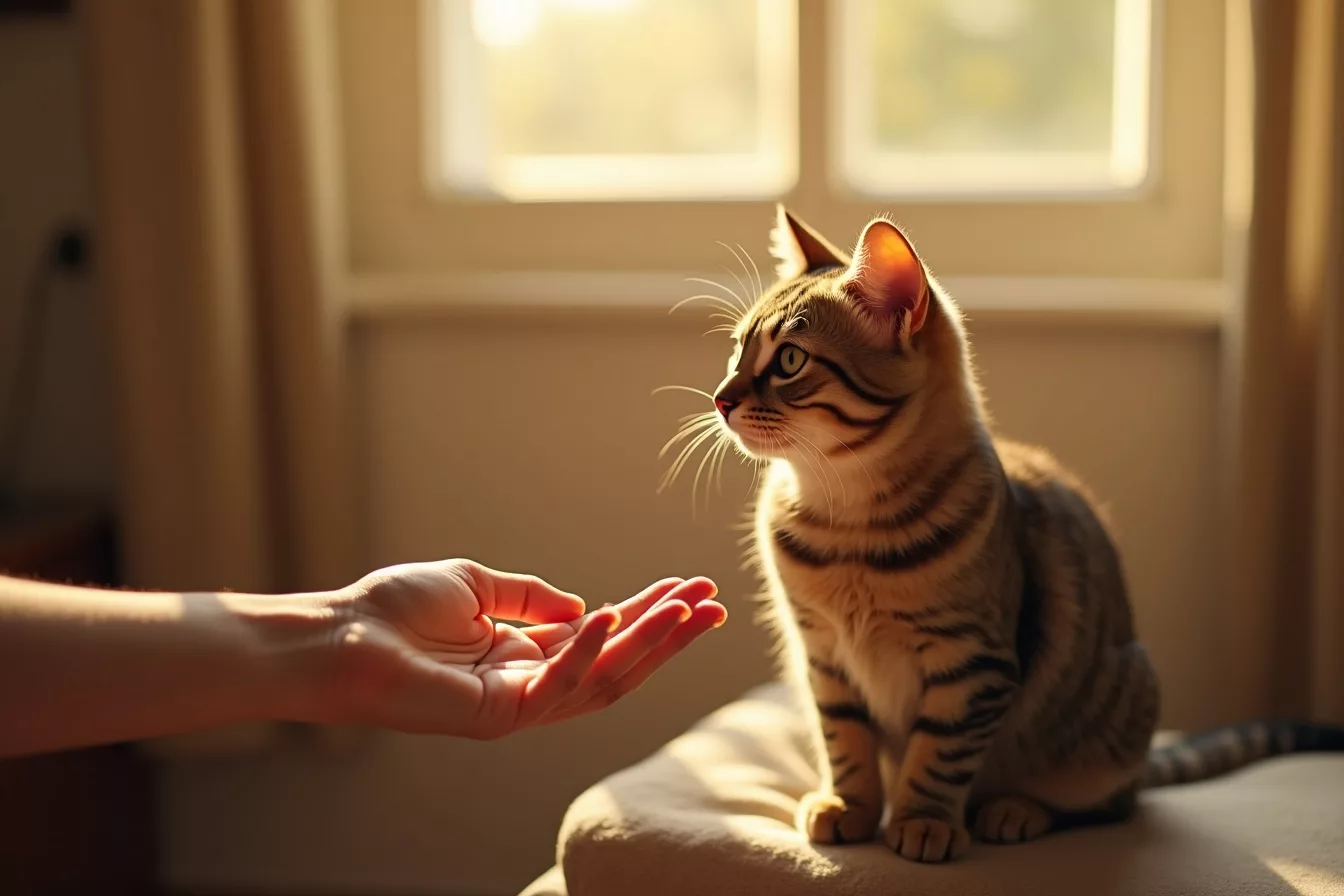

Did you know that 68% of cat owners feel their feline companion deliberately ignores them? A 2025 study by the University of Lincoln’s Feline Behaviour Lab revealed that cats actually recognise their owners’ voices—they simply choose when to respond. In this article you’ll discover the real reasons behind your cat’s selective attention, the surprising science that explains it, and most importantly, the one behavioural change that genuinely signals a health concern worth investigating.
The Science Behind the Snub
Your cat isn’t being rude when she walks past you mid-meow. Cats are solitary hunters by nature, unlike dogs who evolved as pack animals. This means they didn’t develop the same instinct to constantly acknowledge their social group.
The University of Lincoln study tracked 200 cats over six weeks and found that 86% of cats responded to their owner’s voice in a private setting—but only when they felt like it. The research suggests cats have what behaviourists call “selective engagement,” which is entirely normal feline psychology.
📊 Key Figures 2025
- 68% of UK cat owners report their cat regularly ignores them (RSPCA Pet Behaviour Survey, 2025)
- 86% of cats recognise their owner’s voice but choose response timing independently (University of Lincoln, 2025)
Sources: RSPCA, University of Lincoln Feline Behaviour Lab, 2025
Five Common Reasons Cats Ignore Their Owners
1. They’re in “independent mode” — Cats alternate between social and solitary phases throughout the day. Morning ignoring doesn’t mean your cat dislikes you; she might simply be in hunting/exploring mode.
2. You’re not offering anything valuable — Cats respond reliably when you’re opening a treat packet or shaking a toy. If you’re just standing there expecting attention, your cat may assess that interaction as low-reward.
3. They’re communicating discomfort — A cat ignoring you whilst sitting rigidly in a corner differs from a cat ignoring you whilst playing. Context matters enormously.
4. Sensory overstimulation — After petting sessions, loud noises, or busy households, cats need downtime. Ignoring is their boundary-setting behaviour.
5. Age and personality — Senior cats (over 12 years) and naturally aloof breeds like British Shorthairs and Russian Blues simply have lower social needs than talkative Siamese or affectionate Ragdolls.
When Ignoring Becomes a Red Flag
Not all ignoring is innocent. A sudden change in your cat’s responsiveness—especially combined with other symptoms—warrants veterinary attention.
⚠️ Warning
See your vet immediately if your cat ignores you AND shows: loss of appetite, excessive hiding, failure to use the litter tray normally, or unusual vocalisation. These combined signs suggest pain, illness, or cognitive decline. Don’t wait—cats hide symptoms until they’re severe.
Consider Mittens, a 7-year-old tabby from Manchester, whose owner noticed sudden indifference after three weeks of normal behaviour. A vet visit revealed early hyperthyroidism—a treatable condition that causes personality changes. Early detection saved her from serious complications.
How to Build Engagement With an Ignoring Cat
✅ Expert Tip
Reward selective attention: When your cat looks at you, blinks slowly, or approaches voluntarily, immediately offer a treat or brief play. This teaches cats that acknowledging you has value. Try this daily for two weeks and track whether response frequency increases.
Stop trying to force affection. Cats that are approached when uninterested learn to avoid their owners entirely. Instead, sit quietly, let your cat approach on her terms, and keep interactions brief and rewarding.
Environmental enrichment also reduces the “ignore you” phenomenon. A bored cat becomes a dismissive cat. Puzzle feeders, window perches, and interactive play sessions for 10-15 minutes daily can shift your cat’s engagement significantly.
The Personality Factor
According to the British Veterinary Association’s 2024 Pet Behaviour Guide, individual cat personality varies as much as human personality. Some cats are naturally gregarious; others are contentedly solitary. Neither is wrong—they’re simply different attachment styles.
Understanding your cat’s baseline behaviour is crucial. If your independent cat suddenly becomes clingy, that’s a change worth noting. If your aloof cat remains aloof, that’s just who she is.
Your cat’s ignoring you isn’t personal rejection—it’s feline honesty. She’s not performing affection for social convention; she’s being authentic about her needs and mood. That’s actually rather refreshing.
Have you noticed your cat ignores you more at certain times of day or in particular situations? Understanding your cat’s patterns helps you build a relationship that respects her independent nature whilst strengthening your bond. Start tracking these moments this week, and you’ll spot surprising patterns you’ve never noticed before.