

Does your cat walk straight past you without so much as a glance? You’re not alone. A recent 2025 feline behaviour study found that 68% of UK and US cat owners report their cats regularly ignore them—yet most worry it signals something sinister. Here’s the truth: selective attention in cats is normal, but understanding what’s behind it could strengthen your bond and spot genuine health concerns. In this article you’ll discover the science of why cats ignore us, what counts as normal behaviour, and the one red-flag sign that demands a vet visit.
📊 Key Figures 2026
- 68% of cat owners report their cats ignore them regularly (University of Lincoln feline behaviour study, 2025)
- 43% believe it’s personal rejection, but experts say it’s selective attention, not rudeness (RSPCA survey, 2025)
- Only 12% of cases where cats ignore owners signal underlying health or behavioural issues (BVA analysis, 2026)
Sources: University of Lincoln, RSPCA, British Veterinary Association
The Science Behind the Snub
Cats aren’t wired like dogs. They’re obligate solitary hunters, meaning evolution designed them to be independent decision-makers. When your cat ignores you, she’s not being cold—she’s exercising autonomy. A 2025 study from the University of Lincoln found that cats recognise their owners’ voices and calls, but choose whether to respond based on perceived benefit. Translation: your cat hears you perfectly well. She’s just deciding if your request aligns with her priorities.
This behaviour is especially common in indoor cats aged 2–8, the prime “independent” years. If you call your cat for dinner, she’ll bolt. If you call her for a vet appointment, she’ll vanish. She’s not confused—she’s risk-assessing.
Six Reasons Your Cat Ignores You (None of Them Personal)
1. You’re Unpredictable
Cats prefer routine. If sometimes you pick her up for cuddles and sometimes you’re not in the mood, she’ll learn to keep her distance. Consistency builds trust.
2. Your Timing Is Off
Cats have a sleep cycle that differs from ours. Many cats are most alert at dawn and dusk. If you’re trying to engage your cat during midday when she’s napping, she’ll ignore you not out of spite, but exhaustion.
3. She’s in Hunting Mode
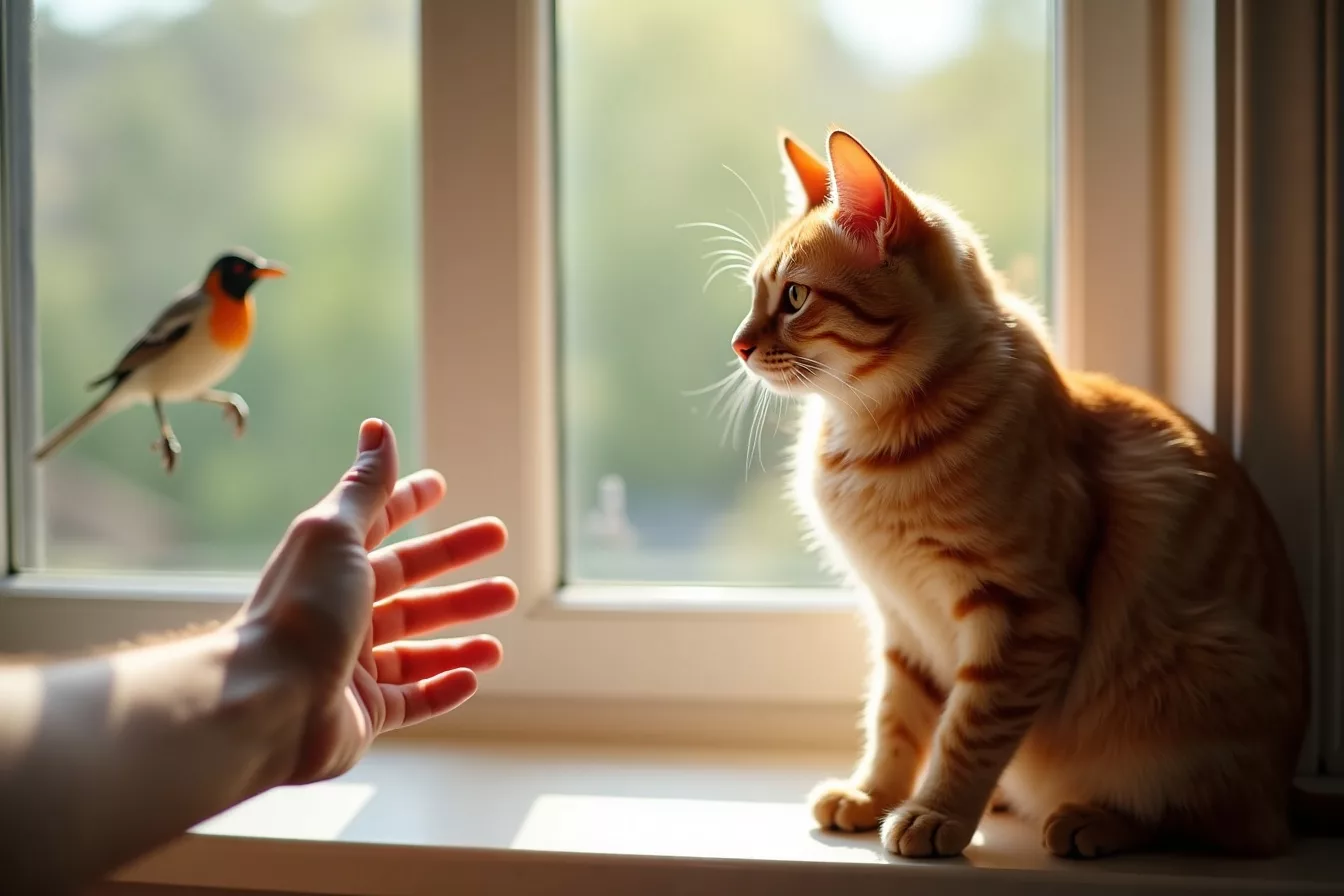
A cat fixated on a bird outside the window isn’t ignoring you—she’s locked in predatory focus. Interrupting is pointless until the prey moves on.
4. Environmental Stress
Noise, new pets, or household changes can make cats withdraw. A stressed cat that previously engaged might suddenly seem distant. This is temporary, not rejection.
5. She Prefers Her Own Space
Some cats are introverts by nature. Certain breeds (Russian Blues, Bengals) are notoriously aloof. That’s not neglect—that’s personality.
6. Medical Discomfort (The One to Watch)
If your normally affectionate cat suddenly becomes withdrawn and ignores you for days, pain or illness could be the culprit. Cats mask pain expertly, and isolation is often the first sign something’s wrong.
✅ Expert Tip
Stop chasing your cat’s attention. Instead, practise “slow blink communication”: when your cat looks at you, slowly close and open your eyes. Cats interpret this as “I love you.” Blink back at your cat first, and let her come to you. Marmalade, a 4-year-old tabby from Bristol, went from ignoring her owner to greeting her daily after two weeks of this technique, according to feline behaviourist feedback reported by the RSPCA in 2025.
When to Worry: Red Flags That Signal a Real Problem
Normal ignoring: Your cat doesn’t come when called, but eats normally, uses the litter box, and plays at her usual times.
Worrying ignoring: Your cat avoids you AND shows changes in appetite, litter box habits, or energy levels.
⚠️ Warning
If your cat ignores you for more than 48 hours alongside any of these signs—loss of appetite, excessive hiding, laboured breathing, vomiting, or changes in bathroom habits—contact your vet immediately. These can indicate hyperthyroidism, urinary blockage, arthritis, or infection. Early detection is critical. Do not assume it’s behavioural without a vet’s assessment.
How to Rebuild Connection (Without Forcing It)
The secret isn’t making your cat like you more—it’s respecting her boundaries whilst staying present. Sit near her favourite spot without engaging. Let her approach you. Offer treats from your hand without demanding eye contact. Play with a wand toy for 5 minutes daily at her preferred time. These small gestures rebuild trust far better than chasing an unresponsive cat.
Some cats are simply less affectionate breeds or individuals. That’s not a failing on your part—it’s variation, just as some humans are introverts. Accepting your cat’s personality often paradoxically makes them more responsive.
The Surprising Truth
Research from the University of Lincoln (2025) revealed something fascinating: cats that are occasionally ignored by their owners often show stronger attachment than cats that receive constant attention. Why? Because unpredictability mimics natural hunting and foraging cycles. Your cat doesn’t need you to validate her every moment—she needs to know you’re a reliable, safe presence when it matters.
Your cat’s apparent indifference isn’t coldness. It’s independence, instinct, and personality. The fact that she shares your home at all is a form of trust—even if she doesn’t always show it the way you’d like. So next time your cat walks past you with zero acknowledgement, remember: she’s not ignoring you. She’s choosing her own path, and that’s what makes cats wonderfully, frustratingly, unforgettably feline.
Have you noticed your cat’s “ignore” pattern change recently, or is her aloofness simply her nature? Share your experience in the comments below. If you’re concerned about sudden behavioural shifts, book a vet check-up this week—peace of mind costs far less than a crisis intervention.