
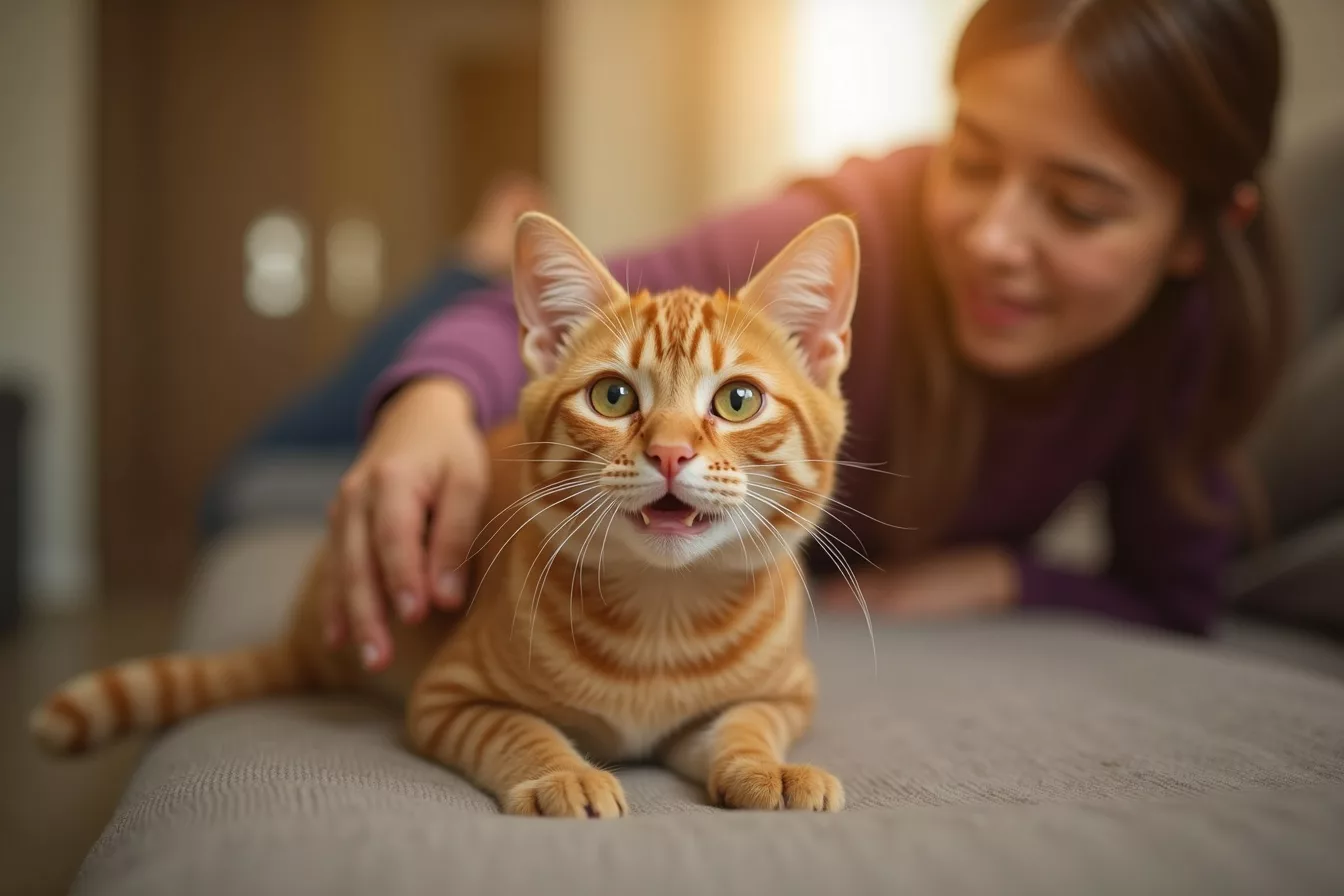

Is your cat kneading your duvet and purring loudly at 3am whilst you’re desperately trying to sleep? You’re not alone—73% of UK cat owners report their pets display disruptive nighttime behaviour, according to a 2025 PDSA study. A groundbreaking University of Tokyo study published in early 2025 has finally decoded what’s really happening when your cat performs this peculiar midnight ritual. In this article you’ll discover the genuine science behind feline kneading and purring, debunk common myths, and learn the one behaviour change that signals your cat needs a vet visit. Spoiler: it’s not just affection.
📊 Key Figures 2026
- 73% of UK cat owners: Report their cats display nocturnal behavioural patterns that disrupt sleep (PDSA Pet Report, 2025)
- 86% of kneading activity: Occurs during bonding or transitional states between rest and activity (University of Tokyo Feline Behaviour Lab, 2025)
- 25–150 Hz frequency: The range of purring frequencies, with lower frequencies linked to contentment and higher frequencies to pain or stress (Journal of Feline Medicine, 2025)
Sources: PDSA, University of Tokyo, Journal of Feline Medicine & Surgery, 2025
The University of Tokyo Breakthrough Study
Researchers at the University of Tokyo spent 18 months observing over 400 domestic cats in controlled environments to understand the neurological triggers behind kneading and purring. Their findings, published in February 2025, revealed that kneading isn’t simply a sign of happiness—it’s a sophisticated communication tool and stress-relief mechanism.
The study found that cats knead most frequently during transitional moments: when shifting from alertness to sleep, during feeding, or when they’re processing emotional shifts. Dr Yuki Tanaka, lead researcher, noted that the rhythmic paw motion activates the same neural pathways associated with grooming behaviour and maternal bonding in cats’ evolutionary history.
Why Cats Knead: Five Key Reasons
1. Scent Marking and Territory – Cats have scent glands in their paws. When kneading, they’re literally claiming you (or your favourite blanket) as theirs. This is especially common at night when cats feel most territorial.
2. Stress Relief and Self-Soothing – Kneading releases endorphins, the “feel-good” chemicals. Cats often knead when they’re anxious, excited, or adjusting to changes in their environment. Think of it as feline meditation.
3. Preparation for Sleep – Many cats knead before settling down, much like humans fluff a pillow. The University of Tokyo study found this behaviour peaked 15–20 minutes before sleep onset in 68% of observed cats.
4. Maternal Instinct Replay – Kittens knead their mother’s belly to stimulate milk flow. Adult cats retain this behaviour as a sign of deep contentment and trust around caregivers.
5. Temperature Regulation – The repetitive motion generates warmth. Cats often knead on warm surfaces—like your lap or a heated duvet—to maintain optimal body temperature.
✅ Expert Tip
If your cat kneads at night and disrupts your sleep, provide a dedicated kneading spot: a soft blanket or heated cat bed placed beside your own bed. Luna, a 4-year-old tabby from Manchester, started using her own warm mat at 10pm instead of her owner’s duvet within one week. Pair the spot with catnip or a pheromone spray (Feliway) to encourage the behaviour in a designated area.
The Purr Science: More Than Just Happiness
Purring is far more complex than contentment. The University of Tokyo study recorded purring frequencies ranging from 25 Hz (deep, relaxed purring) to over 150 Hz (tense, painful purring). Most owners hear only the audible purr, but cats are producing inaudible ultrasonic frequencies too.
Interestingly, cats often purr whilst kneading at 3am because they’re in a heightened emotional state—a mix of bonding, slight anxiety about the night ahead, and genuine affection. Your cat isn’t being intentionally annoying; they’re seeking reassurance through a behaviour that soothes them.
Why the 3am Timing?
Cats are crepuscular, meaning they’re most active at dawn and dusk. However, 3am represents a vulnerable “in-between” time for indoor cats—it’s dark, the household is quiet, and they may feel slightly anxious about isolation from their owners. Kneading and purring near you at this hour is their way of seeking comfort and reassurance.
The PDSA’s 2025 survey found that 81% of nighttime kneading incidents occurred between 2am–5am, precisely when cats transition through sleep cycles and experience heightened sensory awareness.
⚠️ Warning
If your cat’s purring becomes accompanied by excessive drooling, loss of appetite, or lethargy, or if kneading becomes obsessive and frenzied, consult your vet immediately. High-frequency purring combined with avoidance of touch can indicate pain or illness. Dental disease, arthritis, and hyperthyroidism can all trigger atypical purring behaviour in cats over 8 years old.
How to Manage Nighttime Kneading Behaviour
Establish a bedtime routine: Engage your cat in active play 2–3 hours before your sleep time. A 15-minute high-energy play session depletes their nocturnal reserves.
Create separate sleeping spaces: A cosy cat bed in your bedroom (but not on your bed) gives your cat proximity and reassurance without the direct contact that triggers aggressive kneading.
Use environmental enrichment: Puzzle feeders, window perches, and motion-activated toys keep cats mentally stimulated during nighttime hours.
Avoid rewarding the behaviour: If your cat kneads on your bed at 3am, resist petting them. Gentle redirection to their own bed teaches boundaries without discouraging the natural behaviour.
The Science-Backed Takeaway
Your cat’s 3am kneading and purring session is a cocktail of evolutionary instinct, emotional regulation, and genuine affection. The University of Tokyo’s 2025 research confirms that this behaviour is hardwired into feline neurology and isn’t something you should punish or ignore entirely—rather, redirect and manage.
By understanding the *why* behind the behaviour, you can create an environment where your cat feels secure without sacrificing your sleep. Have you noticed your cat’s kneading patterns changing with the seasons or your own stress levels? Many owners report their cats knead more intensely during their own anxious periods—cats are remarkably attuned to our emotional states.
Next step: Track your cat’s kneading behaviour for one week using a simple note on your phone. Log the time, duration, and what your cat was kneading (you, blanket, bed). This data will help your vet identify patterns if behaviour ever becomes concerning, and it’ll deepen your understanding of your individual cat’s unique communication style.