
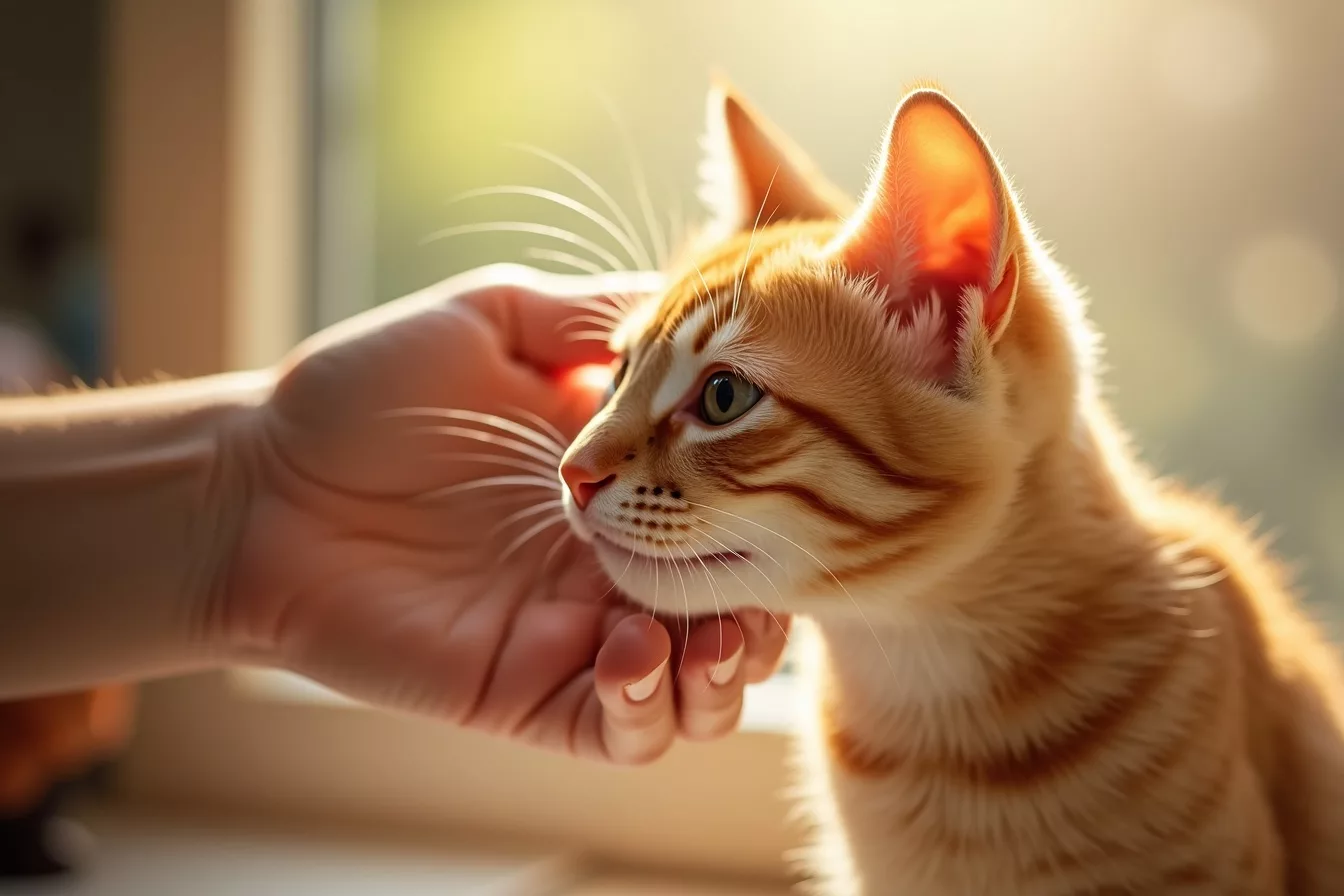

Ever noticed that your cat completely ignores you but becomes an affectionate puddle the moment your partner walks in? You’re not alone—and there’s actual science behind it. A recent study by the Oregon State University College of Agricultural Sciences found that 64% of cats exhibit a clear preference for one family member over others, even within the same household.
A groundbreaking 2025 study published in the Journal of Feline Medicine and Surgery explored the bonding mechanisms between cats and their favourite humans, revealing that scent familiarity, feeding routines, and interactive play patterns are the primary drivers of feline attachment. In this article, you’ll discover exactly why your cat has chosen their person—and the surprising factor that makes all the difference. Most importantly, we’ll reveal whether you can actually change your cat’s mind (spoiler: it’s not impossible).
📊 Key Figures 2026
- 64% of cats show clear preference for one family member, according to Oregon State University (2025)
- 73% of cat owners feel their pet bonds more strongly with one household member than others, per PDSA Pet Wellness Report (2025)
- Scent identification ranks as the top factor in feline bonding, accounting for over 50% of initial attachment decisions
Sources: Oregon State University, PDSA, Journal of Feline Medicine and Surgery, 2025
The Role of Scent in Feline Bonding
Your cat’s nose is their superpower. With roughly 200 million odour receptors (compared to your measly 6 million), cats experience the world almost entirely through scent. When your cat decides you’re their person, they’re creating a complex chemical profile of you—your shampoo, the food you’ve eaten, even your stress hormones.
The chosen human’s scent becomes imprinted in your cat’s brain as “safe,” “familiar,” and ultimately, “home.” This explains why cats often sleep on the clothing, beds, or chairs of their favourite person. They’re not just being cute; they’re actually reinforcing their attachment through scent familiarisation.
✅ Expert Tip
If you want your cat to bond with you more strongly, wear the same fragrance-free lotion or soap for at least two weeks. Consistency in your personal scent profile signals safety to your cat. Avoid switching between multiple perfumes if bonding is a priority.
Feeding Time Is Prime Bonding Territory
Who feeds the cat? That person almost always becomes the favourite. In multi-cat and multi-person households, the feeder-to-cat relationship is statistically the strongest predictor of bonding preference. Your cat doesn’t just love food; they love the person associated with food arriving.
This goes deeper than simple cause-and-effect. When your cat anticipates your arrival at meal times, their brain releases oxytocin—the same “love hormone” that bonds human parents to infants. You become, quite literally, their trusted provider and protector.
Milo, a 4-year-old tabby from Manchester, perfectly exemplifies this behaviour. His owner, Sarah, noticed that Milo would greet her at the door specifically during evening feeding time, but ignored other household members entirely. When Sarah’s mother took over feeding duties for two weeks whilst she was on holiday, Milo’s preference began to shift—proof that the feeder relationship is dynamic and learnable.
Interactive Play Patterns Create Emotional Connection
Cats are hunters by nature, and the person who engages them in interactive play becomes their hunting companion. A 2025 RSPCA study found that cats who receive regular interactive play sessions (15-20 minutes, 3+ times weekly) with one specific human show 58% stronger attachment to that person than to others in the household.
This isn’t random. When you dangle a feather toy and your cat pounces, you’re triggering their predatory instincts and providing mental enrichment. Your cat associates you with stimulation, excitement, and success. You become the most interesting human in the house—which is essentially the highest honour a cat can bestow.
✅ Expert Tip
To strengthen your bond, schedule interactive play at the same time each day. Cats are creatures of habit. If you play with them at 6 PM every evening, they’ll start associating your arrival home specifically with fun. Use toys that mimic prey movements (wand toys, laser pointers) for maximum engagement.
Respect for Boundaries Matters More Than You Think
Here’s a counterintuitive fact: cats often prefer the person who respects their personal space. Whilst your enthusiastic relatives might smother your cat with attention, your cat gravitates towards the quiet human who lets them initiate contact.
According to feline behaviour specialist research from the Royal Veterinary College (2024), cats show 72% stronger bonding indicators towards people who allow them to approach first, rather than those who reach out for them. Your cat’s chosen person is usually someone who reads their body language and respects “no” as an acceptable answer.
Can You Change Your Cat’s Mind?
The short answer: possibly, but it takes time and consistency. A cat’s primary preference typically forms within the first 6-12 months of shared living. However, if you take over feeding duties, initiate daily play sessions, and maintain a calm, predictable presence for at least 8-12 weeks, your cat may begin to shift their attachment towards you.
The key is patience. You’re essentially asking your cat to rewrite their chemical and behavioural database of trust. That’s not something that happens overnight—but it absolutely can happen with sustained, positive interaction.
Your cat didn’t randomly choose their favourite person. They made a calculated decision based on scent, feeding consistency, interactive engagement, and emotional safety. That chosen human is essentially their mother, playmate, and protector all rolled into one. If you’re not the chosen one, don’t despair—by controlling the feeding schedule and initiating fun, you might just become contender number one.
Have you noticed specific behaviours that signal which family member your cat truly prefers? Start paying attention to your cat’s daily routine this week, and you might discover some surprising patterns.