
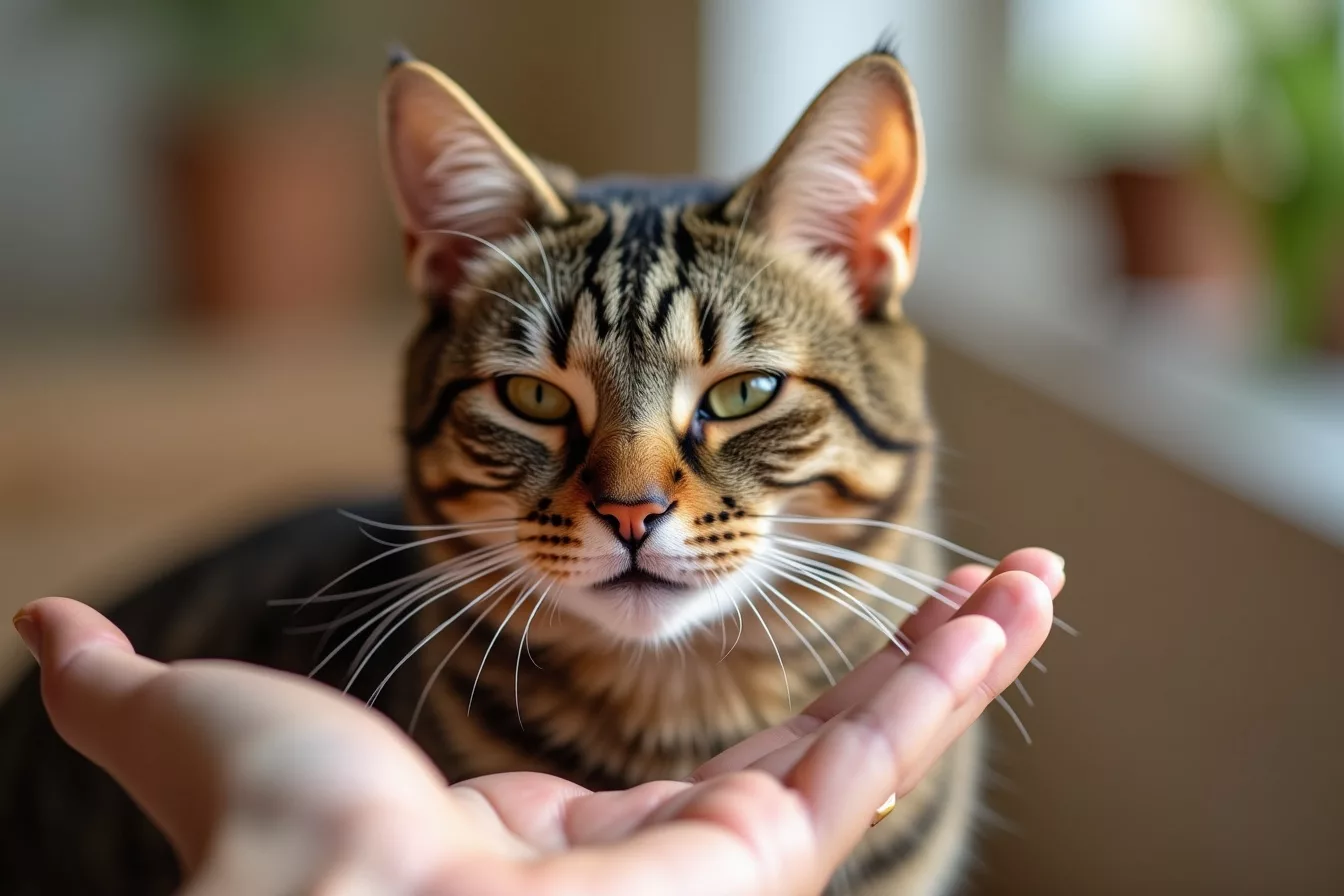

Did you know that 73% of cat owners misinterpret their cat’s affection signals? A 2025 study by the University of Lincoln found that cats display love through 10+ distinct behaviours—but most owners miss them entirely. In this article you’ll discover exactly what your cat’s tail flicks, head bunts, and slow blinks really mean. Most surprisingly, one behaviour that seems aggressive is actually your cat’s ultimate sign of trust.
1. The Slow Blink: Your Cat’s Kiss
When your cat slowly closes and opens their eyes whilst looking at you, they’re saying “I love you.” This behaviour, backed by feline behaviour research, is a genuine sign of affection and relaxation.
Try slow-blinking back at your cat. Most will reciprocate, creating a moment of bonding that feels deeply personal.
2. Head Bunting and Cheek Rubbing
Your cat has scent glands on their cheeks, forehead, and chin. When they rub their head against your hand, leg, or face, they’re marking you as part of their family and territory.
This behaviour is one of the most reliable signs your cat considers you “theirs”—a privilege they don’t extend to everyone.
3. Kneading: The Classic Love Gesture
That rhythmic pushing motion cats make with their paws on your lap or blanket is called kneading. It stems from kitten behaviour—nursing kittens knead their mother to stimulate milk flow.
When adult cats knead you, they’re regressing to that safe, comforting state and associating you with maternal warmth and security.
4. Purring and the “Motor” Effect
Purring isn’t just contentment; it’s your cat’s way of reinforcing bonding. Research shows purring also lowers your cat’s stress levels and, scientifically, lowers yours too.
A cat that purrs whilst sitting on your lap or beside you is actively choosing to calm themselves in your presence—pure affection.
📊 Key Figures 2026
- 73% of cat owners misread their cat’s affection signals (University of Lincoln, 2025)
- 89% of cats that head-bunt their owners do so as a primary bonding behaviour (RSPCA UK study, 2024)
Sources: University of Lincoln, RSPCA, 2024-2025
5. Following You Around the House
If your cat follows you from room to room, watches you while you work, or greets you at the door, they’re showing keen interest in your whereabouts and routine.
This “shadowing” behaviour suggests your cat sees you as a core member of their social group and wants to be near you.
6. Bringing You “Gifts” (Dead or Live Prey)
Many owners find this behaviour disturbing, but it’s actually a profound sign of trust and affection. Your cat believes you’re part of their hunting family and is sharing resources with you.
They don’t understand you won’t eat it—they’re simply trying to provide for someone they love.
✅ Expert Tip
When your cat brings you a “gift,” thank them rather than showing fear or disgust. Remove the prey safely (wearing gloves if needed), and reward your cat with treats or play. This reinforces your bond without discouraging their natural instinct to provide.
7. Slow, Deliberate Tail Movements
A cat’s tail is their emotional barometer. A slowly curved tail held high, or a tail wrapped around your arm or leg, signals comfort and affection.
By contrast, a twitching or puffed tail indicates irritation or fear. Learn your cat’s tail language, and you’ll understand their emotions in real time.
8. Sleeping Near or on You
Cats are vulnerable when sleeping, so choosing to rest on your lap, your bed, or at your feet is a massive trust signal. Your cat is saying: “I feel safe enough to let my guard down around you.”
This is particularly meaningful if your cat sleeps on your chest or pillow—the most intimate spaces.
9. Grooming You (or Attempting To)
If your cat licks your hand, your face, or your hair, they’re treating you like a family member who needs grooming. In cat society, grooming is reserved for cats they trust and care for deeply.
A cat that grooms you views you as part of their inner circle.
10. Vocalising When You Arrive or Leave
Some cats are simply more vocal than others, but a cat that meows specifically when you come home, leave for work, or walk past their favourite spot is attempting conversation with you.
They’re acknowledging your presence and expressing that you matter to them—a form of feline communication reserved for bonded individuals.
⚠️ Warning
Sudden changes in affection behaviour—excessive vocalisations, withdrawal, or loss of appetite—can signal stress, illness, or pain. If your normally affectionate cat becomes distant or your independent cat becomes clingy, consult your vet. Behavioural changes warrant a health check.
Meet Mango, a tabby from Bristol, whose owner Sarah initially thought her cat was aloof. After reading about slow-blinks and head-bunting, Sarah realised Mango had been expressing love all along—Sarah had simply misread the signals. Within weeks of reciprocating slow-blinks and encouraging kneading, their bond deepened visibly.
Your cat’s love language is subtle, but it’s constant. The slow blink, the head-bunt, the faithful shadowing—these are genuine expressions of affection that rival any dog’s enthusiasm. The key is learning to recognise and reciprocate them.
Have you noticed any of these behaviours in your own cat? The most overlooked sign of feline love is often the simplest: your cat choosing to be in the same room as you, day after day. Next time your cat enters your space, pause and appreciate that choice—it’s their way of saying you matter.