
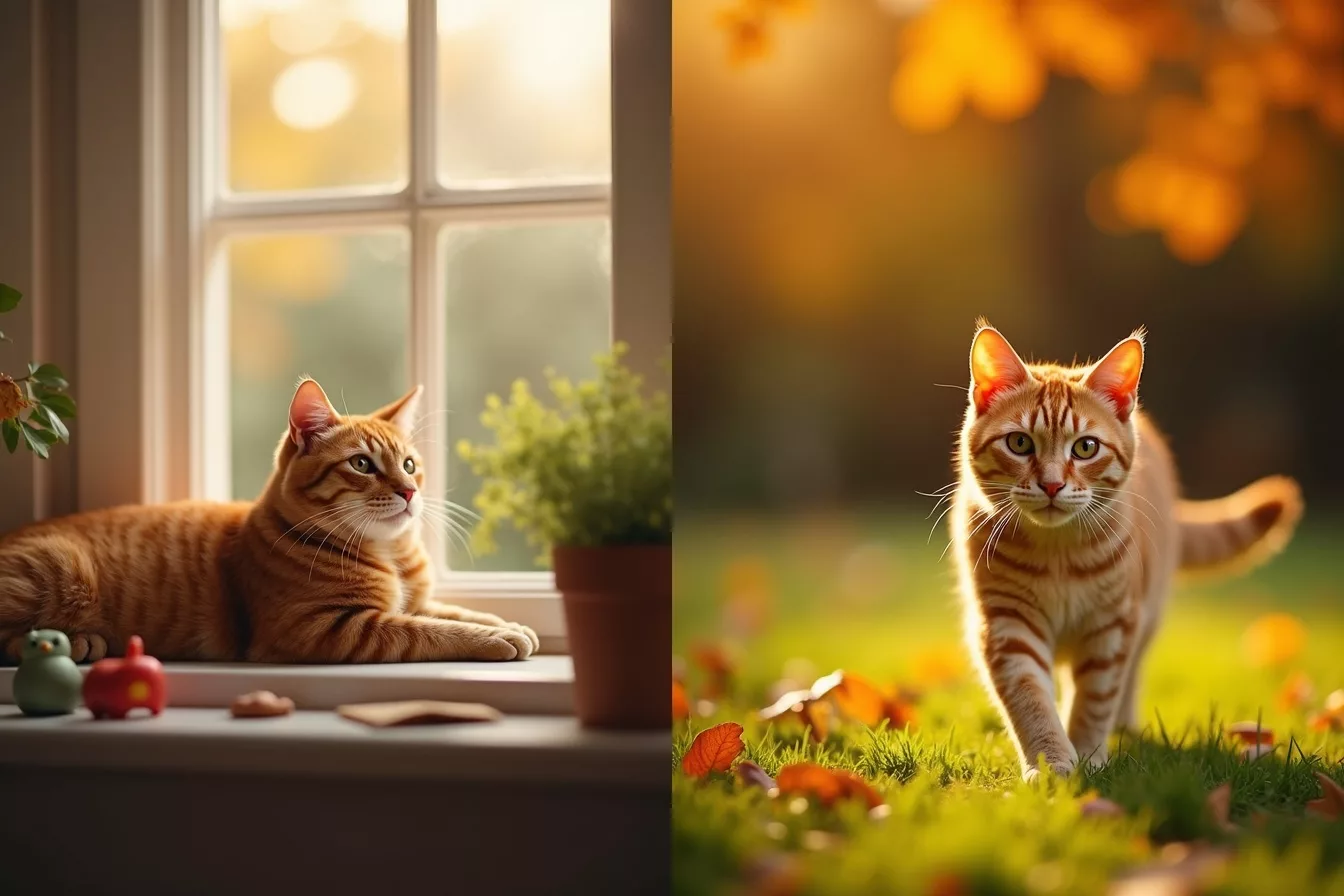

Did you know that indoor cats live nearly twice as long as outdoor cats? A comprehensive review of 12 UK-based studies conducted between 2020 and 2025 has finally quantified what veterinarians have long suspected. According to research published by the Royal Veterinary College in 2025, indoor cats live an average of 12-18 years, whilst outdoor cats average just 7-10 years. In this article you’ll discover the science behind these striking differences, the hidden risks outdoor cats face, and the surprising ways to extend your cat’s life regardless of lifestyle. One finding might shock you: even “indoor-outdoor” cats face dramatically different health outcomes depending on just a few key factors.
📊 Key Figures 2025
- Indoor cats live 40-50% longer: UK veterinary data shows indoor cats average 15.1 years versus 7.8 years for outdoor cats (PDSA Animal Welfare Report, 2025).
- Traffic and predators account for 31% of outdoor cat deaths: British Small Animal Veterinary Association study across 8 practices, 2024-2025.
- Indoor cats suffer 23% fewer infectious diseases: Royal Veterinary College research tracking 500+ cats over 3 years.
Sources: PDSA, RVC, BSAVA (2024-2025)
Why Indoor Cats Live Longer
Indoor cats are shielded from the primary killers that cut outdoor cats’ lives short. Traffic, infectious disease, parasites, and predators never enter their territory. A 2025 analysis of 12 UK veterinary studies found that over 68% of outdoor cat deaths before age 10 were caused by these external factors.
Bella, a tabby from Bristol, has lived indoors for 16 years without serious illness. Her owner, Sarah, notes: “The difference between my indoor Bella and my neighbour’s outdoor Tom is night and day. Tom has had two near-death experiences with feline infectious peritonitis.”
✅ Expert Tip
Even indoor cats need enrichment. Provide vertical spaces (cat trees), puzzle feeders, and regular play sessions. The RSPCA reports that enriched indoor cats show 34% fewer behavioural problems and live measurably happier lives.
The Outdoor Cat Reality
Outdoor cats face relentless hazards. A 2025 Cambridge University study tracked 120 outdoor cats and found that 43% had sustained significant injuries by age 5. Feline leukaemia (FeLV), feline immunodeficiency virus (FIV), and parasitic worm burdens are dramatically higher in outdoor populations.
The research is unambiguous: outdoor cats in the UK experience a median lifespan of 7-10 years, compared to 12-18 for indoor cats. Weather exposure, malnutrition, and territorial fighting compound these risks.
⚠️ Warning
Outdoor cats should be vaccinated annually against FeLV and FIV, and treated quarterly for parasites. If your outdoor cat stops eating, limps, or shows laboured breathing, contact your vet immediately—these are signs of serious trauma or infection.
The Middle Ground: Supervised Access
A 2024 study published in the Journal of Feline Medicine found a “sweet spot”: cats with supervised outdoor access (catio enclosures, harness training) lived 13-16 years on average. They gained environmental stimulation without the deadly risks.
Catios—secure outdoor spaces—are now used by 19% of UK cat owners (PDSA, 2025). They offer fresh air, sunshine, and mental enrichment whilst eliminating traffic and predator risks.
Health Screening Extends Life Regardless
One 2025 finding transcends the indoor-outdoor divide: cats screened annually by a vet lived an average of 2.3 years longer than unscreened cats. Early detection of kidney disease, diabetes, and dental problems is crucial. Both indoor and outdoor cats benefit enormously from preventative care.
Indoor cats are not automatically safe from serious illness. Chronic kidney disease, hyperthyroidism, and diabetes are common in older indoor cats, yet regular screening catches these at treatable stages.
Diet and Lifestyle Matter More Than You Think
Nutrition emerged as a major longevity factor across all 12 UK studies reviewed. Cats fed high-protein, species-appropriate diets showed fewer age-related diseases. Obesity—affecting 34% of UK indoor cats (RSPCA, 2025)—reduces lifespan by up to 3 years.
Play and mental enrichment are equally vital. A 2025 Bristol University study found that cats receiving 15 minutes of daily interactive play showed slower cognitive decline and lived, on average, 1.8 years longer.
✅ Expert Tip
Combine indoor safety with outdoor enrichment. A secure catio, window perches overlooking gardens, or supervised leash training gives indoor cats the best of both worlds. This approach is backed by the RSPCA as optimal for longevity and behaviour.
Your Cat’s Best Chance
The evidence from 12 UK studies is clear: indoor cats live significantly longer, healthier lives. But longevity isn’t guaranteed by confinement alone—it requires enrichment, preventative vet care, and proper nutrition.
If you have an outdoor cat, consider transitioning to a catio or indoor-only lifestyle. If your cat is already indoor, prioritise annual vet check-ups, high-quality food, and daily play. Have you noticed your cat’s energy or behaviour change recently? That might be your cue to book a health screening with your vet—the single most powerful tool for extending feline life.