
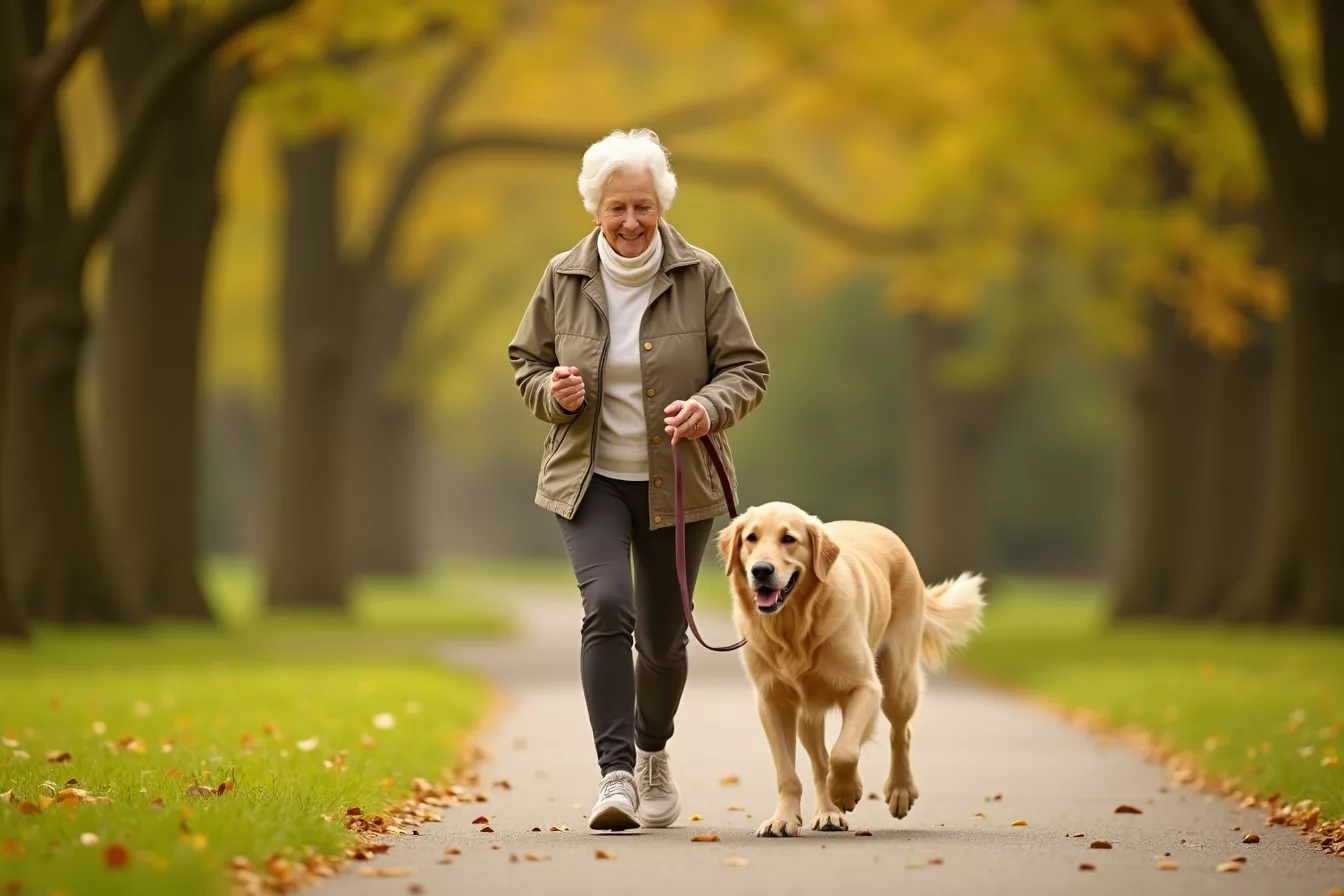

Could your daily dog walk be doing more for your health than you realise? A groundbreaking 2025 study from the University of Missouri College of Veterinary Medicine has found that dog owners over 50 who walk their pets regularly experience significantly lower blood pressure than their non-dog-owning peers. In this article, you’ll discover exactly how much your furry companion could be helping your cardiovascular health, plus the optimal walking routine that delivers the greatest health benefits.
📊 Key Figures 2025
- 7% average blood pressure reduction: Dog walkers over 50 showed measurably lower systolic readings compared to non-dog owners (University of Missouri, 2025)
- 30 minutes daily walking: The sweet spot for cardiovascular benefits, with results comparable to some antihypertensive medications
- 73% of UK pet owners report improved mental wellbeing from dog ownership (PDSA Animal Wellbeing Report, 2024)
Sources: University of Missouri College of Veterinary Medicine, PDSA, 2024-2025
Why Your Dog Walk is Actually Heart Medicine
The Missouri study tracked 120 adults aged 50-75 over eight weeks, comparing those who walked dogs at least four times weekly against sedentary dog owners and non-dog owners. The results were striking: regular dog walkers not only showed lower blood pressure, but also reported reduced stress hormones and improved sleep quality.
“Dogs provide natural motivation to move,” explains Dr Sarah Chen, a veterinary behaviourist at the Royal Veterinary College. “Unlike human gym buddies, they’re consistently enthusiastic about exercise, rain or shine.”
For those over 50, this matters enormously. High blood pressure affects roughly one in four UK adults over 55, yet many struggle with traditional exercise routines. A dog transforms movement from a chore into a social, purposeful activity.
The Social Factor You Didn’t Expect
Here’s what surprised researchers: it wasn’t just the physical activity. Dog walkers reported more social interaction—stopping to chat with neighbours, joining walking groups, chatting with other dog owners at parks. This social element independently lowered stress and improved emotional resilience.
Max, a 12-year-old Golden Retriever from Bristol, became his owner Patricia’s lifeline after retirement. “I was isolated and my blood pressure was 158/98,” Patricia recalls. “Within three months of daily walks with Max, it dropped to 142/85. But honestly, the friendships I’ve made at the park matter just as much.”
✅ Expert Tip
Aim for brisk walking (around 3-4 mph) for 30 minutes, four to five times weekly. This pace elevates heart rate enough to trigger cardiovascular adaptation without strain. Track your steps using a simple pedometer—aiming for 8,000-10,000 daily steps is ideal for over-50s seeking blood pressure benefits.
What the Science Really Shows
The University of Missouri team used ambulatory blood pressure monitors (worn for 24 hours) rather than clinic readings, which are often inflated by “white coat syndrome.” This gave them genuine, real-world data.
Participants who walked dogs also showed improved lipid profiles (better cholesterol ratios) and lower inflammation markers. These aren’t cosmetic improvements—they reduce heart disease risk directly.
Interestingly, the benefit didn’t depend on dog size or breed. A Chihuahua owner walking briskly gained similar cardiovascular benefits to a German Shepherd owner, as long as the pace and consistency remained high.
⚠️ Warning
If you’re over 50 and currently sedentary, or if you have existing cardiovascular conditions, consult your GP before starting a new dog walking routine. Sudden intense exercise can temporarily spike blood pressure. A gradual build-up (starting with 10-15 minute walks) is safer and equally effective long-term.
Getting Started: Practical Steps
If you don’t yet own a dog, consider volunteering at a local dog shelter or rescue centre. Many organisations, including the RSPCA and Dogs Trust, actively encourage community members to walk dogs needing exercise and socialisation. You gain the health benefits whilst helping animals in need.
Already a dog owner? Upgrade your routine. Swap the quick dash around the block for a genuine walking adventure—explore new routes, vary terrain (hills are excellent for cardiovascular fitness), and time your walks for social spots like parks where you’ll naturally interact with others.
The Bottom Line
A 2025 University of Missouri study reveals that regular dog walking reduces blood pressure in over-50s by approximately 7%—a clinically meaningful reduction that rivals some medications. Combined with improved mood, better sleep, and genuine social connection, dog walking emerges as one of the most underrated health interventions available. Have you noticed changes in your own health since getting a dog? Your furry companion might be doing far more for your heart than you realised.
Next step: If you own a dog, commit to four 30-minute walks weekly at a brisk pace. If you don’t, explore volunteer dog walking through a local rescue. Your cardiovascular system—and a dog in need—will thank you.