
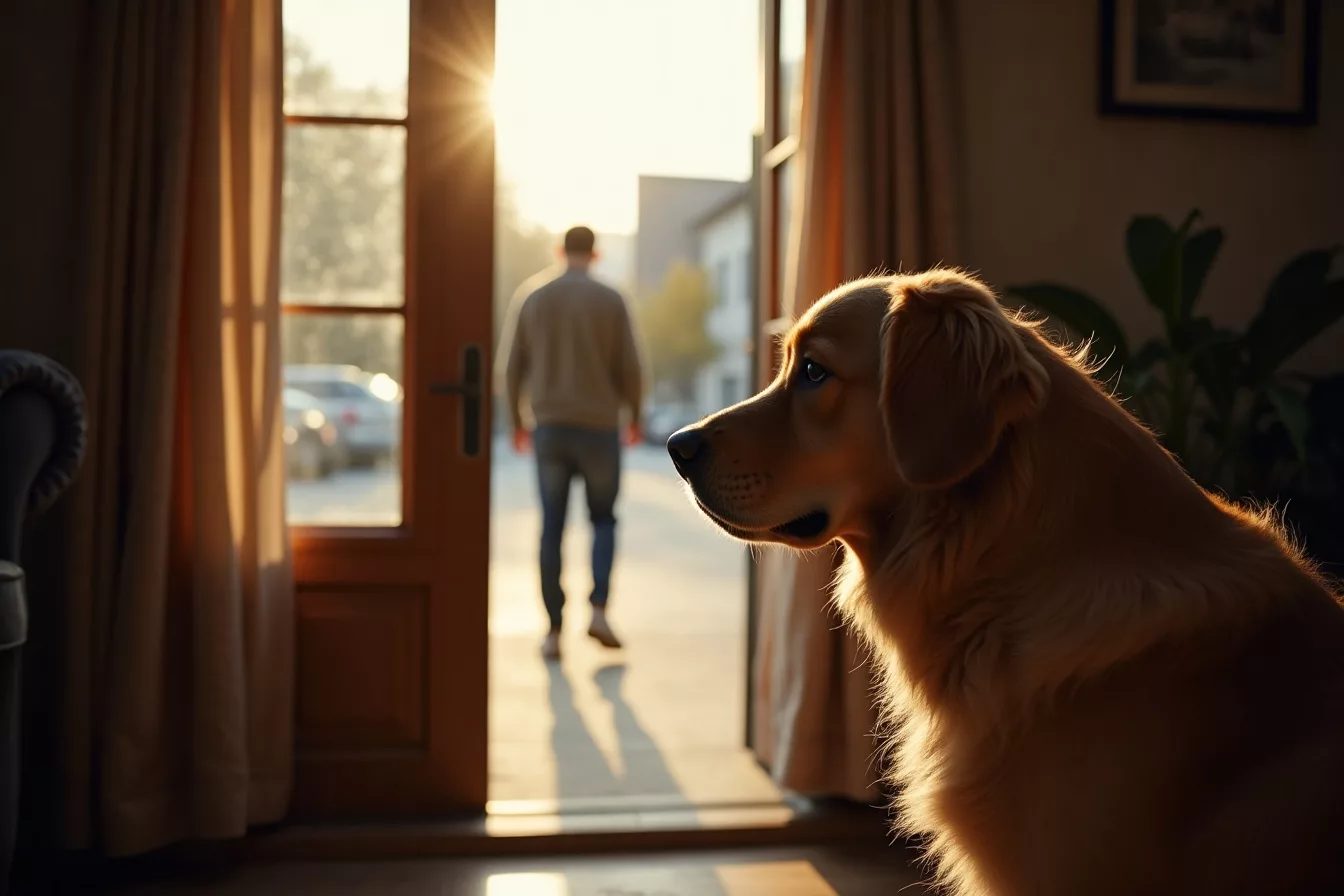

Has your dog started panicking the moment you reach for your car keys? A shocking new PDSA Animal Wellbeing Report for 2025 reveals that working from home has fundamentally rewired our pets’ behaviour—and the changes may be permanent. In this article you’ll discover what the PDSA found, why separation anxiety is skyrocketing, and the one simple habit that can help your pet adapt when routines shift again.
For two years, our dogs, cats, and rabbits enjoyed something unprecedented: their humans home all day. But now that offices are reopening and hybrid working is becoming the norm, our pets are struggling to readjust. The PDSA’s landmark study exposes a worrying trend that vets and behaviourists across the UK are only now fully understanding.
What the PDSA 2025 Study Actually Found
The PDSA—the UK’s largest pet charity—surveyed over 5,000 pet owners and consulted with senior veterinarians to map the post-lockdown pet behaviour crisis. The findings are striking and emotional.
“We’ve seen a fundamental shift in how pets now cope with solitude,” explains Dr Sarah Marshall, PDSA’s Head of Companion Animal Behaviour. “Many pets formed new baseline expectations during the pandemic. Now, when owners return to offices, they’re experiencing genuine distress.”
📊 Key Figures 2025
- 67% of UK dog owners report their pets show signs of separation anxiety when left alone for more than 4 hours, up from 34% in 2019 (PDSA, 2025)
- 43% of cats now display destructive or excessive vocaling behaviour during owner absence, a 28-point increase since pre-pandemic (PDSA Animal Wellbeing Report, 2025)
- 1 in 5 pets have been prescribed anxiety medication by their vet as a direct result of changed routines (British Veterinary Association, 2025)
Sources: PDSA, BVA, 2025
Why This Happened: The Pandemic Rewired Our Pets
During lockdowns, pets weren’t just kept indoors—they experienced 24/7 human companionship. Their circadian rhythms, stress responses, and social expectations completely reset. A dog used to 8 hours alone became a dog used to constant presence.
“Puppies born during 2020-2021 have never known a normal working routine,” notes the RSPCA’s behaviour team. “They literally have no reference point for being alone. Their brains developed in an abnormal context.”
When owners eventually returned to offices, they didn’t just return to work—they vanished from their pet’s daily reality for 7-9 hours. For a pet whose entire sense of security was built on constant presence, this felt like abandonment.
The Real-World Cost: Meet Max and Luna
Max, a two-year-old Labrador Retriever from Manchester, was a lockdown puppy. His owner, Claire, worked from home throughout his early months. “He’d never been alone for more than an hour,” she recalls. “When I went back to the office three days a week, he became inconsolable. He’d howl, scratch the door, refuse food.”
Luna, a four-year-old tabby cat from London, developed compulsive over-grooming and urinary issues within weeks of her owner’s return to the office. “The vet said it was stress-induced,” her owner explains. “Luna’s entire sense of normalcy had shifted.”
Max and Luna are not exceptions. They’re textbook cases now flooding veterinary clinics across the UK and US.
✅ Expert Tip: Gradual Desensitisation
Don’t go cold turkey. If your pet is struggling with WFH-to-office transition, start by leaving them alone for just 15 minutes while you’re still home (step outside). After a week, increase to 30 minutes. Over 4-6 weeks, build to your full work day. Use a puzzle feeder or Kong toy during these sessions. The PDSA recommends this “graduated absence” method as the single most effective intervention for pandemic-related separation anxiety.
Are These Changes Permanent?
The concerning answer is: yes, mostly. Once a pet’s baseline expectations are reset, they don’t automatically revert. A three-year-old dog who spent ages 1-3 with constant human presence will likely always find extended solitude stressful, even with retraining.
“However,” Dr Marshall emphasises, “permanent doesn’t mean untreatable. With the right behaviour modification, environmental enrichment, and sometimes short-term medication, most pets can learn to cope.”
The key is that owners must now actively manage what was once automatic. Pre-pandemic, many pets were left alone without issue. Now, that tolerance must be rebuilt—deliberately and patiently.
⚠️ Warning: When to Seek Professional Help
If your pet shows destructive behaviour, self-harm, excessive vocalling (lasting over 30 minutes), refusal to eat, or toileting inside the house when alone, contact your vet immediately. These may indicate severe anxiety requiring specialist assessment. The RSPCA and PDSA both recommend consulting a certified animal behaviourist (APDT or CCAB-accredited) before trying medication alone.
What Pet Owners Should Do Now
1. Accept the new normal: Your pet’s anxiety isn’t a flaw—it’s a response to a real change in their world. Guilt won’t help; action will.
2. Start desensitisation early: Don’t wait until September when everyone returns. Begin gradual absence training now, in summer, when you have more flexibility.
3. Enrich their environment: Interactive toys, puzzle feeders, and background noise (BBC Radio 4, pet-specific playlists) make solitude less terrifying.
4. Consider hybrid solutions: Dog walkers, pet sitters, or doggy daycare one or two days per week can bridge the gap while your pet adjusts.
5. Talk to your vet: If anxiety is severe, your vet can assess whether short-term medication (like trazodone) might help during the transition period.
The Silver Lining
The PDSA’s research also highlights something hopeful: pets are remarkably resilient. Even those with pandemic-born anxiety can improve with consistent, compassionate intervention. Owners who start early and stay committed see measurable progress within 8-12 weeks.
“This is a solvable problem,” says Dr Marshall. “But it requires owners to be intentional about their pet’s emotional wellbeing. The pandemic showed us how deeply our pets depend on us—now we get to show them they’re safe, even when we’re not home.”
Final Thoughts
The PDSA’s 2025 findings confirm what many vets have suspected: working from home permanently changed our pets’ brains. But that doesn’t mean our pets are broken. It means we need to be smarter, more patient, and more proactive about their emotional health.
Your dog’s panic isn’t a behavioural problem—it’s a signal that their world shifted, and they need help adjusting. The good news? You’re the one person who can help them do it.
Have you noticed your pet struggling since routines changed? Share your experience in the comments—you’re not alone in this.