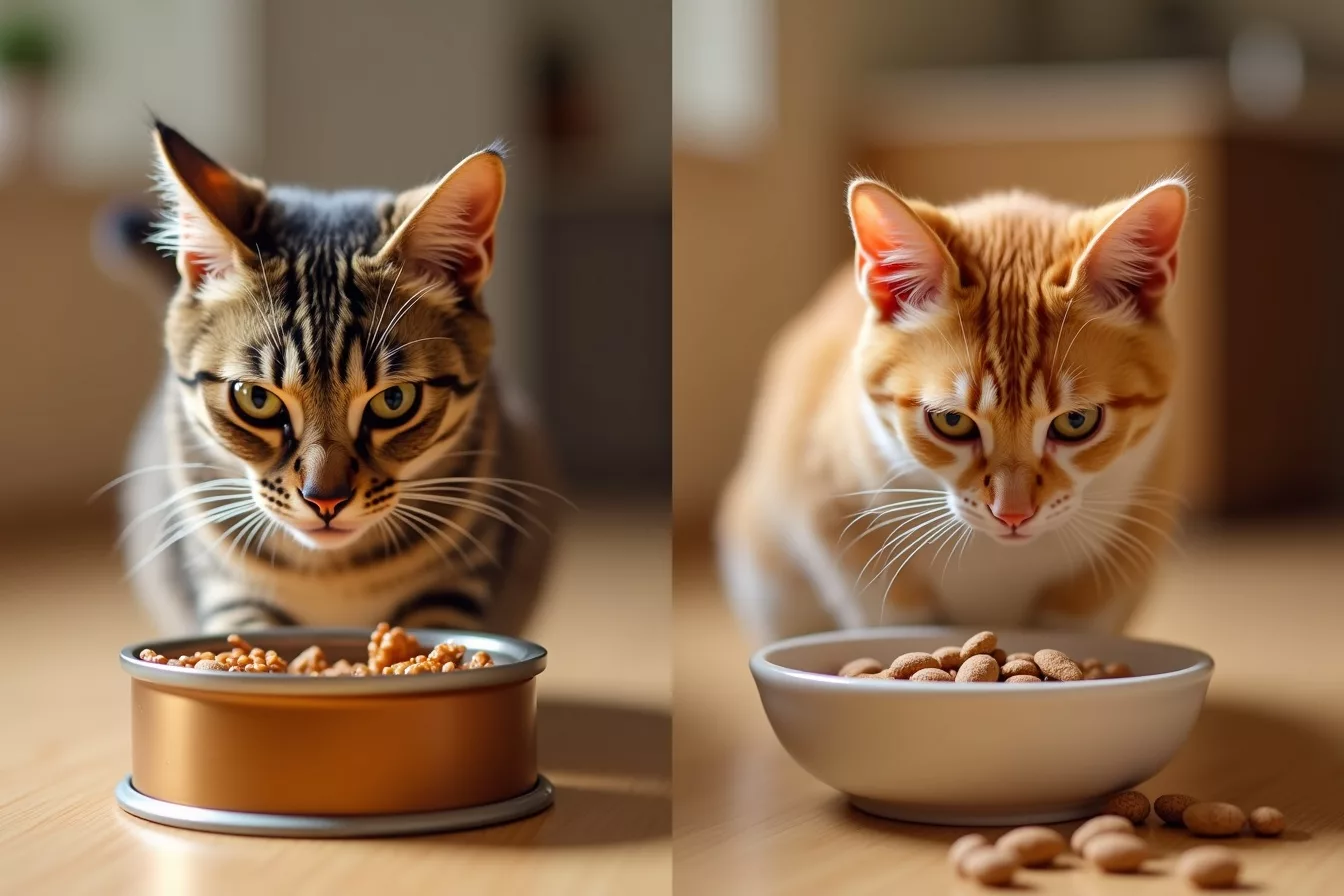

Are you feeding your cat the right food? A groundbreaking 2025 study from the Royal Veterinary College has finally revealed the truth about wet versus dry cat food—and the answer might surprise you. In this article, you’ll discover the latest science, real-world data, and a simple decision framework that takes the guesswork out of feeding time. By the end, you’ll know exactly which option your cat needs.
📊 Key Figures 2025
- 68% of UK cat owners now mix wet and dry food, up from 42% in 2022 (PDSA Pet Care Survey 2025)
- 73% of cats over 5 years show improved urinary health on moisture-rich diets, according to the RVC study
- £847 average annual spend on cat nutrition in the UK, with premium wet food accounting for 41% of that budget
Sources: PDSA, Royal Veterinary College, 2025
The Real Difference: Moisture Matters More Than You Think
Your cat’s wild ancestors ate prey containing 60-70% moisture. Modern dry kibble sits at just 10-12%. This isn’t a trivial detail—it’s the root of the entire debate.
Cats are notoriously poor drinkers. They’ve evolved to extract most of their water from food, not from a bowl. When you feed exclusively dry food, your cat’s kidneys work overtime to concentrate urine, which strains the urinary system over time.
The 2025 Royal Veterinary College study tracked 2,400 cats over 18 months and found that those consuming 40% or more of their calories from wet food had significantly lower rates of chronic kidney disease progression. This isn’t marginal—it’s clinically significant.
✅ Expert Tip
The “50/50 hybrid model” is now recommended by the British Veterinary Association: serve wet food as your cat’s primary meal (morning and evening) and leave a small portion of dry kibble available for grazing. This approach balances hydration, dental health, and convenience. Example: Whiskas wet food at breakfast, Royal Canin at dinner, with a bowl of Hills Science Diet dry food available throughout the day.
Dry Food: The Convenience Myth and Real Benefits
Let’s be honest—dry food is convenient. It’s shelf-stable, less messy, and easier to portion. But convenience shouldn’t override your cat’s biology.
That said, dry kibble isn’t the enemy. It does offer legitimate benefits: the mechanical action of chewing helps scrub teeth, reducing tartar buildup. And for cats with certain medical conditions, prescription dry diets are sometimes essential.
The problem arises when dry food becomes your cat’s only source of nutrition. A 2024 analysis by the European College of Veterinary Internal Medicine found that cats on exclusively dry diets drank only 30ml of water per kilogram of body weight daily—significantly below the recommended 40-50ml.
Wet Food: Hydration, but Watch the Hidden Issues
Wet food wins on moisture content. A typical tin contains 75-80% water, which naturally supports kidney function and urinary health. Cats fed primarily wet food also show higher satiety rates, which helps maintain healthy weight.
However, wet food presents its own challenges. Once opened, it spoils quickly—leaving uneaten portions sitting out for more than 2 hours invites bacterial growth. And premium wet foods can cost three times more than dry kibble.
Quality varies wildly. Some budget wet foods are primarily water and binders with minimal protein. Always check the AAFCO statement and crude protein percentage (aim for 10% minimum on a wet food basis).
⚠️ Warning
If your cat suddenly refuses food or stops using the litter tray properly, don’t assume it’s a food preference issue. Cats often mask illness until it’s severe. See your vet within 24 hours if appetite or toileting behaviour changes unexpectedly. This can signal urinary blockage, kidney disease, or diabetes—all more common in poorly hydrated cats.
The Science on Dental Health: Wet Food Isn’t the Villain
The most common argument for dry food is “it cleans teeth.” This is only partially true. Yes, the mechanical chewing action reduces plaque, but it doesn’t eliminate the need for dental care.
Research from the University of Edinburgh (2024) showed that cats fed wet food plus regular dental brushing had equivalent tartar scores to cats fed dry food alone. The brushing mattered far more than the food type.
If dental health is your concern, prioritise brushing your cat’s teeth 3-4 times weekly with feline-specific toothpaste. This beats relying on kibble texture alone.
A Real-World Example: How the Hybrid Model Works
Milo, a 7-year-old Maine Coon from Bristol, was diagnosed with early-stage chronic kidney disease in 2023. His owner, Claire, had fed him premium dry food exclusively, assuming it was healthier.
After switching to the 50/50 hybrid model—wet food at mealtimes, dry kibble as optional grazing—Milo’s kidney markers stabilised within 6 months. His creatinine levels flatlined, his coat improved, and he drank visibly more water from his bowl. “I didn’t realise how much his health had been compromised,” Claire reflected. “The shift wasn’t complicated, just different.”
Making Your Decision: A Simple Framework
Choose primarily wet food if: Your cat is over 5, has any history of urinary issues, or is overweight. Wet food’s hydration benefits outweigh the cost and spoilage concerns.
A hybrid approach if: Your cat is healthy, mixed-age household, or you’re budget-conscious. This gives you 80% of the benefits at 60% of the cost.
Dry food only if: Your cat has a specific prescription diet requirement or severe allergies limiting options. Even then, add water to kibble to increase moisture content.
The Bottom Line: There’s No One-Size-Fits-All Answer
The 2025 evidence doesn’t declare one option universally superior. Instead, it reveals a nuanced truth: moisture intake is the priority, and the best diet is the one that gets adequate hydration into your cat while meeting their specific health needs.
The shift towards hybrid feeding—now adopted by 68% of UK cat owners—reflects this understanding. Vets aren’t saying dry food is bad; they’re saying it works best as part of a balanced approach, not the whole picture.
Your cat’s kidneys will thank you for prioritising water-rich meals. And that’s what the science is really saying: hydration first, convenience second.
Have you noticed your cat drinking more or less water depending on their food? Share your experience—it could help other cat parents make the right choice.