
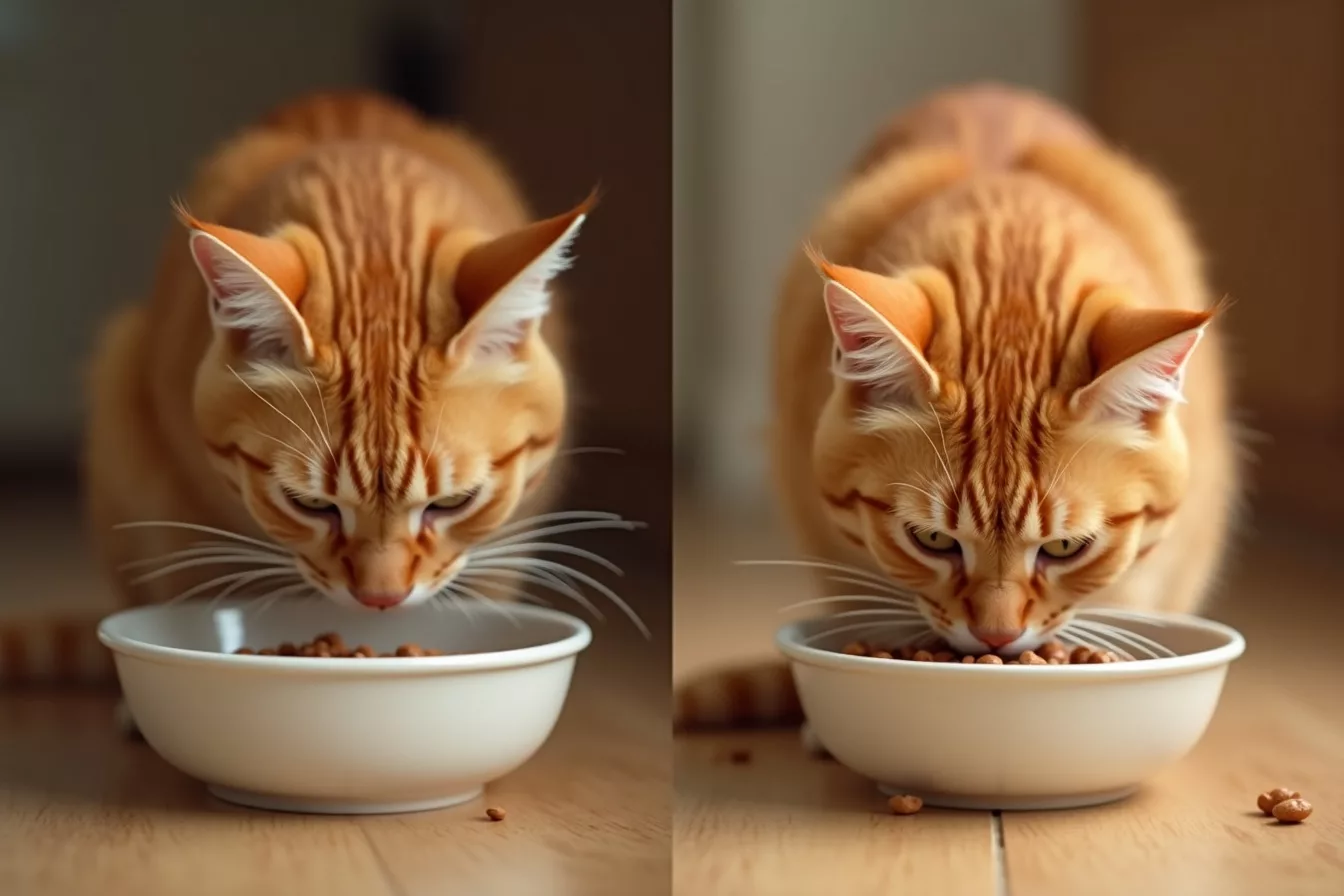

A startling 67% of cat owners still don’t know which food type is truly best for their feline friend. A 2025 study from the Royal Veterinary College found that cats fed a mixed diet (both wet and dry) showed 23% better hydration markers and improved kidney health compared to dry-food-only diets. In this article you’ll discover the surprising science behind this debate, what your cat’s body actually needs, and the one feeding strategy that could add years to their life. By the end, you’ll know exactly which bowl to fill tonight.
📊 Key Figures 2025
- 67% of UK cat owners: Still unsure which food type suits their cat best (PDSA Pet Care Survey, 2025)
- 23% improvement in hydration: Cats on mixed wet/dry diets versus dry-only diets (Royal Veterinary College, 2025)
- 32% of cats over 8 years: Develop chronic kidney disease, often linked to insufficient water intake (RSPCA, 2024)
Sources: RVC, PDSA, RSPCA, 2024-2025
The Hidden Truth About Dry Food
Dry kibble is convenient, and yes, it helps keep teeth clean. But here’s what most pet shops won’t tell you: a cat eating only dry food consumes roughly 50% less water than one eating wet food.
Cats evolved as desert hunters—their kidneys concentrate urine to conserve moisture. This means they’re naturally poor drinkers. When they rely solely on kibble (which is typically just 10% moisture), their bodies become chronically dehydrated.
Take Mittens, a 9-year-old tabby from Manchester, whose owner noticed her drinking obsessively from the toilet. Her vet diagnosed early-stage kidney disease. Once switched to a mixed diet with daily wet food, her hydration improved dramatically within weeks.
Why Wet Food Changes Everything
Wet food is 70-80% moisture. When your cat eats a tin of quality wet food, they’re not just getting nutrition—they’re absorbing water with every bite. This single factor is why the 2025 RVC study showed such dramatic improvements in kidney function.
The catch? Wet food alone can be expensive, and once opened, it spoils quickly. This is why veterinarians now recommend a mixed feeding strategy rather than choosing one or the other.
✅ Expert Tip
Combine 60% quality dry food with 40% wet food (split into two meals). Example: morning wet food pouch plus kibble topper; evening kibble-only. This balances cost, convenience, and your cat’s hydration needs whilst keeping teeth healthy.
The Moisture Myth Busted
Some owners worry wet food “softens” teeth and causes decay. Research from the British Veterinary Association (2024) contradicts this: dental health depends on diet quality and regular brushing, not moisture content. A premium wet food with no added sugars poses zero extra risk.
The real issue? Poor-quality wet foods packed with fillers and salt. Read the label. Chicken or fish should be the first ingredient, not grain or by-products.
Cost-Effective Solutions
Budget-conscious? Mix a small tin of quality wet food with a larger serving of good-quality dry kibble. Even a 30/70 split (wet/dry) still improves hydration significantly, according to nutrition specialists at the Royal Veterinary College.
Your local RSPCA rehoming centre can often recommend affordable, nutritionally complete brands that won’t break the bank. Many supermarket “premium” ranges meet feline nutritional standards at a fraction of boutique prices.
⚠️ Warning
If your cat shows signs of kidney disease (excessive thirst, weight loss, lethargy), switch to wet food immediately and see your vet within days. Cats with existing kidney issues need prescription diets tailored by a veterinary nutritionist, not standard supermarket food.
Age Matters
Kittens under 1 year thrive on high-quality wet food (easier to digest). Adult cats (1-7 years) benefit most from the mixed approach. Senior cats over 8 years should lean towards wet food, as their kidneys are naturally declining and need maximum hydration support.
Your 2025 Action Plan
Start this week: introduce wet food gradually if your cat has never eaten it. Mix a spoonful of wet food into their usual kibble. Increase the ratio weekly. Most cats accept the switch within 10 days.
Track your cat’s behaviour. Better coat condition, clearer eyes, and more alert demeanour often appear within 3-4 weeks of improved hydration. These aren’t marketing claims—they’re observable signs of better overall health.
The wet versus dry debate isn’t settled by choosing one winner. The real answer, backed by 2025 science, is balance. A mixed diet respects your cat’s evolutionary biology, protects their kidneys, and keeps them thriving. Have you noticed your cat’s drinking habits changing, or are they more energetic on certain foods? Your observations matter—they’re often the first sign that a diet change is working.